
Best window film privacy decorative options are usually the quickest way to block sightlines and still keep daylight, without committing to blinds, heavy curtains, or permanent changes.
If you live in an apartment, share close neighbors, or just want a softer look in bathrooms and street-facing rooms, no-glue decorative film is often the sweet spot: it can look intentional, it removes easier than adhesive styles, and it solves the “I need privacy but I hate dark rooms” problem.
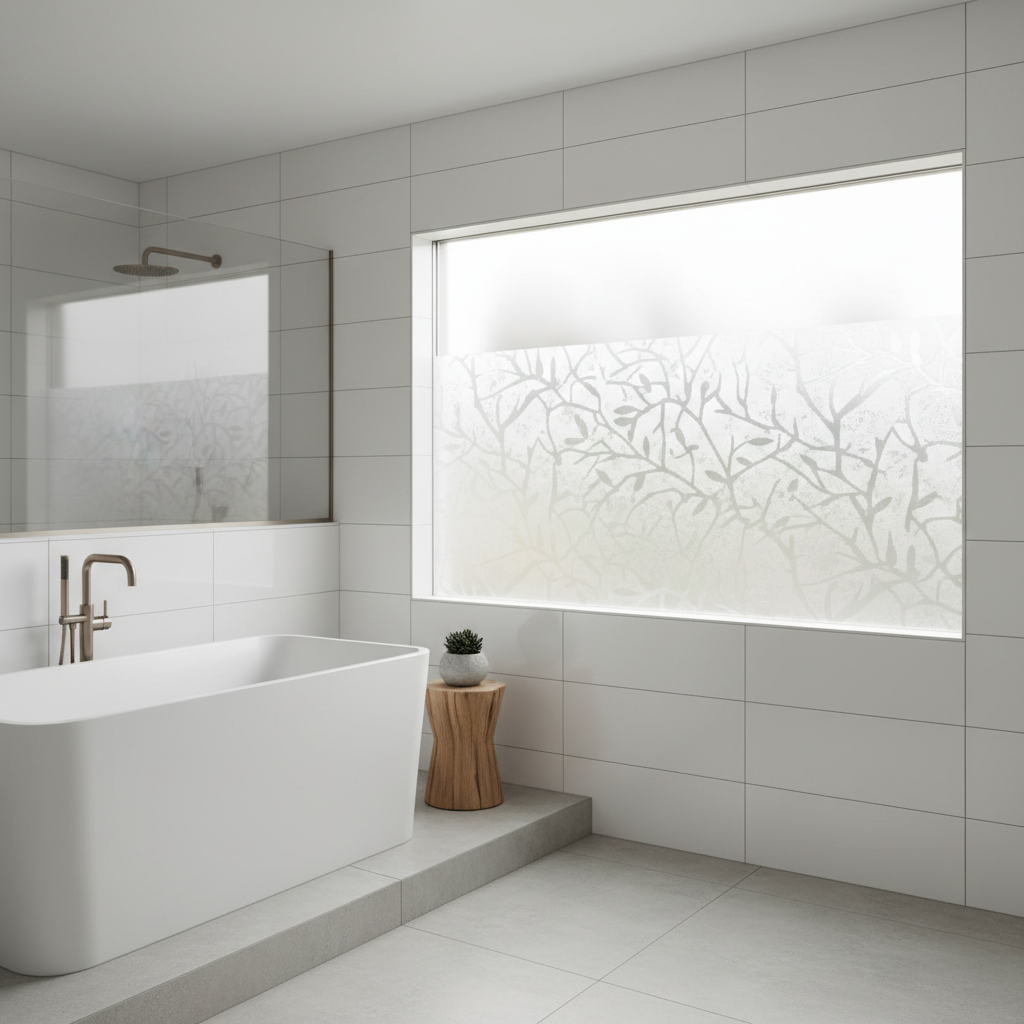
One common misconception: “no glue” means it will fall off. In many homes it holds very well, but performance depends on glass type, humidity, and installation quality. This guide helps you pick a style that fits your room, avoid the usual install mistakes, and decide when static cling is the right call versus a light adhesive.
What “No-Glue” Window Film Really Means (and Why It Matters)
In US listings, “no glue” typically refers to static cling window film. It uses electrostatic attraction and surface tension from the install solution rather than a pressure-sensitive adhesive.
- Pros: usually renter-friendly, easier repositioning, easier removal, less residue risk.
- Trade-offs: edges can lift if not squeegeed well, humidity can challenge it, textured glass can be a deal-breaker.
There are also films marketed as “non-adhesive” that still use a mild tack layer, not a traditional glue. If “easy remove” is your priority, check the label for static cling and look for notes about residue or “reusable.”
Why Privacy + Decorative Film Works Better Than You Think
Privacy film earns its keep when you want daytime privacy without turning the room into a cave. Most decorative patterns scatter light, so you keep brightness while breaking up visibility.
According to U.S. Department of Energy, daylighting strategies can reduce the need for electric lighting in many situations, which is one reason people try to preserve natural light instead of covering windows completely.
- Street-facing rooms: frosted or reeded patterns hide clutter and movement without sacrificing sun.
- Bathrooms: frosted and etched-glass looks feel “built-in,” especially on the lower pane.
- Home office: patterned film cuts distractions while keeping the room open.
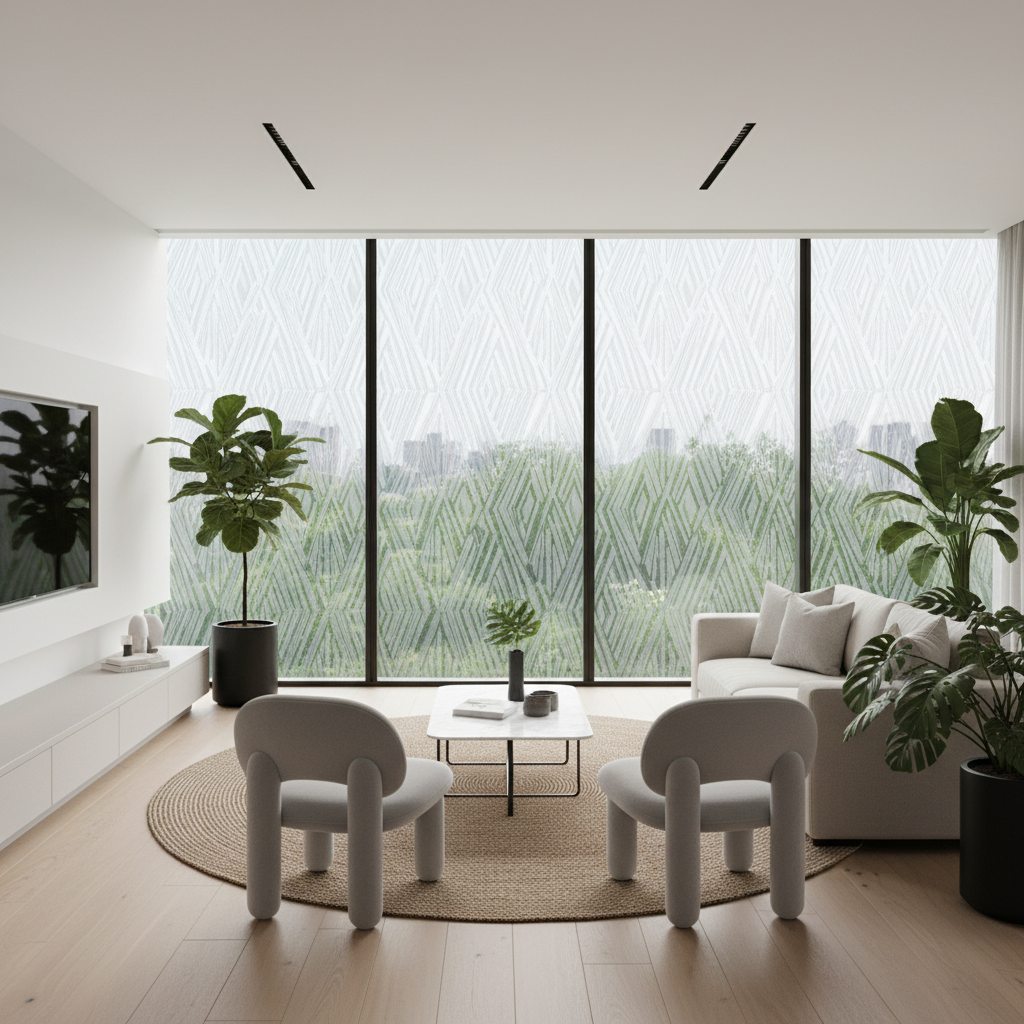
The catch is expectations: most decorative films are privacy filters, not blackout. At night, if the interior is brighter than outside, silhouettes may still show. Planning for nighttime is where people regret their pick.
Quick Self-Check: Which Film Type Fits Your Window?
Before you shop, take 60 seconds and answer these. Your choices narrow fast.
- Is the glass smooth? Static cling usually needs smooth, non-porous glass. Textured glass often needs a different approach.
- Is it a bathroom or kitchen window? Higher humidity favors higher-quality cling film and careful edge work.
- Do you need nighttime privacy? Consider pairing film with a shade, or choose a denser frosted pattern.
- Do you rent? Lean static cling; avoid permanent adhesives unless your lease allows changes.
- Is the window double-pane? Most modern homes are; check any manufacturer notes for compatibility and heat concerns.
If you’re unsure about thermal stress on certain window types, it’s reasonable to ask the film seller for compatibility notes or consult a local installer, because glass performance can vary by region and window build.
Comparing Popular Decorative Privacy Styles (What They’re Good At)
For best window film privacy decorative shopping, style is not just aesthetics, it changes how well the film hides motion and how “busy” a room feels.
| Style | Privacy Level | Light Feel | Best For | Watch Out For |
|---|---|---|---|---|
| Frosted / Etched | High (daytime) | Soft, bright | Bathrooms, entry sidelights | Night silhouettes still possible |
| Reeded / Fluted | Medium–High | Bright with texture | Modern kitchens, living rooms | Alignment can show if crooked |
| Geometric Pattern | Medium | Decor-forward | Home office, accent windows | Can feel visually loud in small rooms |
| Stained-Glass Look | Medium | Colorful, darker | Decor statement, rentals | Reduces brightness more than frosted |
| Gradient (Top Clear / Bottom Frost) | Flexible | Bright, open | Street-level windows | Measure carefully so the “privacy band” hits eye level |
If you’re trying to get privacy while keeping the room calm, frosted and reeded designs are usually the safest bet. Bold patterns shine when you treat the window like decor, not just a cover.
How to Install No-Glue Privacy Film So It Looks Clean
This step looks simple and still trips people up. Most “it won’t stick” complaints come from tiny dust, not enough solution, or rushing the squeegee.
Tools you actually need
- Spray bottle with water + a few drops of mild dish soap
- Squeegee or a firm plastic card with a soft edge
- Sharp utility knife and straightedge
- Lint-free cloth or paper towels
Practical install steps (the version that prevents bubbles)
- Clean the glass like you mean it: remove grease and dust, then do a final wipe. Any lint becomes a visible bump.
- Over-wet the window: don’t be shy with solution, it gives you working time and helps push air out.
- Place and float: position the film while it can still slide, then align edges.
- Squeegee from center out: firm strokes, overlap passes, push water to the edges.
- Trim after it sits: many people cut too tight too early, then edges shrink back and lift.
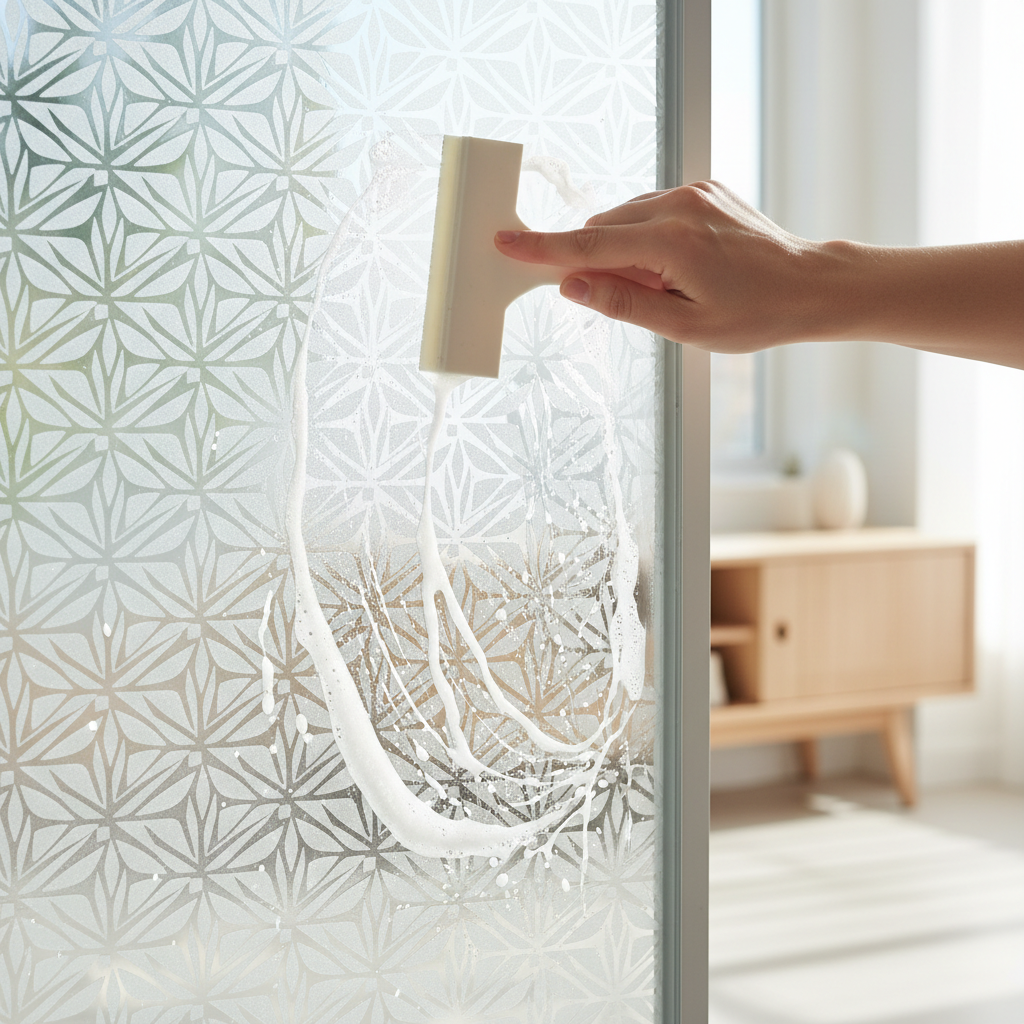
Key point: static cling film often looks slightly hazy right after install because of trapped moisture. Many products clear up as water evaporates, though timing varies by humidity and film thickness.
Common Mistakes That Make Privacy Film Look Cheap
You can buy a great pattern and still end up with edges that scream “DIY.” These are the usual culprits.
- Installing on textured or dirty glass: cling film needs a smooth surface; residue creates bubbles you can’t “squeegee away.”
- Cutting exactly to size before applying: leave a tiny margin, then trim in place for straighter edges.
- Not planning for night: decorative film can blur detail, but indoor light can bring silhouettes back.
- Mixing styles across one room: one window in reeded and another in stained-glass tends to look mismatched.
- Ignoring the frame color: a warm wood frame can fight a cool gray frost pattern, the clash is subtle but real.
If you’re chasing a high-end look, choose one “hero” window for a bold pattern and keep other panes more neutral.
When You Should Consider a Pro (or a Different Solution)
No-glue decorative film is DIY-friendly, but there are situations where extra caution makes sense.
- Very large panes: big sheets are hard to handle solo, one crease can ruin the finish.
- High heat exposure: some windows get intense afternoon sun; if a manufacturer warns about certain glazing types, asking a pro may save you a cracked pane risk.
- Safety glass, historic windows, specialty coatings: compatibility can be tricky, and product labels are not always specific.
For rentals with strict rules, a removable tension rod + sheer curtain can be the safer fallback, and you still get softness and privacy without touching the glass.
Conclusion: A Simple Way to Get Privacy Without Losing Style
Best window film privacy decorative picks usually come down to two things: you match the pattern to the room’s “visual noise,” and you install slowly enough that edges and bubbles don’t sabotage the look.
If you want a low-regret starting point, try a frosted or reeded static cling film on one window, live with it for a week in daytime and at night, then scale to the rest of the house once you know the privacy level feels right.
FAQ
What is the best no-glue window film for bathroom privacy?
Frosted or etched-look static cling film is usually the most forgiving in bathrooms because it hides detail well and still lets in light. In steamy rooms, careful cleaning and strong squeegee pressure matter as much as the film style.
Does decorative privacy film work at night?
It depends on indoor versus outdoor brightness. Many films provide strong daytime privacy, but at night silhouettes may appear if lights are on inside. Pairing film with a shade or curtain is often the practical fix.
Can static cling window film damage glass?
Static cling styles typically remove cleanly, but any film can cause issues if installed incorrectly or used on incompatible specialty glass. If your windows have unusual coatings or you’re worried about heat, check manufacturer guidance or consult a professional.
How long does no-glue window film last?
Many products last years in normal indoor conditions, but lifespan varies with sun exposure, humidity, and how well edges were finished. If corners lift over time, re-wetting and re-squeegeeing often helps.
Can I reuse decorative window film after removing it?
Often yes for static cling film, especially if you keep it clean and store it flat with its backing. If it picks up dust or creases, the second install may look less crisp.
Why do I still see bubbles after installation?
Tiny bubbles can come from dust or trapped water. Dust bubbles usually won’t disappear, while moisture haze often improves as it dries. A careful squeegee pass and better cleaning on the next try usually solves it.
Is no-glue film actually better for renters?
In many cases, yes, because removal is simpler and there’s less risk of adhesive residue. Still, it’s smart to test a small corner first and follow your lease rules for window modifications.
If you’re trying to get privacy fast but want it to look intentional, it can help to shortlist two patterns, test them on a single pane, and then commit, that small extra step saves a lot of rework when the light changes at night.