
how to organize winter clothes in summer comes down to three moves: clean everything, choose the right storage for each fabric, and store it where heat and humidity stay low.
If you skip any one of those, you usually feel it in fall, sweaters smell “off,” down looks flat, or you can’t find matching gloves when the first cold snap hits. Summer storage is less about fancy bins and more about preventing moisture, pests, and fabric stress.
I’ll walk you through a realistic workflow you can finish in an afternoon, plus a quick checklist to decide what belongs in a closet, under-bed bin, vacuum bag, or garment bag. You’ll also get a small storage “map” idea so future-you doesn’t have to open eight containers to find one scarf.
Why winter clothes get “ruined” in summer (and what actually causes it)
Most storage problems trace back to a few boring factors, and boring is good because it means you can control them.
- Residual body oils and stains attract pests and turn into yellowing over time, even when you can’t see them now.
- Humidity drives musty odor and mildew risk, especially in basements, garages, and sealed plastic with damp items.
- Heat can weaken elastic, warp some plastics, and flatten down if it’s compressed for months.
- Friction and crushing causes pilling on knits and misshapes structured coats.
- Pests like moths target natural fibers such as wool, cashmere, and alpaca, and they often go after “dirty” items first.
According to the Environmental Protection Agency (EPA), controlling indoor moisture helps reduce mold growth. In storage terms, that usually means picking a drier location and packing only fully dry items.
A quick self-check: what kind of storage situation do you have?
Before you buy containers, decide which scenario fits your home. This changes the “best” method more than most people expect.
Pick the closest match
- Small closet, apartment living: under-bed bins, vertical bags, and ruthless editing matter most.
- House with a basement: moisture control is the main risk, off-the-floor storage is non-negotiable.
- Garage storage: temperature swings and pests increase, sealed bins plus elevation matter.
- Climate with humid summers (many U.S. regions): breathable storage plus moisture absorbers often beats “airtight everything.”
Also check your wardrobe mix. If you own lots of wool and cashmere, plan for moth prevention. If you own lots of down, plan to avoid extreme compression for months.
Prep work that makes storage work: sort, clean, and dry
This is the part people rush, then they blame the bins later. For how to organize winter clothes in summer, cleaning is not optional if you want items to smell normal in fall.
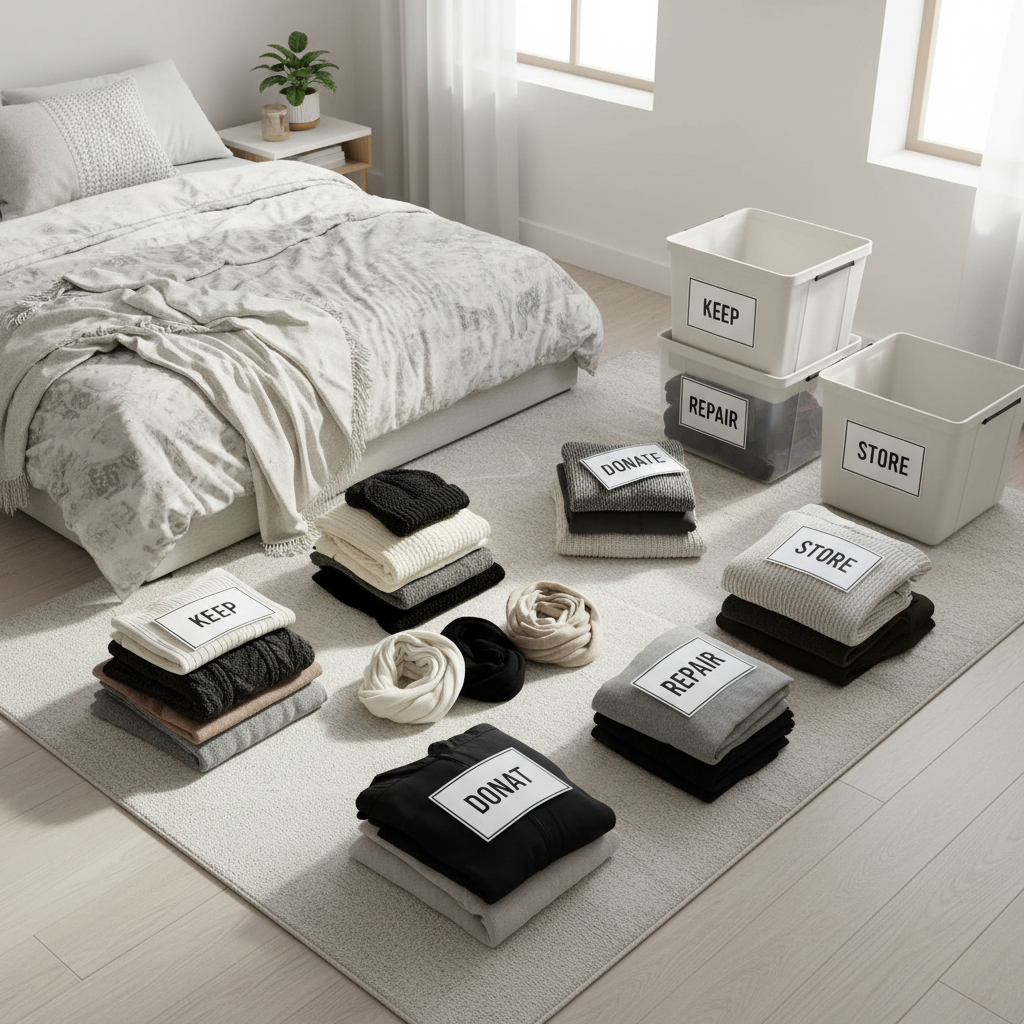
1) Sort into four piles
- Store: truly winter-only items.
- Keep out: light layers you’ll use on cold A/C days or travel.
- Repair/cleaner: missing buttons, torn linings, dry-clean-only coats.
- Donate/sell: anything you didn’t wear last winter and don’t miss.
2) Clean appropriately (avoid “one rule for everything”)
- Knits (wool/cashmere): wash per label or dry clean, then dry completely flat to reduce stretching.
- Down jackets: clean and dry thoroughly, incomplete drying is where odor and mildew trouble starts.
- Coats with structure: spot clean plus professional cleaning when needed, then store on supportive hangers.
- Hats, gloves, scarves: wash what you can, lint-roll what you can’t, make sure everything is fully dry.
If you’re unsure about a fabric, follow the care label or ask a professional cleaner. That’s often cheaper than replacing a coat.
Choose the right container: a practical guide (with a table)
Containers aren’t just “plastic vs fabric.” The right choice depends on whether you’re fighting dust, humidity, pests, or lack of space.
| Item type | Best summer storage | Why it works | Watch-outs |
|---|---|---|---|
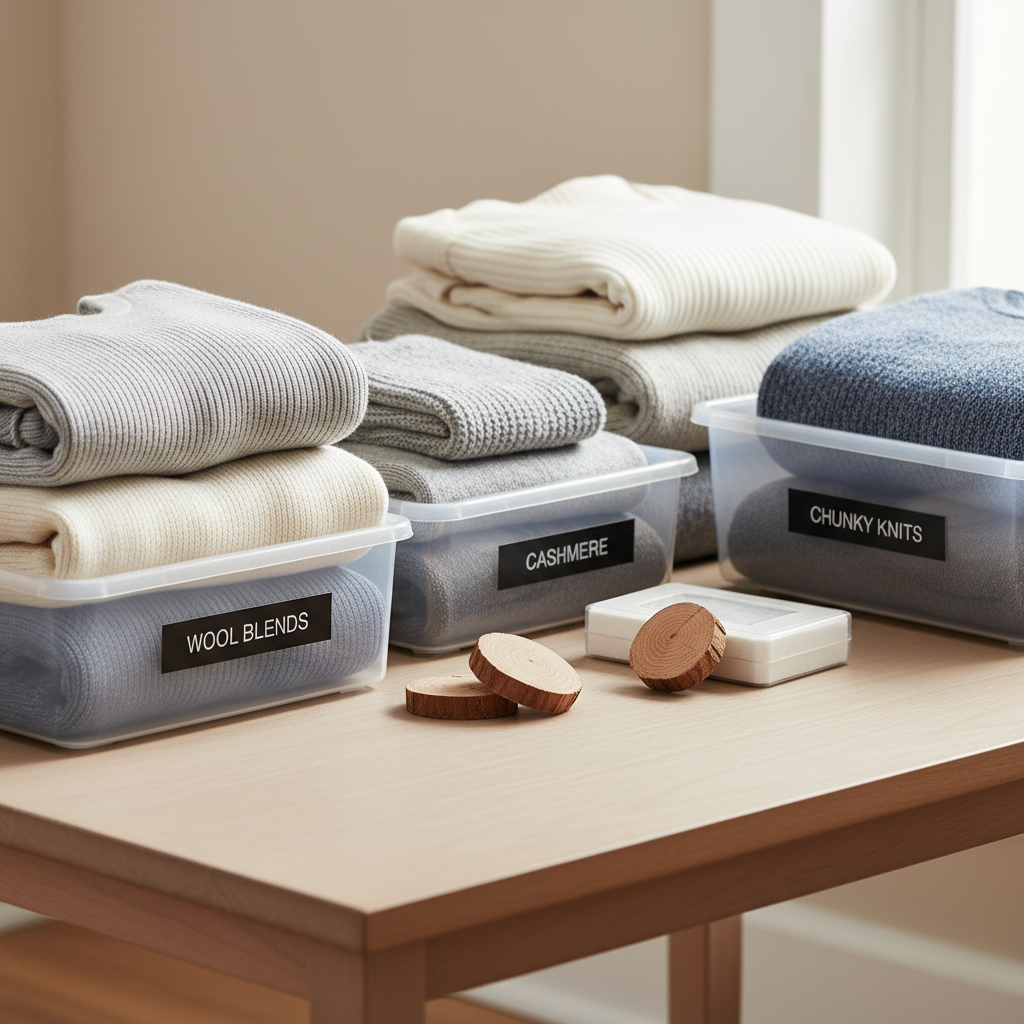
| Wool/cashmere sweaters | Breathable bin or cotton storage bag, folded | Reduces crushing and pilling, discourages musty odor | Avoid hanging, it can stretch shoulders |
| Down jackets/vests | Large bin with room, or roomy garment bag | Less compression helps loft rebound | Vacuum bags save space but can over-compress long-term |
| Heavy coats (structured) | Hang on sturdy hanger, garment bag | Keeps shape, limits wrinkles | Avoid thin wire hangers and tight crowding |
| Thermals/base layers | Under-bed bin or drawer dividers | Easy access for travel, compact | Make sure they’re fully dry before sealing |
| Hats/gloves/scarves | Small labeled boxes inside a larger bin | Prevents “accessory soup” and lost pairs | Don’t store damp knit hats |
| Winter boots | Shoe boxes or clear shoe bins, stuffed with paper | Holds shape, reduces creasing | Skip plastic stuffing that traps moisture |
About vacuum bags (a balanced take)
Vacuum bags can be useful for bulky items if space is tight, but they’re not magic. In many cases, they’re fine for synthetic puffers and spare blankets, and less ideal for down if you’ll compress it for months. If you do use them, make sure items are bone-dry and don’t store them in a hot attic.
Step-by-step: a simple system that stays organized until fall
This is the part that turns “packed away” into “actually easy to retrieve.” Most people don’t need a bigger closet, they need a clearer map.
Create zones: wear-now vs store-away
- Wear-now zone: light jacket, one hoodie, a travel scarf, one pair of closed-toe shoes.
- Store-away zone: everything truly cold-weather specific.
Pack by category, not by person (usually)
- Bin 1: sweaters and knits
- Bin 2: coats and outerwear accessories
- Bin 3: snow gear and “rarely used” items
For families, “by person” can work too, but it tends to create half-empty bins and messy reshuffles. Category packing makes it easier to find what you need in October.
Label like you mean it
- Use big labels on two sides, not just the lid.
- Add a short contents list: “Wool knits: gray, cream, stripes.”
- If you have many bins, number them and keep a note in your phone: “Winter Bin 2 = coats + scarves.”
Where to store winter clothes in summer (location matters more than you think)
If your storage spot runs hot and damp, even perfect folding won’t fully save you. Aim for a place with stable temperature and lower humidity.
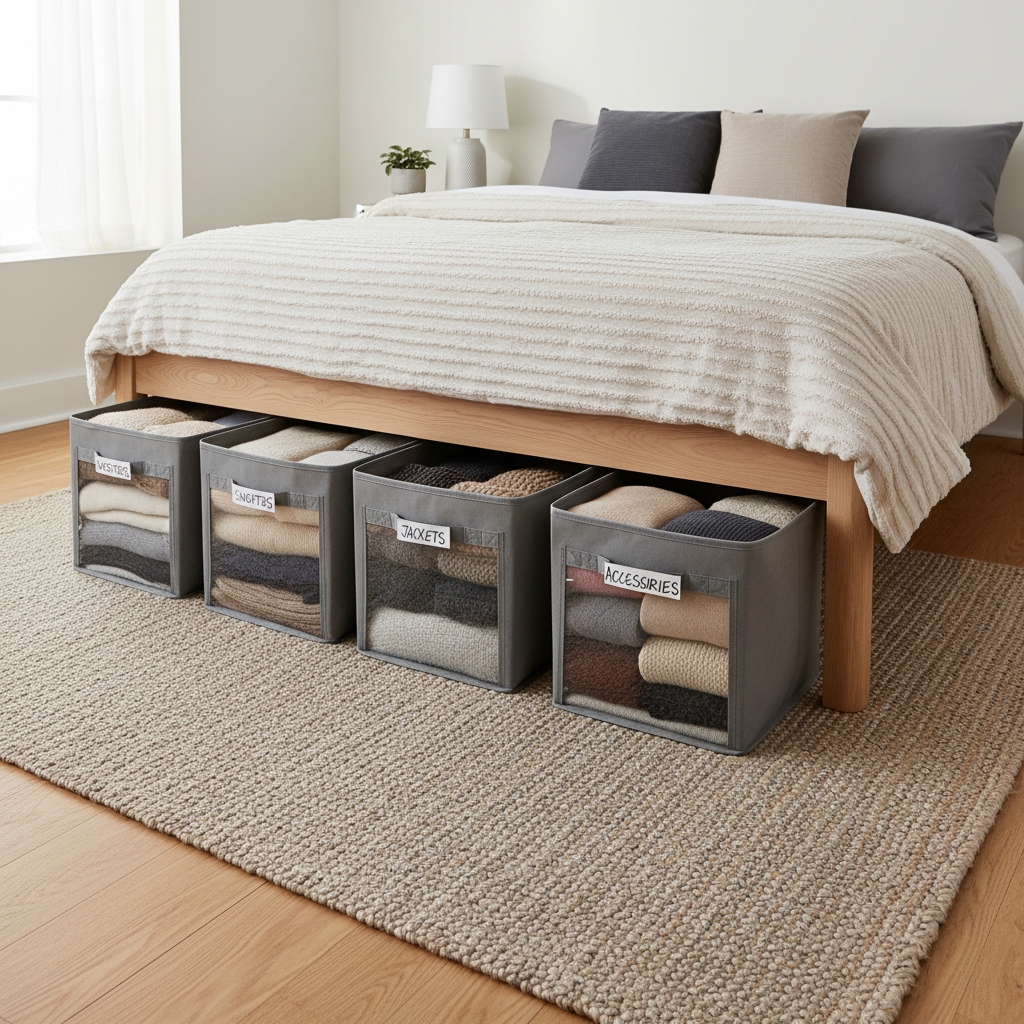
- Best options: interior closet shelves, under-bed in a climate-controlled room, high closet racks.
- Usually risky: attic (heat), basement (humidity), garage (pests and temperature swings).
If you must use a basement, keep bins off the floor on shelving and consider a dehumidifier. According to the American Society of Heating, Refrigerating and Air-Conditioning Engineers (ASHRAE), humidity control is a key part of maintaining healthy indoor environments, which overlaps with protecting stored textiles.
Common mistakes and small fixes that save your clothes
A few habits cause most “why does this smell weird” moments.
- Storing slightly damp items: if there’s any doubt, air-dry longer. Linings and thick knits trick people.
- Overstuffing bins: crushed fibers pill faster and come out wrinkled, leave a bit of breathing room.
- Skipping pest prevention for natural fibers: use clean storage, tight lids, and consider cedar or lavender as a supplemental deterrent, not a guarantee.
- Hanging heavy knits: shoulders stretch, hems droop, fold instead.
- Forgetting boots: wipe salt and dirt, let them dry, then stuff with paper to hold shape.
Key point: odor usually comes from oil, moisture, or both. If you solve those two, storage becomes much simpler.
When you may need extra help (cleaners, repair, or pest control)
If you notice active moth damage, persistent mildew smell that returns after washing, or widespread dampness in a storage area, it can be worth calling a professional cleaner or pest control service. Mold and pests can involve health and home issues, so if you have asthma or sensitivities, it’s reasonable to be cautious and consult a qualified professional.
Conclusion: a summer storage routine you can repeat every year
How to organize winter clothes in summer feels overwhelming until you treat it like a short annual reset: edit what you own, clean and fully dry, pick containers that match your fabric, then label and store in the most stable spot you have.
If you want a simple next step, start with one bin today: wash and fold your sweaters, label the container clearly, and jot a quick note in your phone listing what went inside. When fall arrives, you’ll be glad you did.