
How to organize pantry snacks for easy reach usually comes down to one idea, put the items you actually grab where your hands naturally go, and move everything else out of that “prime zone.” If you feel like snacks vanish, get crushed, or become a daily scavenger hunt, your pantry layout is working against you, not your family.
This matters more than it sounds, because snack clutter creates two problems at once, you waste time finding things, and you waste money rebuying what you already have. A few small changes, like clear zones, the right bins, and a simple restock rhythm, can make the pantry feel calm without becoming a perfection project.
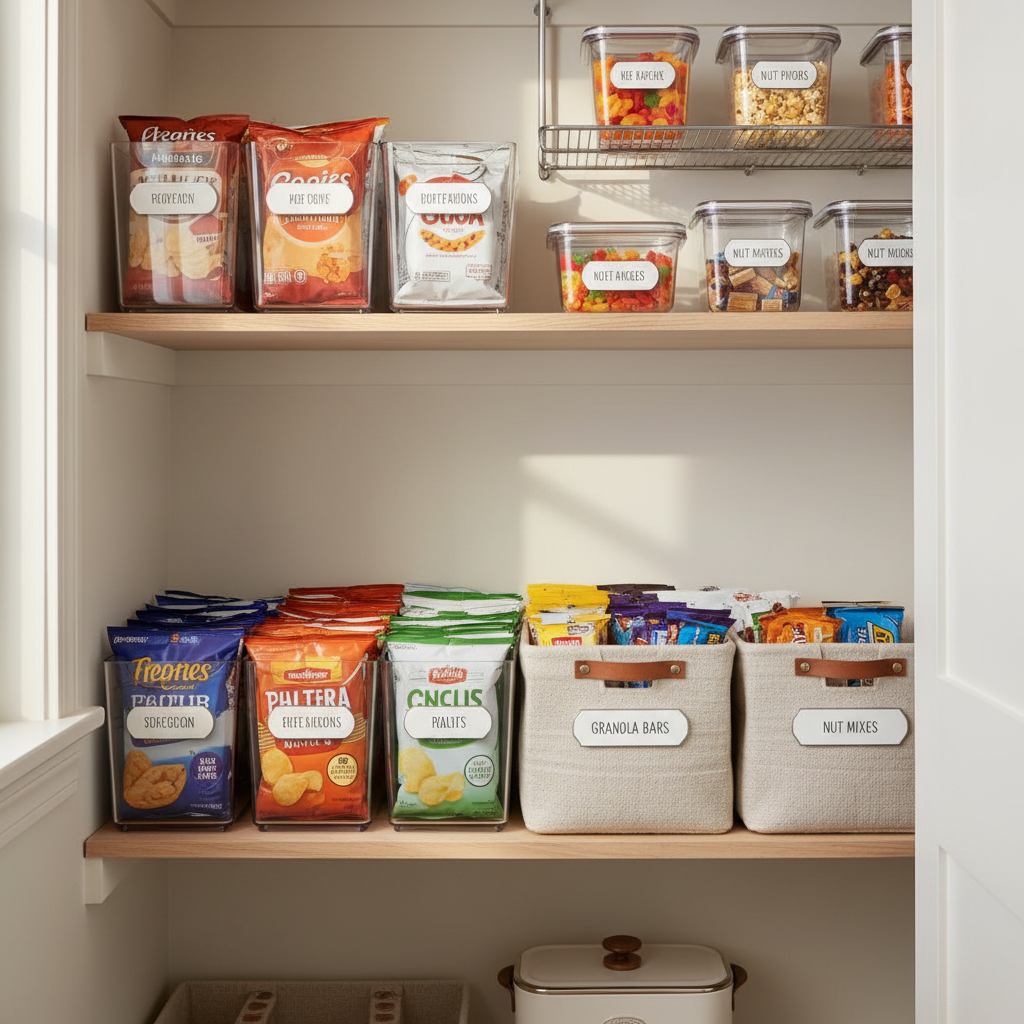
I’ll also be honest about the common trap, many people buy containers first, then try to force snacks into them. It looks good for a week, then the system breaks. Start with usage and reach, then choose containers that support that reality.
Start with a quick “reach map” before you buy anything
If your goal is easy access, you need a pantry that matches how tall everyone is, and who grabs what. A reach map is simply dividing shelves into zones based on how easy they are to grab from.
- Prime reach zone (about waist to eye level): everyday snacks, lunchbox items, after-school staples
- Low zone (knee to waist): kid-approved snacks if you want kids to self-serve, or heavier bulk items
- High zone (above eye level): backstock, party snacks, items you want to limit, rarely used appliances
According to USDA Food Safety and Inspection Service (FSIS), storing food properly helps prevent cross-contamination and reduces spoilage risk, so keep snacks away from cleaning supplies and anything that can leak or smell strong. It sounds obvious, but pantries often become “miscellaneous closets” over time.
Why snacks get messy (it’s usually not laziness)
Snack chaos tends to come from a few predictable patterns. When you spot which one applies, the fix becomes much easier than doing a full pantry reset every month.
- Too many categories, no clear homes, everything becomes a pile, so any restock creates new clutter
- Packaging mismatch, tall chip bags and tiny pouches don’t stack well, so they slide and collapse
- Backstock mixed with daily use, you can’t “see” what’s available, so duplicates happen
- No boundary for “open” snacks, half-used bags roam around until they go stale
- Kid access without limits, self-serve works, but only if the system has guardrails
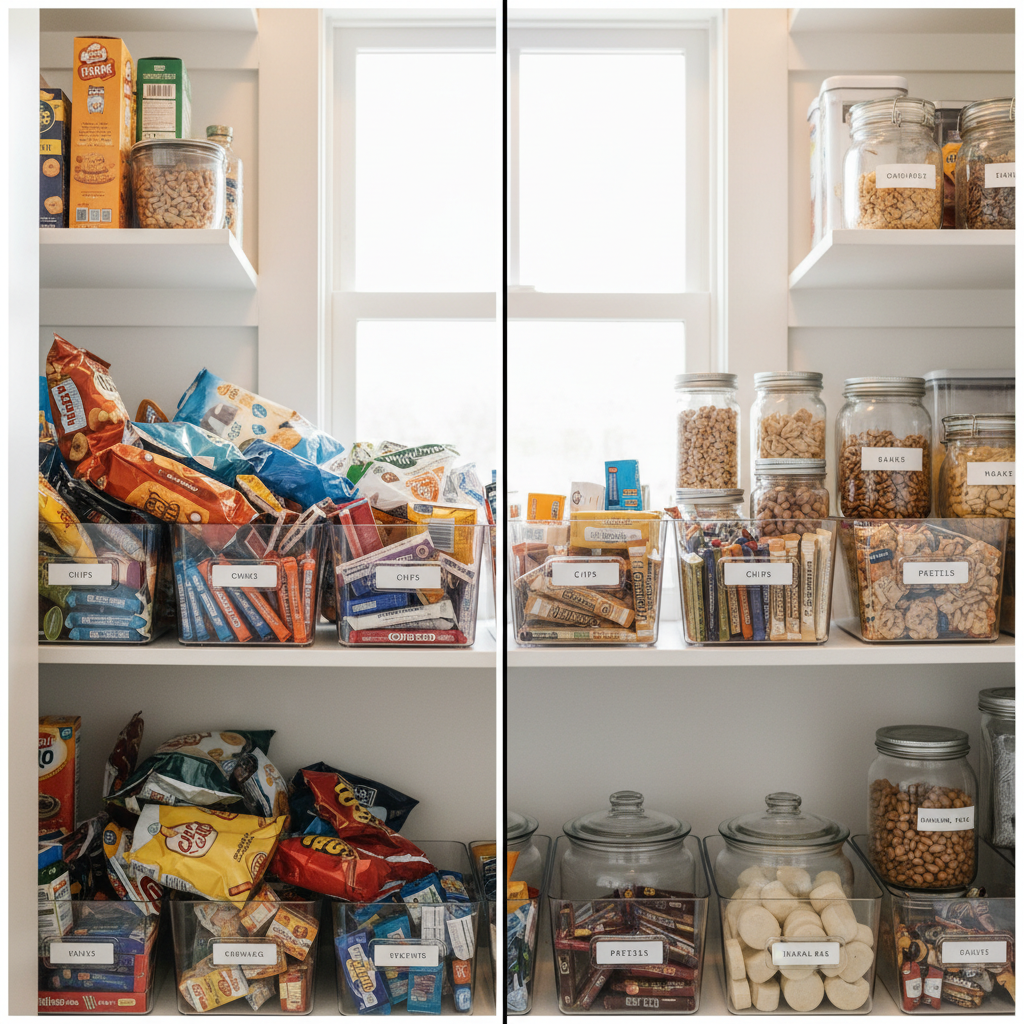
One more subtle issue, many pantries are “deep,” so snacks hide behind other snacks. In that setup, it’s not about more bins, it’s about creating shallow, pull-forward storage so the front doesn’t lie to you.
A fast self-check: which pantry snack setup do you need?
Use this to avoid overbuilding a system. Pick the description that feels most accurate, then follow the matching approach in the next sections.
- You live alone or as a couple: you likely need visibility more than kid-proofing, prioritize front-facing and small bins
- You have school-age kids: you need a “grab zone” plus a parent-controlled backstock zone
- You buy in bulk: you need a clean separation between daily snacks and backup inventory
- Your pantry is tiny: you need vertical organization and fewer snack types on-hand
- Your pantry is deep: you need pull-out bins or turntables, otherwise snacks disappear
If you’re mainly searching for how to organize pantry snacks for easy reach because mornings feel rushed, prioritize the lunchbox flow first. You can perfect the rest later and still feel the win.
Set up snack zones that match real life (not Instagram)
A good snack pantry has a few zones that stay stable even when brands change. Keep the zones simple enough that anyone in the house can restock without asking you where things go.
Recommended snack zones
- Daily grab snacks: bars, fruit snacks, crackers, pretzels, jerky
- Lunchbox add-ons: single-serve packs, squeeze pouches, allergy-safe options if needed
- After-school bowls: quick things you’re okay with kids taking, in limited quantity
- Treats / “ask first”: candy, special chips, desserts, placed higher or in a lidded bin
- Backstock: duplicates of the above, stored separately so the front stays tidy
- Open items: resealable container zone to prevent stale snacks
Small but impactful rule, one shelf equals one job. When a shelf tries to hold cereal, snacks, baking, and vitamins, it becomes decision fatigue in physical form.
Containers that actually help (and when to skip them)
Containers are tools, not the goal. If you choose the wrong type, you’ll fight your pantry every time you put groceries away.
Quick container guide
| Snack type | Best storage | Why it works |
|---|---|---|
| Granola bars, pouches, small packs | Open-top bin or basket | Fast grab-and-go, easy to see when low |
| Chips, popcorn bags | Deep bin with upright “file” style dividers | Stops sliding piles and crushed bags |
| Crackers, cookies, pretzels (open) | Airtight canister | Helps keep snacks fresher, reduces half-open bags |
| Bulk snack boxes | Backstock shelf + smaller front bin | Prevents overflow in the prime reach zone |
| “Sometimes” treats | Lidded bin, higher shelf | Creates a natural speed bump without drama |
When to skip containers, if you’re still deciding what snacks you routinely buy, labels and zones will do more than buying matching acrylic sets. Start cheap, then upgrade the pieces that genuinely reduce friction.
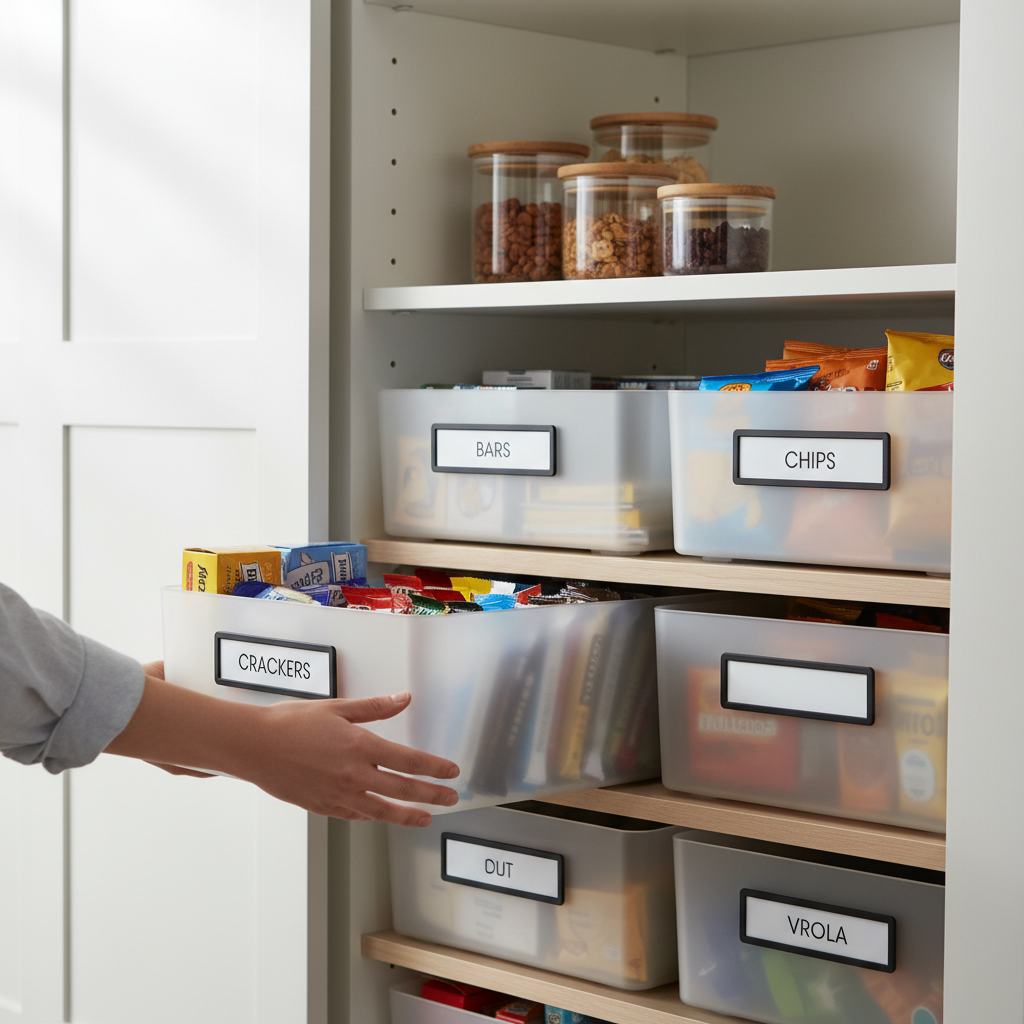
Step-by-step: set it up in one afternoon (without overthinking)
This is the practical sequence that usually works, even if you’re busy and the pantry is already a mess.
- Pull only snacks out, ignore baking supplies and canned goods for now, you’re reducing scope on purpose
- Sort into “daily,” “lunchbox,” “treat,” “backstock,” “open”, don’t over-categorize
- Wipe shelves, crumbs attract pests, and it’s easier to maintain when it starts clean
- Place daily snacks in the prime reach zone, put the most-grabbed items front and center
- Create a backstock lane, top shelf or one side, and commit to not mixing it with daily bins
- Add labels last, label the “home,” not the brand, so the system survives grocery changes
If you want kids to self-serve, keep only a few choices in the low zone, then replenish from backstock weekly. That one habit prevents the “all snacks gone by Tuesday” problem, without turning snacks into a constant negotiation.
Keep it working: a low-effort maintenance rhythm
The best pantry system is the one you can maintain half-asleep on a Monday. Here are routines that hold up in many households.
- Two-minute reset after grocery unload, flatten empty boxes, toss torn cardboard, return loose items to bins
- One weekly front-face, pull bins forward, move older snacks to the front, check for crushed packaging
- Backstock refill day, pick one day a week to refill the kid grab zone, not every day
- “One open bag” rule for certain snacks, if a new bag opens, the old one goes into a container or gets finished first
According to FDA, food labels can include allergen information, so if you transfer snacks into containers and allergies are a concern in your home, consider keeping the original package nearby or labeling key allergen notes. When in doubt, it’s reasonable to ask a healthcare professional for personalized guidance.
Common mistakes that make snacks harder to reach
A few missteps show up again and again, and they’re frustrating because the pantry can look organized while still being annoying to use.
- Over-labeling, if it takes too long to decide where something goes, it won’t get put away
- Storing snacks behind appliances, snacks should be the easiest category to access, not the hardest
- Mixing “healthy” and “treat” snacks without boundaries, people end up digging and knocking things over
- Using bins that are too tall for the shelf, you lose visibility, then you overbuy
- Letting backstock spill forward, the prime reach zone becomes a warehouse shelf
Say it out loud in your house if you need to, the goal is not “perfect pantry,” it’s easy reach with less daily friction. That mindset keeps you from rebuilding the system every season.
Conclusion: make the next snack the easiest one to grab
When how to organize pantry snacks for easy reach becomes your guiding filter, the decisions get simpler, daily snacks live in the prime zone, backstock stays separate, and containers serve the system instead of running it. If you do only one thing today, set up a clear daily grab bin and commit to refilling it from a backstock spot once a week, you’ll feel the difference fast.
If you want a quick next step, take five minutes to empty one shelf, assign it one job, and label that “home,” then stop. Momentum beats a marathon pantry makeover.
Key takeaways
- Prime reach shelves should hold daily snacks, not random overflow
- Zones beat categories, keep it simple so anyone can maintain it
- Backstock stays separate, otherwise easy access disappears
- Maintenance rhythm matters more than matching containers
FAQ
How do I organize pantry snacks for kids without constant fighting?
Give kids a low, clearly defined grab zone with a limited selection, then keep extras in a parent backstock area. The boundary does most of the work, and you avoid daily negotiating over what counts as “okay.”
What’s the best way to store chip bags so they don’t get crushed?
Stand them upright in a deep bin, like files in a drawer, instead of stacking. Dividers help, but even a simple bin that keeps bags vertical usually reduces crushing and mess.
Should I decant snacks into clear containers?
Sometimes, especially for snacks that go stale quickly once opened. For single-serve items, bins often work better than decanting, because the packaging already fits the use case.
How do I organize a deep pantry so snacks don’t disappear in the back?
Use pull-out bins or baskets so the whole category can slide forward. If that’s not possible, keep snacks in shallow bins and avoid placing loose items directly on the shelf where they can drift backward.
How do I separate daily snacks from backstock without extra shelves?
Make one “backstock box” per category and store it high or to one side, even if it’s just a cardboard tray. The physical boundary matters more than the material.
How often should I rotate pantry snacks?
Most households do fine with a quick weekly check, moving older items forward and using up open packages. If you stock a lot at once, add a short midweek glance so expiration dates don’t sneak up.
Is it safe to store snacks near cleaning products?
It’s usually better to keep them separate, because smells and leaks can transfer. If your pantry doubles as storage, consider a designated shelf or a sealed bin for non-food items, and follow product label guidance.
If you’re reorganizing for a busy household and want a more “set it and forget it” approach, start by choosing one snack zone you care about most, like lunchbox items, then build the rest of the pantry around that, it’s the quickest way to get easy access without turning the project into a weekend-long overhaul.