
How to clean ceiling fans without getting dusty comes down to one idea: contain the dust before you disturb it, then wipe in a way that keeps it captured instead of floating around your room.
If you have ever flipped on a fan and watched gray “snow” scatter onto your bed, couch, or freshly mopped floor, you already know why this matters, it is not just gross, it also means you end up cleaning the room twice.
This guide walks through a few low-mess methods (from the classic pillowcase trick to vacuum-first setups), a quick self-check so you pick the right approach for your fan, and a small tool list you can keep in a closet, so you stop putting it off.
Why ceiling fans get so dusty (and why it falls everywhere)
Fan blades act like little shelves, warm air movement plus static electricity can make dust cling, and over time it compacts into a film that breaks loose in chunks when you touch it.
Two details make the mess worse: you wipe too fast (creating airflow and “flicking” debris), or you start dry (turning fine dust into a cloud). If your HVAC return is nearby, it can also pull airborne dust around the room after you disturb it.
According to the U.S. Environmental Protection Agency (EPA), indoor air can contain a mix of particles and pollutants, and reducing dust buildup is one practical step many households use to improve day-to-day indoor cleanliness.
Quick self-check: choose the least-mess method for your situation
Before you grab a rag, take 20 seconds and pick the approach that matches your fan and room, this is where most people either stay clean or end up dusty.
- Light dust, painted blades, no greasy residue: microfiber + pillowcase method usually works.
- Heavy buildup or you see clumps: vacuum with brush attachment first, then wipe.
- Kitchen fan or nicotine residue: damp clean with mild degreaser, dry right after.
- High ceiling or wobbly ladder situation: use an extension duster and vacuum-first, avoid overreaching.
- Allergy or asthma concerns: wear a mask, ventilate, and consider a HEPA vacuum bag or filter.
If your fan has fragile finishes (real wood, high-gloss lacquer, aged paint), test any cleaner on an inconspicuous area and keep moisture minimal.
Tools that keep you clean (and what to skip)
You do not need a specialty kit, but the right two or three items change the whole experience.
What to gather
- Old pillowcase (or two) to trap dust around each blade
- Microfiber cloths (dry and slightly damp options)
- Vacuum with brush attachment for heavy dust
- Step ladder tall enough so your chest is near blade height (no tiptoes)
- Mild dish soap in warm water, or a gentle all-purpose cleaner
- Drop cloth or old sheet if you are dealing with thick buildup
What to skip (most of the time)
- Feather dusters, they tend to redistribute dust
- Very wet rags, moisture can streak finishes or drip into the motor housing
- Strong solvents unless the fan manual explicitly allows them
If you are aiming for how to clean ceiling fans without getting dusty, “containment” beats “scrubbing power” almost every time.
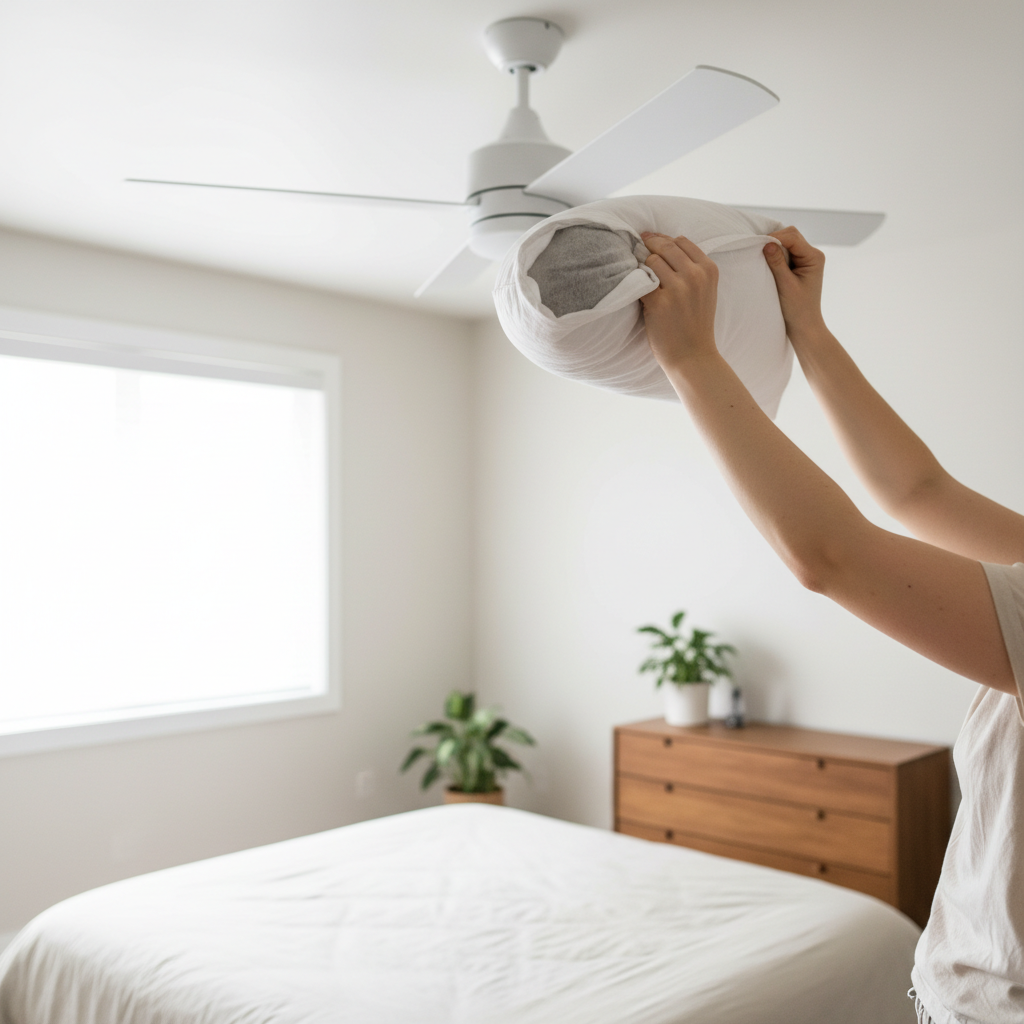
Method 1: The pillowcase trick (fastest, least dust in the air)
This is the crowd favorite because the dust stays inside the fabric instead of dropping onto furniture, it also feels weirdly satisfying.
- Turn the fan off, wait for blades to fully stop, then switch the wall control off so nobody flips it on mid-clean.
- Slide the pillowcase over one blade like you are “sleeving” it.
- With one hand supporting the blade from underneath, pinch the pillowcase around the blade and pull it toward you slowly, dust stays inside.
- Repeat blade by blade, shake the pillowcase outside into a trash bag, then wash it.
Small detail that matters: move slowly and keep the blade supported, pushing up hard can stress brackets, especially on older fans.
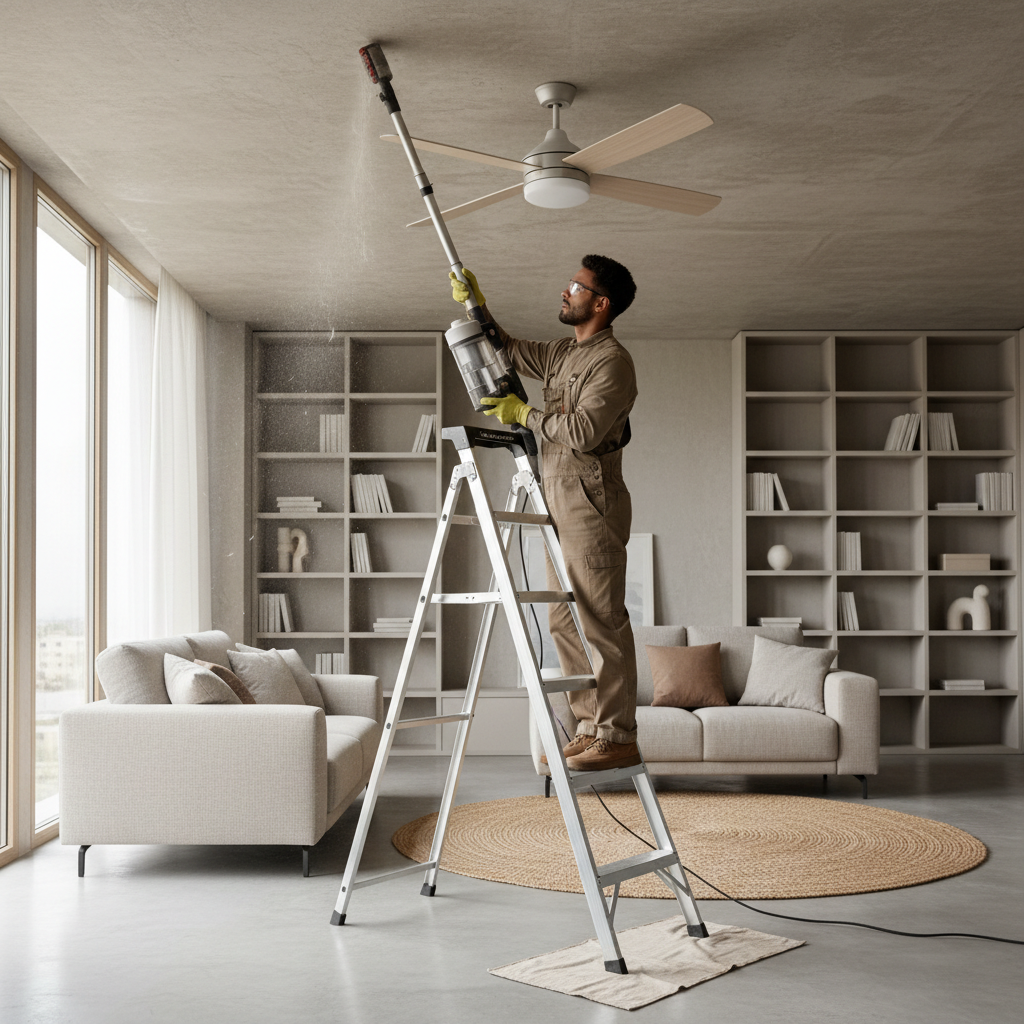
Method 2: Vacuum-first (best for heavy buildup and “dust chunks”)
If you have visible clumps, wiping first can turn into a dust storm. Vacuuming captures the bulk without the “poof.”
- Put a sheet down if the buildup looks thick.
- Use a brush attachment and start on the top side of each blade.
- Work from the blade base outward, short passes, light pressure.
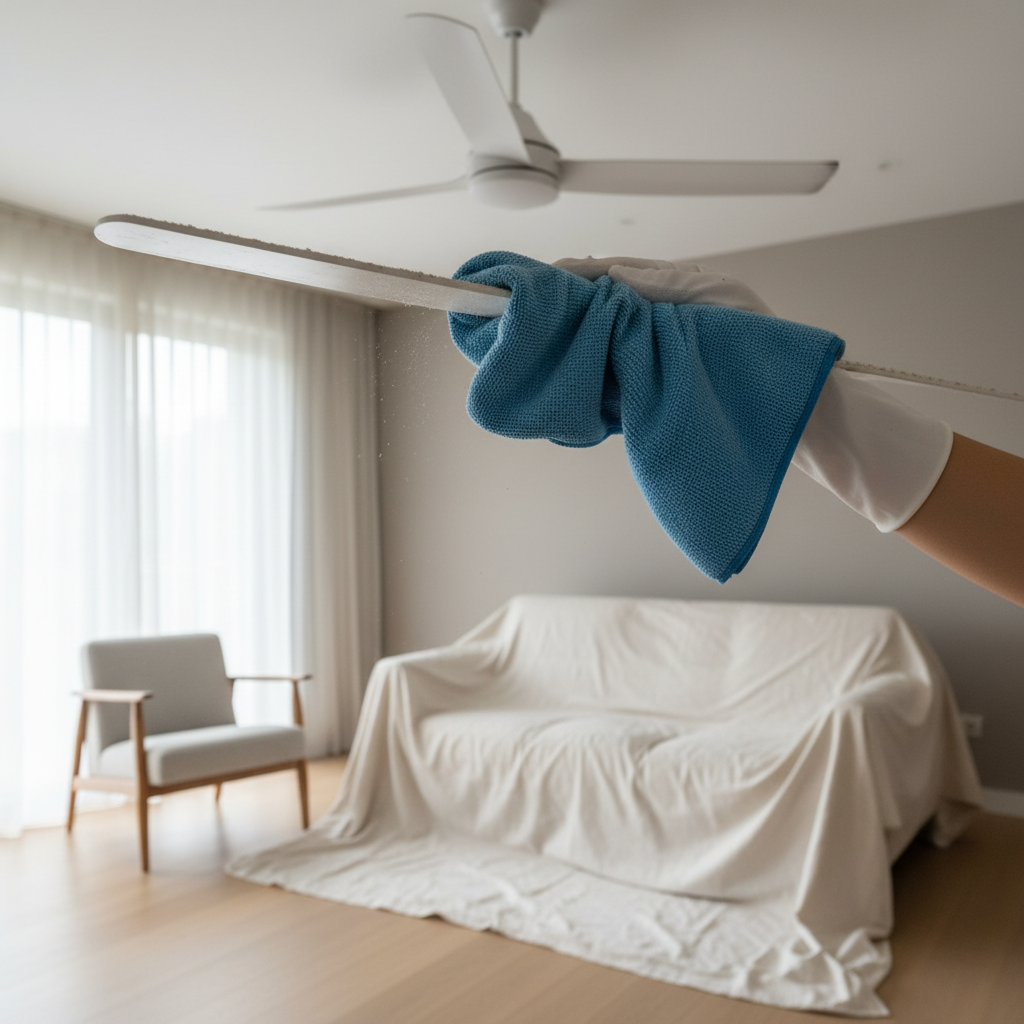
- Follow with a barely damp microfiber cloth to pick up the film.
- Dry with a clean cloth so you do not leave streaks.
Many people land here after trying how to clean ceiling fans without getting dusty and realizing their real issue is years of buildup, not technique.
Method 3: Damp wipe + mild degrease (for kitchen residue)
In kitchens, dust often mixes with cooking oils and turns sticky, a dry cloth just smears it. You want a gentle cleaner and a controlled amount of moisture.
- Mix warm water with a small amount of dish soap, or use a mild all-purpose cleaner.
- Dampen (not soak) a microfiber cloth, wring it out thoroughly.
- Wipe the top and bottom of each blade, then immediately dry.
- For stubborn spots, hold the damp cloth on the area for 10–15 seconds, then wipe again, do not scrape with hard tools.
Keep liquids away from the motor housing and light kit openings, if you see drips forming, your cloth is too wet.
Safety and mess-control details people forget
Most “dust showers” happen because of small setup misses, not because the fan is impossible to clean.
- Ladder placement: keep it on flat flooring, avoid reaching sideways, reposition instead.
- Fan direction switch: make sure it stays off, and wait for blades to stop fully.
- Protect eyes and lungs: if dust is heavy, wearing a mask and glasses can help, especially if you are sensitive.
- Do not bend blades: pushing up or twisting can cause wobble afterward.
- Clean the pull chains and housing: a quick wipe prevents dust from re-settling immediately.
According to CDC guidance on cleaning and ventilation in home settings, reducing dust and using appropriate protection can be sensible for people who react strongly to airborne particles, if you have health concerns, it can be worth asking a clinician what level of exposure is appropriate for you.
Cheat sheet: pick the right approach (table)
If you are deciding in the moment, this quick table usually gets you to the cleanest outcome with the least cleanup after.
| Situation | Best method | Why it stays cleaner |
|---|---|---|
| Light dust, cleaned within 4–8 weeks | Pillowcase + dry microfiber | Dust stays inside fabric, minimal airborne particles |
| Visible clumps, long time since last clean | Vacuum-first + damp wipe | Captures bulk debris before it can fall |
| Kitchen film, sticky residue | Damp wipe with mild soap, dry after | Breaks residue so you do not smear it around |
| Very high ceiling | Extension duster + vacuum where possible | Less ladder movement, fewer accidental bumps |
Practical routine: keep it dust-free with less effort
The easiest way to master how to clean ceiling fans without getting dusty is to avoid “yearly deep clean” mode. A small routine prevents the thick layer that falls everywhere.
- Every 2–4 weeks: pillowcase pass on blades, quick wipe on housing.
- Every 2–3 months: vacuum-first if you notice buildup starting again.
- Season changes: check blade screws for looseness and wipe light globes.
If you run fans daily, you may need the shorter end of that range, homes with pets and carpet also tend to load blades faster.
When to stop and get help (or check the manual)
If the fan wobbles hard, makes grinding noises, or has a loose light kit, cleaning is not the fix, it can even make the issue more obvious once the blades are dust-free.
- Electrical concerns: flickering lights, burning smell, warm switch plates, turn it off and consider an electrician.
- High ceilings or unsafe access: hiring a handyman can be cheaper than an injury.
- Unknown finish or antique fan: consult the manufacturer instructions if available, or test any cleaner carefully.
According to the Consumer Product Safety Commission (CPSC), ladder safety and proper use matter for preventing home injuries, if your setup feels sketchy, it usually is.
Conclusion: a cleaner fan without the dust shower
Most of the mess comes from letting dust fall freely, not from the fan itself, once you trap it with a pillowcase or capture it with a vacuum-first pass, the rest is just a controlled wipe and a quick dry.
Pick one method that matches your buildup level, do it once, then set a simple cadence so it never gets bad again. If you want a low-effort start, grab an old pillowcase and a microfiber cloth and clean one blade, you will know in 30 seconds if the approach works for your fan and your patience.
Key takeaways
- Containment beats speed: slow, supported wipes keep dust from dropping.
- Heavy dust needs vacuum-first: wiping clumps creates airborne mess.
- Kitchen residue needs mild degrease: otherwise you smear film.
- Safety is part of clean: stable ladder, no overreaching, keep moisture away from the motor.
FAQ
How often should I clean ceiling fan blades to avoid dust falling?
Many homes do fine with every 2–4 weeks for a quick pass, if you wait months, the dust layer thickens and falls in clumps, which makes “dust-free” cleaning harder.
Does using a dryer sheet prevent dust from coming back?
It can reduce static a bit on some finishes, but it is not a magic coating, use it as a final light wipe only, and avoid it if the blade finish seems sensitive or streak-prone.
What is the cleanest way to handle dust on textured or ornate blades?
Start with vacuum-first using a soft brush so you pull dust out of grooves, then follow with a damp microfiber cloth, textured blades tend to hold onto dry dust more stubbornly.
Can I clean ceiling fan blades with a wet wipe?
Sometimes, but check ingredients and avoid overly wet wipes that drip, if the wipe leaves residue, follow with a clean damp cloth and then dry to prevent streaks.
Why does my fan wobble after I clean it?
Often it is a blade that got slightly bent or a screw that loosened, gently check blade screws and brackets, and avoid pressing upward during cleaning, if wobble is severe, consider professional help.
Is it okay to turn the fan on to “blow off” dust?
It usually makes the room dusty and spreads particles onto walls and furniture, if you are trying to keep cleanup small, containment methods work better.
What if I have allergies and cleaning makes symptoms worse?
Wearing a mask, ventilating, and vacuuming with a HEPA setup may help, if symptoms are significant or persistent, it is reasonable to consult a clinician for personalized guidance.
If you are already doing regular cleaning but still fighting the dust cloud, it may help to upgrade one piece of the process, like switching to a vacuum-first pass or keeping a dedicated pillowcase and microfiber cloth nearby, the “best” method is usually the one you will actually repeat.