
Best non slip rugs for bathrooms are the ones that stay put on wet floors, dry fast, and don’t turn into a mildew magnet after a few washes. If you’ve ever stepped out of the shower and felt the rug slide, you already know this isn’t just a “decor problem”, it’s a safety and maintenance problem.
What makes it tricky is that “non-slip” gets used loosely in product listings, and the same rug can behave totally differently on tile vs. sealed concrete vs. luxury vinyl. Add kids, older adults, or a bathroom that never fully dries out, and the wrong choice becomes obvious fast.
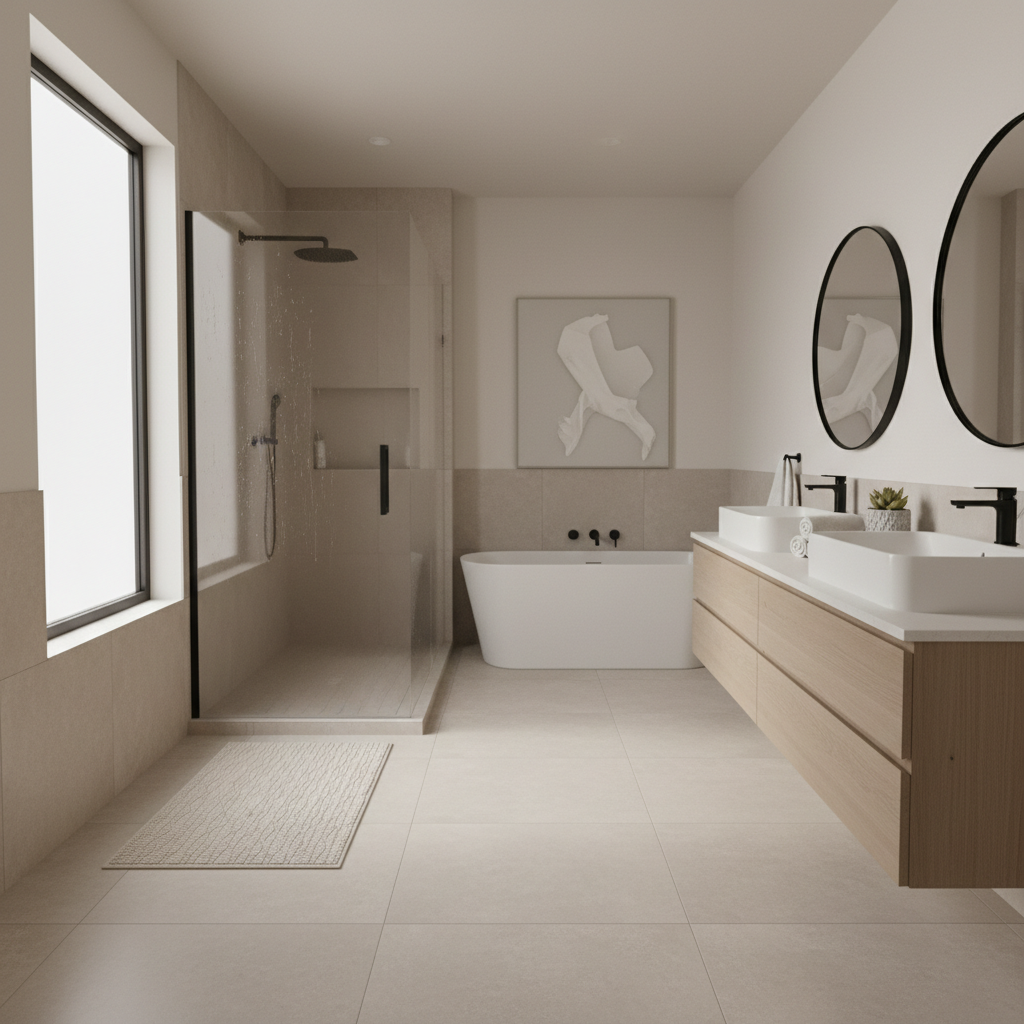
This guide breaks down what actually matters: backing materials, rug fibers, sizing, and which features are worth paying for. You’ll also get a quick checklist to match a rug to your bathroom setup, plus care tips so it keeps its grip longer than a month.
What “Non-Slip” Really Means in a Bathroom
In bathrooms, “non-slip” usually refers to the rug’s backing creating friction against the floor. The problem is that friction changes with moisture, floor texture, and residue from cleaners or fabric softeners.
According to the U.S. Consumer Product Safety Commission (CPSC), slips and falls are a common cause of injuries at home, and bathrooms are a frequent location for those incidents. A rug won’t eliminate risk, but a stable one can reduce a very specific hazard: sudden lateral movement when you shift weight.
Two practical takeaways many shoppers miss:
- “Non-slip” is not the same as “no movement ever.” Even good backings can creep if the floor is dusty, waxy, or constantly wet.
- Backing longevity matters. Some materials lose grip after repeated hot washing or high-heat drying.
Common Backing Types (and Which Floors They Like)
If you only remember one thing, make it this: backing material matters more than pile height. Here’s how the common options usually behave in real bathrooms.
TPR (Thermoplastic Rubber)
TPR tends to be the most reliable “everyday” choice for tile and vinyl because it grips without feeling sticky, and it often survives washing better than cheaper latex dots.
- Good for: tile, LVP/LVT, sealed wood (with caution)
- Watch for: heat damage if you dry on high
Natural Rubber
Natural rubber can grip extremely well, but it may degrade faster with harsh cleaners or high humidity in some setups, and it can discolor certain finishes.
- Good for: tile, textured floors
- Watch for: odor sensitivity, staining risk on delicate finishes
Latex Dots or Sprayed Latex
This is common in budget rugs. It can work at first, then starts flaking or smoothing out after repeated washes, especially if fabric softener enters the picture.
- Good for: guest baths, light use
- Watch for: shedding, reduced grip over time
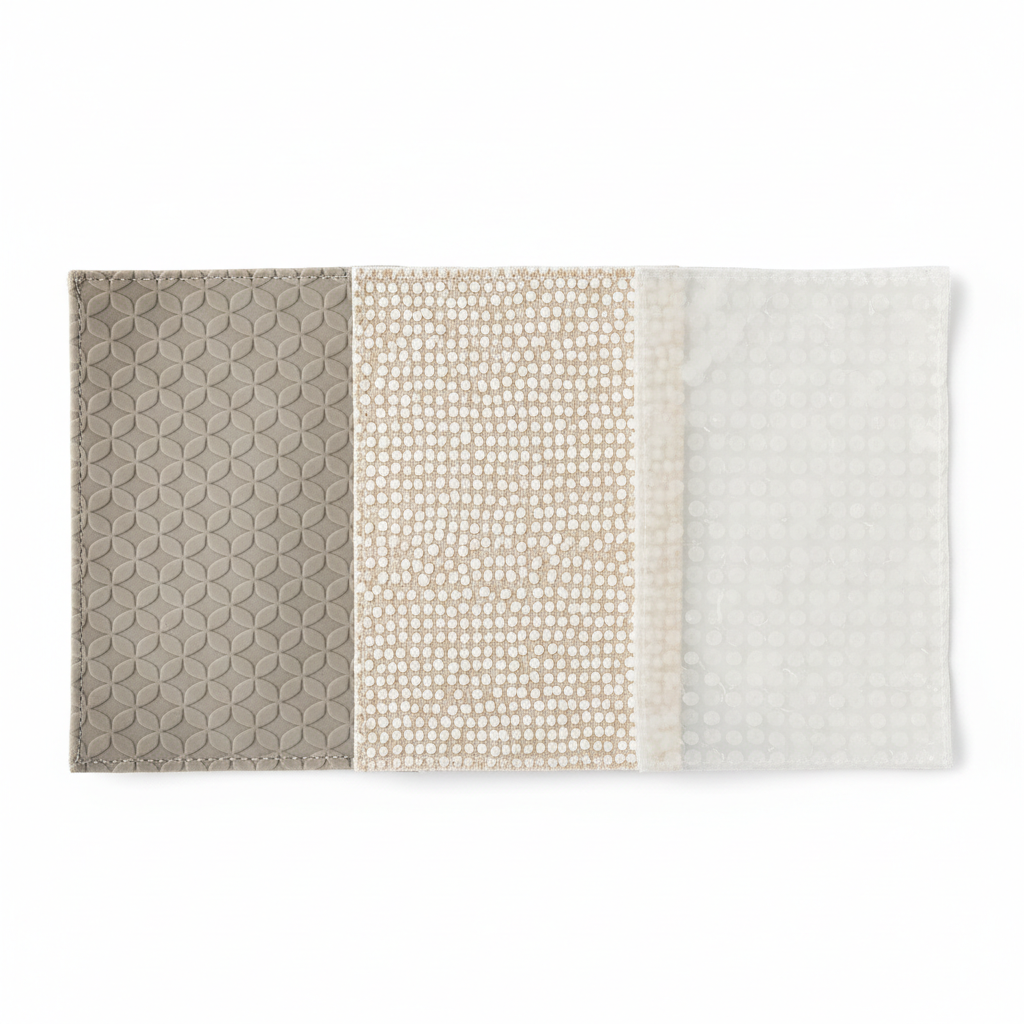
Micro-suction or “Grip” Patterns
These can perform well on smooth tile, but they’re picky: soap film and dust reduce performance fast. If you love this style, plan to clean the floor under it more often.
Material and Construction: Fast-Drying Beats Fluffy in Most Bathrooms
Many people shop by softness first. Comfort matters, but bathrooms punish slow-drying textiles. If your rug stays damp, it can start smelling “off” and lose that clean feel quickly.
Here’s what typically works better:
- Microfiber: Often dries faster, feels soft, and tends to wash well. Quality varies a lot.
- Cotton: Comfortable and breathable, but can stay wet longer and may bunch up unless the backing is strong.
- Memory foam: Feels great underfoot, but many versions dry slowly and the foam layer can trap moisture.
- Diatomaceous earth “stone” mats: Not a rug, but worth mentioning. They dry fast, can feel cold/hard, and need maintenance to avoid surface buildup.
If you’re aiming for the best non slip rugs for bathrooms in a household that showers back-to-back, prioritize quick-dry pile and machine washability over extra thickness.
Quick Comparison Table: Choosing the Right Rug for Your Bathroom
Use this as a fast filter before you get pulled into color and pattern choices.
| Bathroom situation | What to prioritize | What to avoid |
|---|---|---|
| Kids splashing, frequent puddles | TPR backing, quick-dry microfiber, easy wash | Thick foam rugs that stay damp |
| Small bathroom, rug near toilet | Lower pile, easy clean, stain resistance | Shag or high pile that traps debris |
| Older adult mobility concerns | Strong grip backing, larger coverage, low edge profile | Curled edges, lightweight rugs that shift |
| Radiant floor heating | Heat-safe backing, breathable materials | Backings that warp under heat (check care label) |
| Luxury vinyl plank (LVP/LVT) | Non-staining backing, manufacturer-friendly materials | Rubber that may discolor (test first) |
A Simple Self-Check: Which Rug Setup Fits You?
If you’re unsure what to buy, answer these quickly. Your “yes” answers point to the features you should stop compromising on.
- Do you ever feel the rug shift when stepping out of the shower?
- Does your bathroom stay humid for hours after use?
- Do you wash bath rugs weekly, or do they go longer and start to smell?
- Is your floor very smooth (polished tile, sealed concrete)?
- Does anyone in the home have balance issues, or do you want a safer setup for guests?
If you answered “yes” to two or more, you’ll usually be happier spending more attention on backing quality, size, and drying speed than on loft and fluff.
How to Pick the Best Size and Placement (This Part Prevents Most “Slip” Moments)
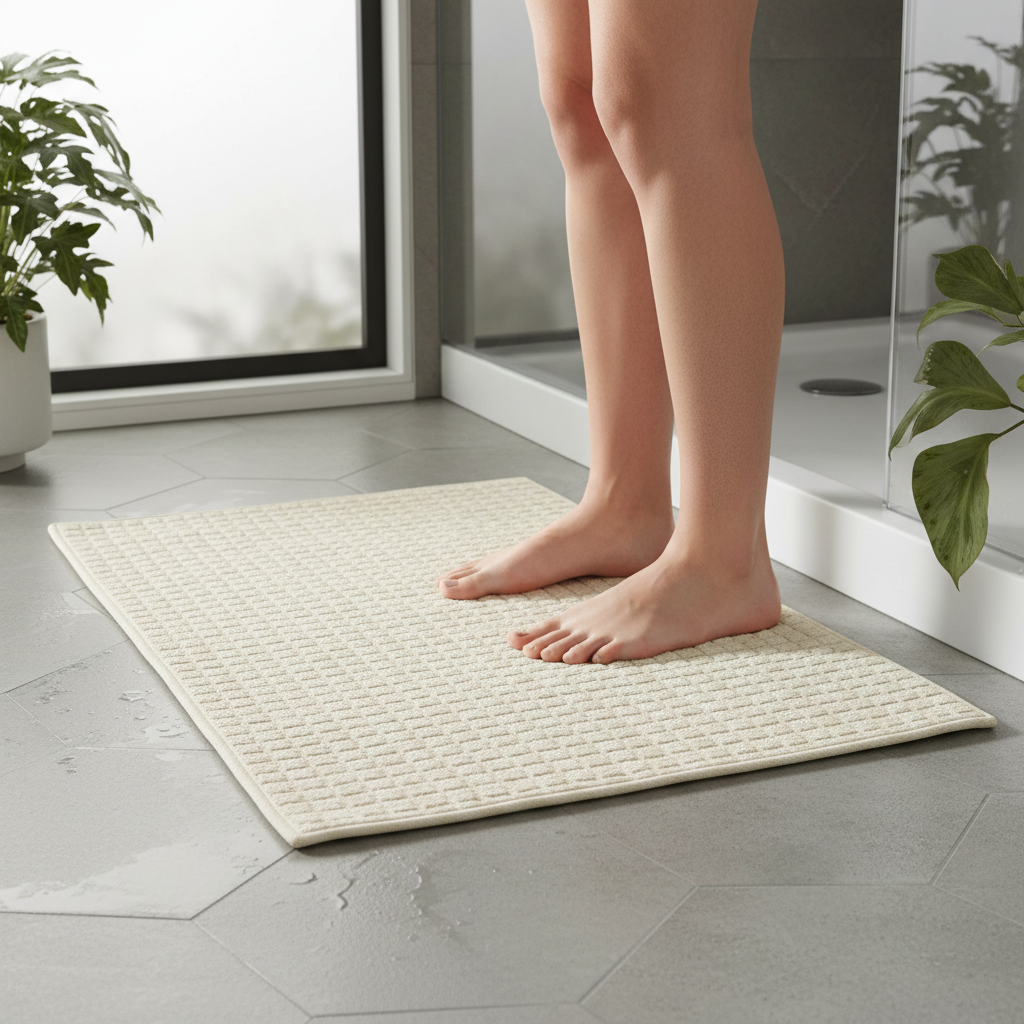
A rug can have excellent grip and still be a bad choice if it’s too small or placed where you “miss” it. Many slip moments happen at the edge, when your heel lands half on rug, half on tile.
- Outside the shower/tub: pick a width that covers your natural step-out path, not just the doorway width.
- Double vanities: a longer runner-style rug often feels steadier than two small mats that drift apart.
- Toilet area: consider whether you actually want fabric there; if yes, keep pile low and wash often.
One more small thing that matters: a rug with a bound edge that lays flat tends to stay flatter after washes, reducing tripping risk.
Care Tips That Keep Non-Slip Backing Working Longer
Even the best non slip rugs for bathrooms can lose performance if you accidentally “condition” the backing into being slick. A few habits help.
- Skip fabric softener when you can. It often leaves residues that reduce friction.
- Use low heat or air dry for rubbery backings; high heat may cause hardening, cracking, or warping.
- Clean the floor under the rug weekly in humid bathrooms. Soap film can act like lubricant.
- Rotate the rug if it always gets soaked on one side, uneven wear shows up as curling edges.
If you notice a “grippy” backing turning shiny and smooth, that’s usually your signal to replace the rug rather than trying to rescue it with hacks.
Mistakes to Avoid (Because They Look Smart Until They Don’t)
Some advice floats around that can backfire, especially on certain floor finishes.
- Adding a separate rug pad without checking compatibility: some pads can stain vinyl or finished wood. Test in a corner first, and follow flooring maker guidance.
- Buying super-plush rugs for a damp bathroom: they feel luxurious for a week, then dry slowly and can smell musty.
- Assuming “heavier” equals safer: weight helps, but backing and edge construction matter more.
- Ignoring return policies: grip performance is hard to predict online; it’s reasonable to prioritize easy returns.
When to Consider Extra Safety Help
If you’re buying for an older adult, someone recovering from injury, or anyone who feels unsteady, a rug is only one piece of the plan. According to the Centers for Disease Control and Prevention (CDC), falls are a serious health concern for older adults, and home setup choices can matter.
In those cases, it may help to combine a stable rug with other measures such as grab bars, better lighting, and non-slip shower/tub surfaces. If you’re unsure what fits your situation, it’s reasonable to ask a qualified contractor or occupational therapist for guidance, especially when mobility is part of the picture.
Conclusion: What I’d Prioritize When Buying
If you want a practical win, choose a rug with TPR or quality rubber-style backing, a quick-drying pile, and a size that actually catches your step. Then keep the floor under it clean and avoid high-heat drying, those two habits do more than people expect.
If you’re replacing a rug that already slid on you, don’t just “buy the same thing but nicer color.” Treat it like a small safety upgrade, and shop for grip first, comfort second.
Key takeaways:
- Backing quality usually drives real non-slip performance.
- Fast-drying materials reduce odor and upkeep in humid bathrooms.
- Right size and flat edges prevent the half-on, half-off step.
If you’re ready to buy, pick two or three candidates, confirm care instructions, and choose the one that fits your floor type and your cleaning routine, not just your style board.