
low maintenance indoor plants for home decor are the sweet spot if you want a home that feels lived-in and styled, without turning plant care into a second job. The trick is choosing plants that forgive missed waterings, tolerate average indoor light, and still look intentional on a shelf, table, or entry console.
Most “easy plants” lists skip the part people actually struggle with: your light, your schedule, and your space. A plant can be “low effort” in a bright apartment and a constant headache in a dim room. Once you match the plant to your conditions, maintenance drops fast.
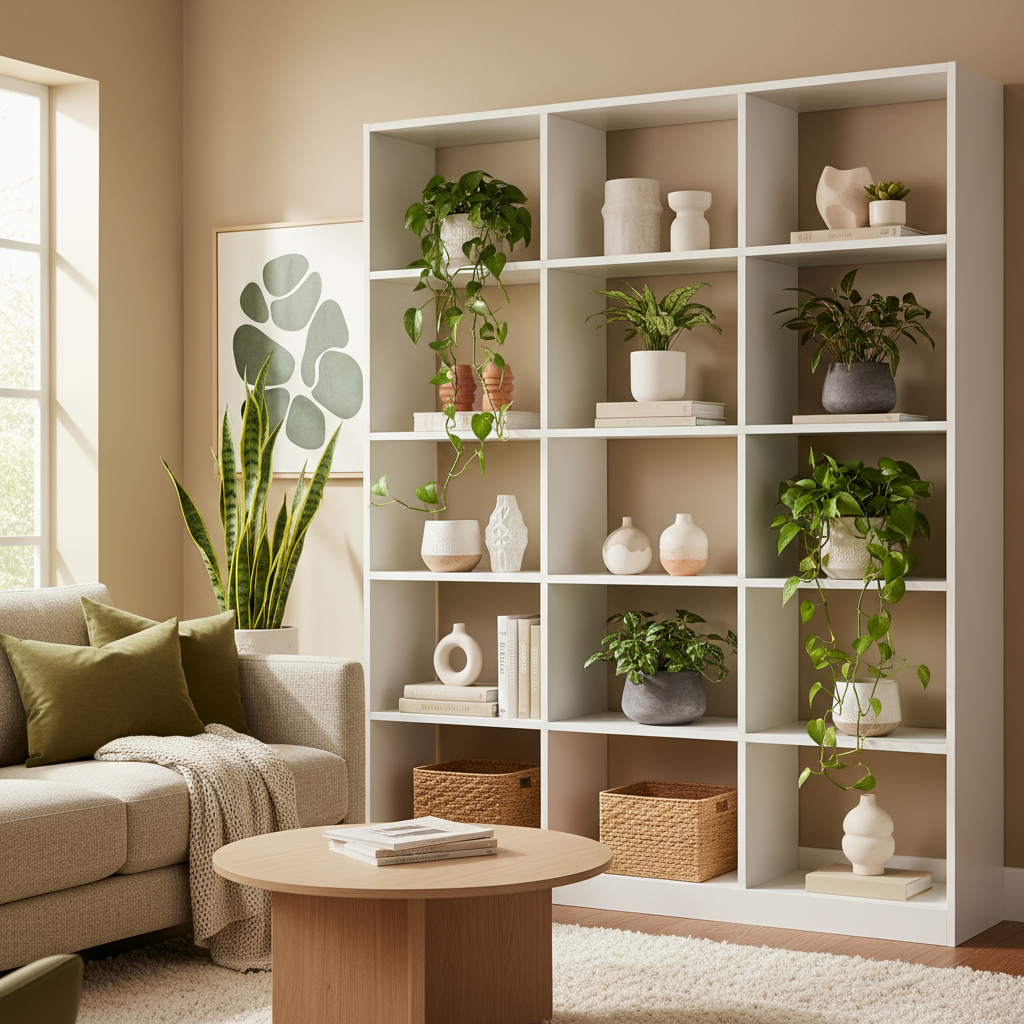
Below is a practical shortlist of reliable plants, plus a quick way to “audit” your room and a care routine that stays simple. You’ll also see where people overdo it, because in many homes the fastest way to kill a plant is too much love.
What “low maintenance” actually means for indoor decor
In real homes, low maintenance usually comes down to four traits: slow growth, drought tolerance, flexible light needs, and resilience to indoor humidity swings. That’s why succulents can be low maintenance in a bright window, while pothos tends to win in regular, medium-light rooms.
It also means the plant looks good even when it’s not “perfect.” A few curling leaves on a peace lily look dramatic, but a slightly dry snake plant still looks sculptural. For decor, that visual stability matters.
- Light-flexible: handles medium light, sometimes low light, without immediate decline
- Water-forgiving: tolerates dry soil better than constant moisture
- Structure-forward: keeps a clean silhouette that reads “styled” from across the room
- Low mess: minimal leaf drop, minimal sticky sap, minimal frequent pruning
A quick self-check: match plants to your space before you buy
If you want low maintenance indoor plants for home decor, start with your conditions, not the plant photo. Two minutes of honesty here saves months of frustration.
Light check (simple, not scientific)
- Bright: you can read comfortably near the window most of the day
- Medium: the room feels bright, but the corner spot is noticeably softer
- Low: you rely on lamps during the day, or the plant sits far from windows
Schedule check
- If you travel or forget watering, prioritize snake plant, ZZ plant, pothos.
- If you enjoy weekly routines, you can add peace lily or a rubber plant.
Pet and kid check
Some common houseplants may cause irritation or illness if chewed. According to ASPCA, many popular indoor plants have varying toxicity for cats and dogs, so it’s worth checking your exact species if pets roam freely. When in doubt, place plants out of reach or ask a veterinarian.
The best low-maintenance plants that still look like decor
These are the “workhorse” options that tend to look intentional in American homes: clean lines, bold leaves, and easy placement in modern planters. You’ll notice a theme: they’re not fragile, and they don’t demand constant attention.
- Snake Plant (Sansevieria/Dracaena trifasciata): upright, architectural, tolerates low light, prefers drying out between waterings
- ZZ Plant (Zamioculcas zamiifolia): glossy leaves, slow-growing, great for medium to lower light, hates overwatering
- Pothos (Epipremnum aureum): easy trailing vine for shelves, handles medium light, bounces back after missed watering
- Heartleaf Philodendron: similar to pothos but often looks a bit more “tailored,” good for hanging planters
- Rubber Plant (Ficus elastica): bold statement leaves, likes bright indirect light, watering stays moderate
- Spider Plant: classic, forgiving, works well on stands, produces “babies” you can propagate
- Peace Lily: more water-sensitive than the rest, but it communicates clearly by drooping, good for medium light
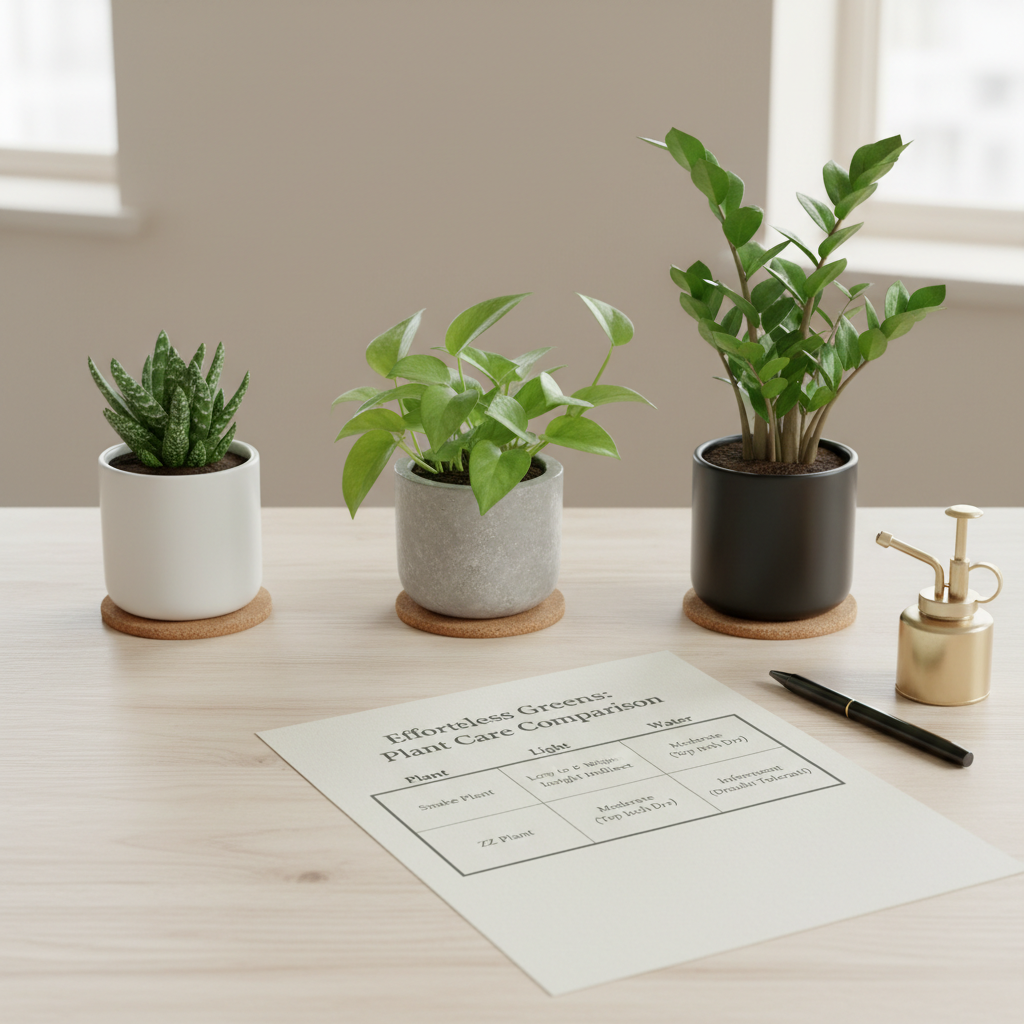
Cheat-sheet table: pick by light, water, and styling use
If you’re decorating as much as you’re “planting,” choose based on where the pot will live. This table helps you avoid the classic mismatch: a sun-loving plant stuck in a dim hallway.
| Plant | Light tolerance | Watering style | Best decor placement |
|---|---|---|---|
| Snake Plant | Low to bright indirect | Let soil dry out fully | Floor pot, entryway, bedroom corner |
| ZZ Plant | Low to medium | Dry out most of the way | Side table, office, darker living rooms |
| Pothos | Low to medium (best in medium) | Water when top inch dries | Shelves, bookcases, hanging planters |
| Heartleaf Philodendron | Low to medium | Water when partly dry | Hanging basket, mantle, high ledge |
| Rubber Plant | Medium to bright indirect | Water when top 2 inches dry | Statement corner near window |
| Spider Plant | Medium to bright indirect | Keep lightly moist, not soggy | Plant stand, kitchen window, kids’ room (out of reach) |
| Peace Lily | Low to medium | More regular watering | Bathroom (if bright), dining area centerpiece |
Simple care routine that keeps plants alive (without micromanaging)
Most people fail with low maintenance indoor plants for home decor because they water on a schedule, not based on soil. A “Sunday watering habit” feels responsible, but it often causes root rot in tougher plants like ZZ and snake plant.
Use the 3-step check
- Finger test: push a finger 1–2 inches into soil; if it’s damp, wait
- Pot weight: learn the feel of a freshly watered pot versus a dry one
- Leaf signals: wrinkling or dullness often means thirst, yellow mushy leaves often means too much water
Keep the setup boring (that’s a compliment)
- Pots with drainage holes make “low maintenance” realistic.
- A saucer or cachepot is fine, but don’t let the inner pot sit in water.
- Choose a well-draining mix for most houseplants; heavy soil stays wet too long.
According to The Royal Horticultural Society (RHS), overwatering is a common cause of houseplant decline, especially when drainage is poor. That lines up with what you see at home: many plants don’t die from neglect, they die from consistently wet roots.
How to style plants so they read as “home decor,” not clutter
A healthy plant helps, but placement does a lot of the visual work. The goal is to create repeatable shapes and heights, so the greenery looks designed rather than scattered.
- Go tall in corners: snake plant or rubber plant in a floor pot softens empty angles
- Go trailing up high: pothos on shelves draws the eye and hides awkward lines
- Group in threes: mix one tall, one medium, one small plant for an easy vignette
- Match pot finishes: keep to 1–2 materials (matte ceramic, terracotta, woven basket) for calmer styling
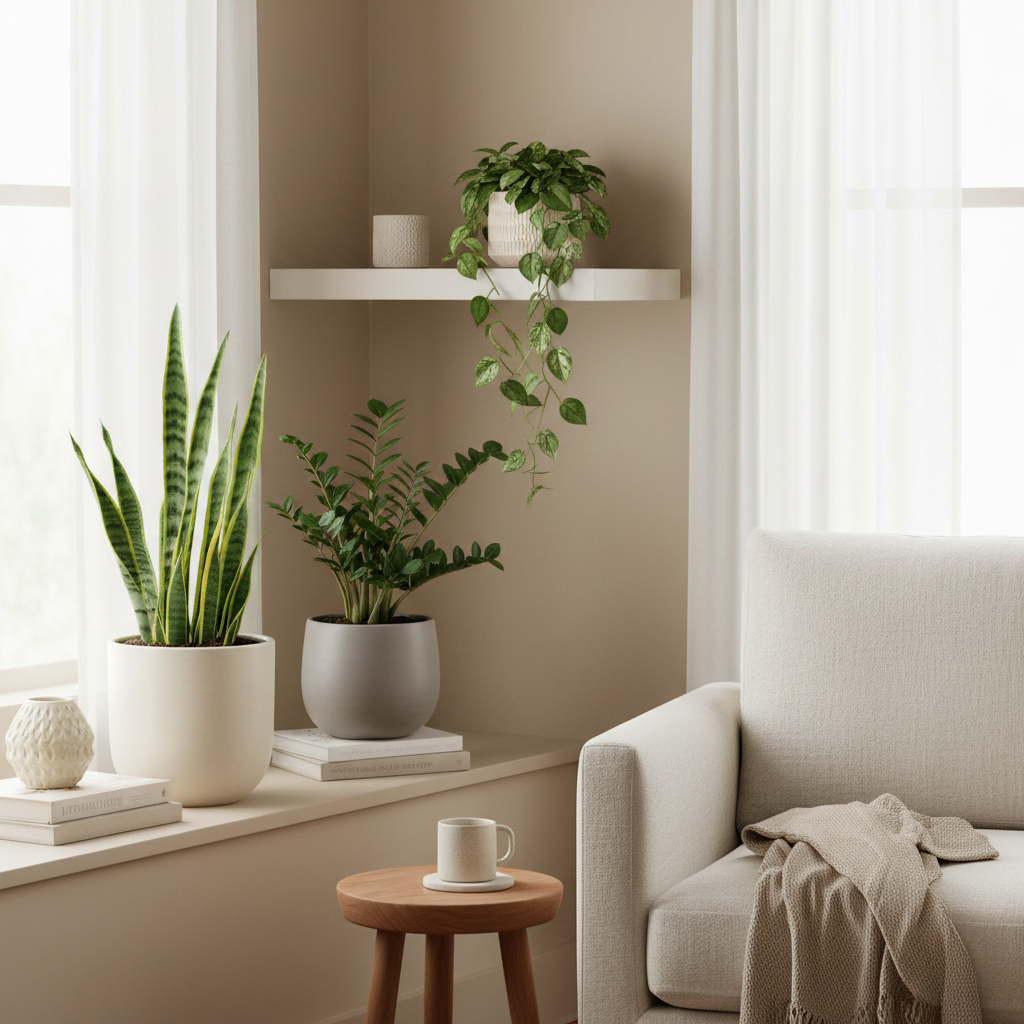
Key takeaway: repeat one plant type across rooms (for example, pothos in multiple spots) and vary only the container size, it looks cohesive and cuts down on care complexity.
Common mistakes that make “easy plants” feel hard
These are the patterns that show up again and again, even among people who swear they “just can’t keep plants alive.” Usually, the plant choice was fine, but the environment or routine fought it.
- No drainage: decorative pots without drainage turn small watering mistakes into bigger ones
- Low light + lots of water: a reliable recipe for root issues and fungus gnats
- Using leaf shine products: often unnecessary, and sometimes interferes with leaf pores; a damp cloth works
- Moving plants constantly: plants adapt to a spot; frequent changes can slow growth and cause leaf drop
- Over-fertilizing: more fertilizer rarely fixes low light, and can burn roots
When it’s worth getting extra help (or changing the plan)
If you see persistent pests, recurring moldy soil, or a plant declining even after you adjust watering and light, it may be time to ask a local nursery for a quick diagnosis. Bringing a photo of the plant and the window direction helps more than you’d think.
If your home is very low light, a small grow light can be a practical decor tool rather than a “plant hobby” purchase. Many modern options look like simple accent lighting. If you have allergies or respiratory concerns, it can be smart to consult a healthcare professional about indoor air quality and humidity choices, since plant soil and mold can be a factor in some situations.
Conclusion: a low-effort plant plan that still looks intentional
Low maintenance indoor plants for home decor work best when you pick a few forgiving species, place them where the light actually supports them, and keep watering tied to soil dryness rather than the calendar. That approach feels almost too simple, but it’s the difference between “plants that survive” and “plants that quietly elevate the room.”
If you want an easy next step, choose one upright plant for a corner and one trailing plant for a shelf, then commit to checking the soil once a week instead of automatically watering. That small habit tends to carry the whole setup.
FAQ
- What are the best low maintenance indoor plants for apartments with low light?
Snake plants and ZZ plants usually tolerate low light better than most, and pothos can work if you accept slower growth. The main adjustment is less frequent watering in low light. - How often should I water “easy” indoor plants?
It varies by light, pot size, and season, so a fixed schedule often backfires. Check soil moisture first, and water only when the top layer dries to the depth that fits your plant type. - Which plants look the most modern for home decor?
Snake plant, rubber plant, and ZZ plant read especially modern because of their bold leaf shapes and clean lines. Pair them with matte neutral planters for a more intentional look. - Are succulents always low maintenance indoors?
Not always. Many succulents need very bright light to stay compact and healthy, so they can struggle in typical indoor corners. They’re easiest when they live right by a bright window. - What’s the easiest trailing plant for shelves?
Pothos is a common winner because it tolerates missed waterings and average indoor conditions. Heartleaf philodendron is similarly forgiving and often looks slightly more uniform. - How do I stop fungus gnats in houseplants?
Gnats often show up when soil stays wet. Letting the top layer dry more between waterings, improving drainage, and using yellow sticky traps usually helps; persistent infestations may need targeted treatment advice from a nursery. - What indoor plants are safer around pets?
Safety depends on the exact species and the pet’s habits. According to ASPCA, many common houseplants have some level of toxicity, so check your plant’s name carefully and ask a veterinarian if your pet chews greenery.
If you’re trying to upgrade your space without adding another ongoing chore, pick two or three plants from the table, buy pots with drainage, and set them up like decor on day one. If you’d rather not guess, a local nursery can usually recommend options based on your window direction and how often you’re realistically home.