
Craft room organization ideas on budget usually come down to two things: giving every tool a “home,” and making that home easy to reach when you’re mid-project. You don’t need matching containers or a full remodel to get there, you need a plan that fits your space and how you craft.
If your room feels messy even after you tidy, it’s often because storage doesn’t match the supplies. Paper gets bent, beads spill, vinyl rolls wander, and suddenly every surface becomes “temporary storage.” This is fixable, and it can be done with inexpensive basics.
Below you’ll find practical setups for small rooms, closets, and spare bedrooms, plus a quick self-check, a low-cost shopping list, and a few DIY tricks that look nicer than they cost.
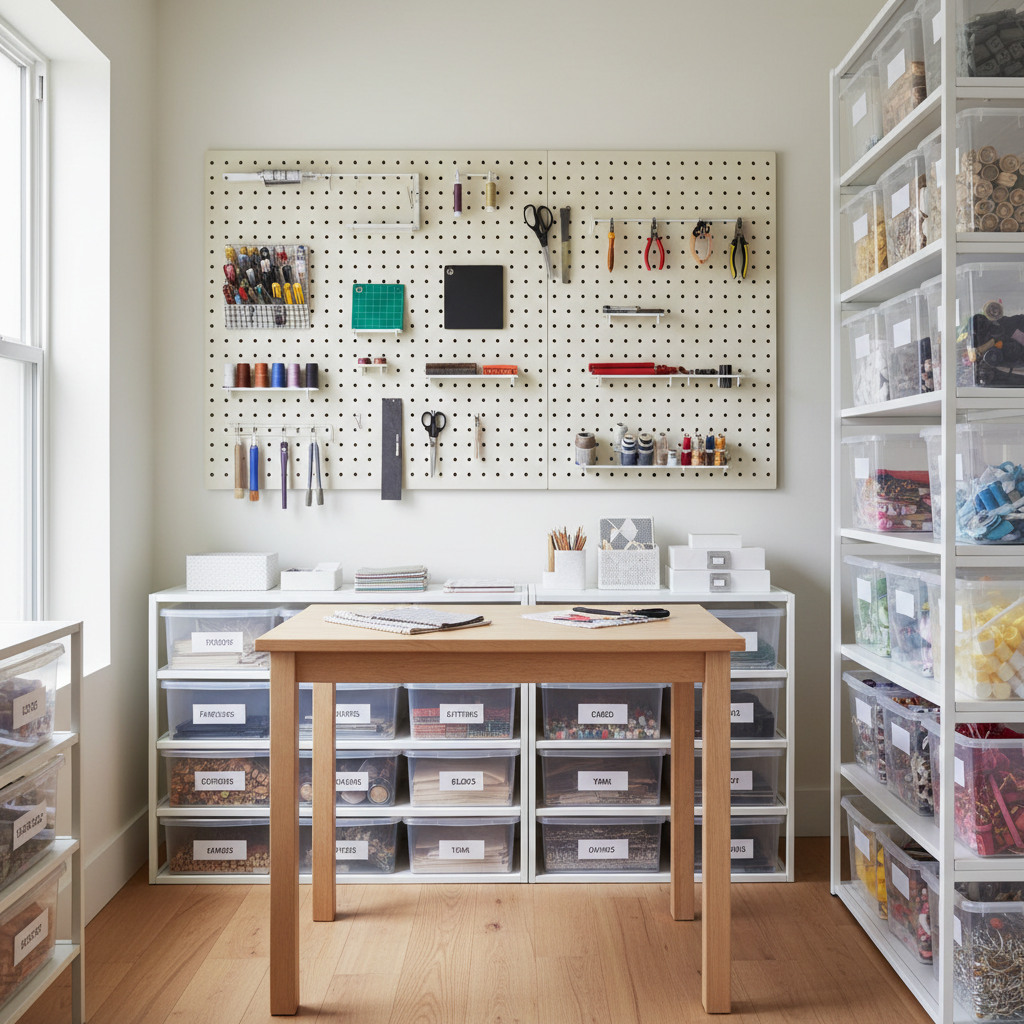
Start with a realistic reset (without making a bigger mess)
The fastest way to waste a weekend is pulling everything out, then realizing you don’t have a sorting system. Keep it simple: sort by how you use items, not by what they are “supposed” to be.
- Active supplies: things you use weekly, keep within arm’s reach of your main workspace.
- Project supplies: items tied to ongoing projects, store together so you can resume quickly.
- Backstock: extras, seasonal materials, bulk packs, store higher or farther away.
- Rare-use tools: specialty punches, large cutters, store in a labeled bin or drawer.
According to OSHA, good housekeeping helps reduce trip and slip hazards in work areas, which applies to craft rooms too when floors collect boxes, cords, and totes. If you often craft with kids or pets nearby, keeping walkways clear is not just “nice,” it’s smart.
Budget-friendly zones that make your room feel bigger
Zones sound fancy, but it’s really about reducing “walking your stuff around.” Many craft spaces work best with 3–5 zones, even if you only have one desk.
Common craft room zones
- Create zone: your primary table, cutting mat, task light, current tools.
- Prep zone: paper trimmer, scoring board, measuring tools, adhesives.
- Dry/cure zone: a shelf or tray for paint, glue, resin items that need time.
- Pack/ship zone: if you sell, keep mailers, labels, tape together.
- Overflow zone: one tote or one shelf, and only one, for “I’ll decide later.”
Here’s the key point: each zone gets a container limit. When the container is full, something has to move out, that’s how budget organization stays stable without constant re-buying.
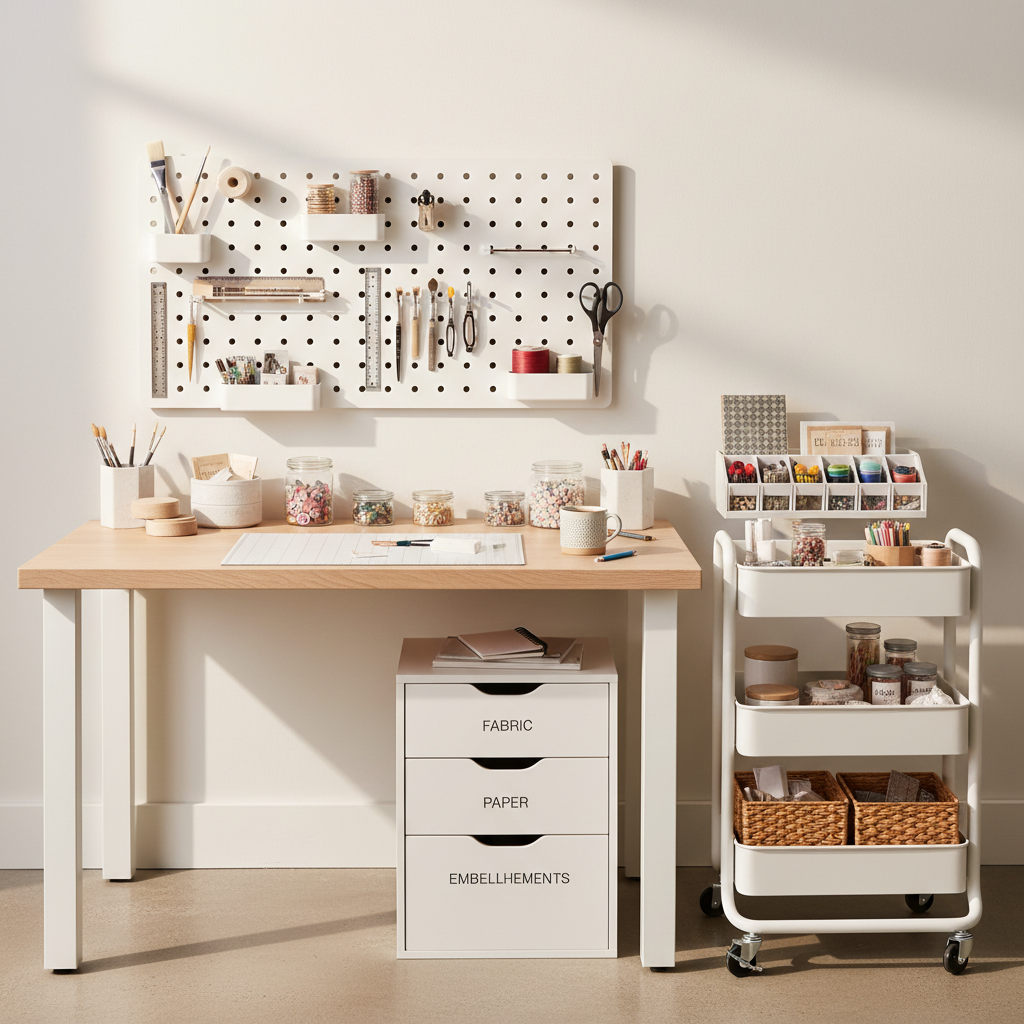
What to buy (and what to skip) when organizing on a budget
Buying containers without measuring your shelves is the classic mistake. Before you spend, measure three things: shelf depth, shelf height, and the widest “awkward item” you must store (12x12 paper, cutting machine, yarn skeins, vinyl rolls).
Best low-cost basics that fit most crafts:
- Clear bins with lids: see-through saves time, lids reduce dust.
- Shoebox-size bins: ideal for ribbon, stamps, small tools, minis.
- Drawer units: great for beads, notions, Cricut tools, pens.
- Magazine files: store cardstock, vinyl sheets, stencils upright.
- Over-the-door organizers: perfect for adhesives, paints, thread spools.
- Label maker or masking tape + marker: cheap labeling beats “pretty” bins.
Usually not worth it on a tight budget:
- Custom built-ins before you know your workflow.
- Matching container sets that waste space because sizes don’t fit your shelves.
- Open baskets for tiny supplies, they look cute, then everything disappears.
DIY storage ideas that look good but cost little
Craft room organization ideas on budget often work best when you reuse what already fits your materials. The “best” storage is the one you’ll actually keep using.
Simple DIYs that hold up
- Cardboard box drawer dividers: cut to fit, wrap with contact paper for durability.
- Mason jar or pasta jar sorting: buttons, sequins, glitter, keep lids tight to avoid spills.
- Foam board paper rack: a lightweight vertical sorter for 12x12 paper, if you measure carefully.
- Tension rod under a shelf: hang spray bottles, small ribbons, or works-in-progress bags.
- Binder + sheet protectors: store stamps, stencils, vinyl scraps, or sticker sheets.
One small upgrade that changes everything: add “grab handles” to bins with ribbon or cheap drawer pulls, so you stop yanking containers off shelves and creating mini-avalanches.
A quick self-check: why your craft room keeps re-cluttering
If your space keeps sliding back into chaos, it’s rarely laziness. It’s usually a mismatch between storage and behavior. Run through this checklist and circle what feels true.
- You can’t put things away in under 60 seconds (too many lids, too many steps).
- Frequently used tools aren’t visible, so they land on the table “for now.”
- Scraps have no clear rule, so they multiply.
- Projects don’t have containers, so pieces migrate across the room.
- Your labeling is vague (“misc”), so you avoid putting items back.
If you checked 2–3 items, you don’t need more storage, you need fewer decisions. Tighten categories, simplify access, and give scraps a policy.
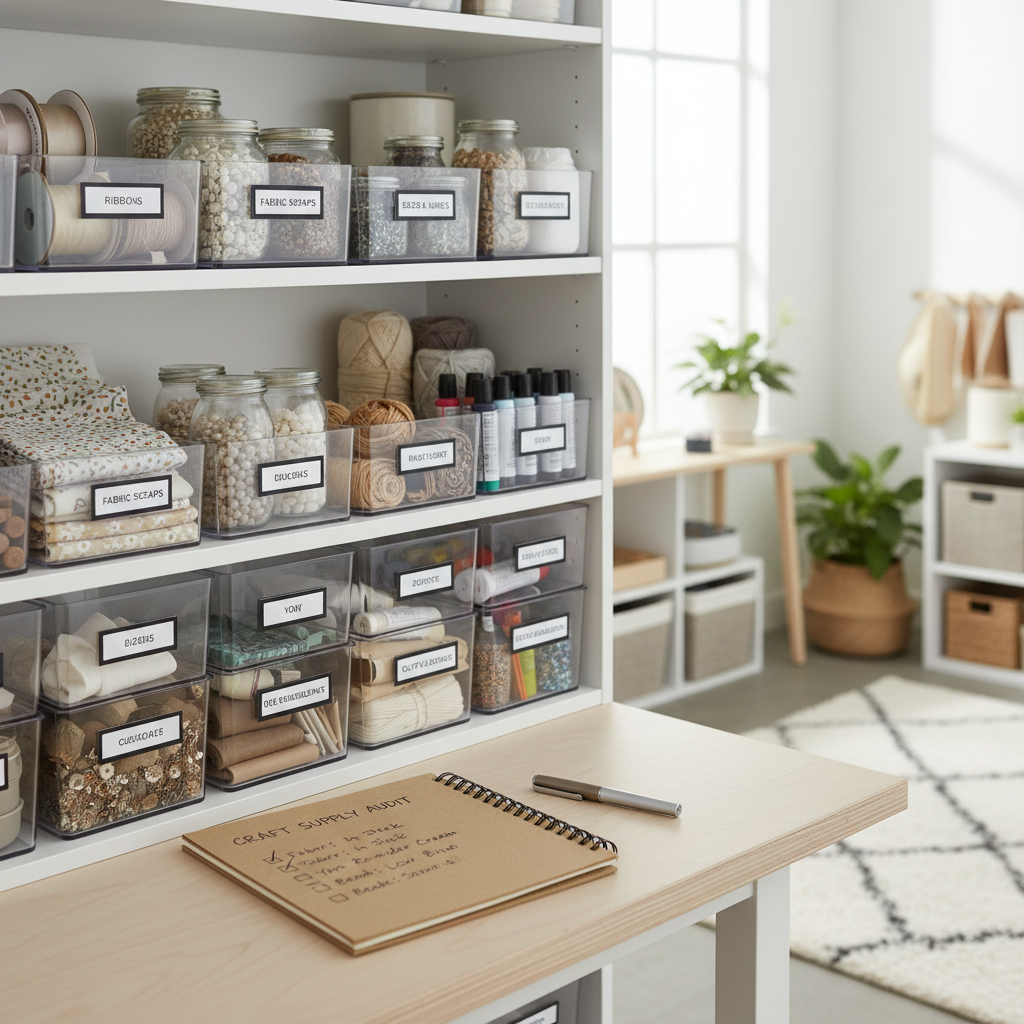
Room-by-room solutions: small space, closet, or shared room
The best craft room organization ideas on budget depend on what kind of space you really have. Here are setups that work even when the room isn’t “just” a craft room.
If you have a small corner
- Use a rolling cart as your active-supplies hub, top tier for current project only.
- Mount pegboard or rail strips for scissors, rulers, and frequently used tools.
- Store paper vertically in magazine files to avoid bending and digging.
If you’re organizing a craft closet
- Put heavy bins low, light bins high, keep one step stool nearby.
- Use door storage for adhesives and small bottles to free shelf space.
- Assign one shelf as a “project parking” spot with 1–3 labeled totes.
If the room is shared (guest room, office, kids’ space)
- Choose lidded bins so you can visually “close” the craft mess fast.
- Use one cabinet or one shelving unit as a hard boundary, no overflow allowed.
- Keep a foldable cutting mat and a tray so setup and teardown stays painless.
Budget planning: a simple table to prioritize spending
If you’re trying to keep costs low, spend where it reduces daily friction. This quick table helps you decide what to buy now versus later.
| Need | Buy First (Low Cost) | Upgrade Later | Why It Matters |
|---|---|---|---|
| Stop clutter spread | Clear lidded bins + labels | Matching containers | Containment beats aesthetics early on |
| Find tools fast | Pegboard/rails, cups, hooks | Full wall system | Visibility prevents table piles |
| Protect paper/vinyl | Magazine files, flat bin | Specialty paper cabinet | Prevents damage and re-buying |
| Keep projects together | 3 tote boxes, labeled | Project drawer tower | Less time lost hunting pieces |
| Comfort & accuracy | Good task light | Ergonomic chair | Helps reduce eye strain and mistakes |
Practical routines that keep it organized (without “perfect”)
Most people don’t fail at organizing, they fail at maintenance because the system expects too much. Keep your routine small and predictable.
Two routines that actually stick
- The 10-minute reset: return tools to the wall, toss trash, put active project into one tray.
- The weekly container check: if a bin won’t close, remove duplicates, rehome backstock, or donate.
Key takeaways you can screenshot:
- Store by use, not by “craft category.”
- Keep frequently used tools visible and reachable.
- Limit scraps with one container and a clear rule.
- Labels beat pretty storage when money is tight.
According to the U.S. Consumer Product Safety Commission, following basic safety practices around cutting tools and chemicals is important at home. If you store blades, hot tools, resin, or strong adhesives, keep them in secure containers, and if you have children at home, consider locked storage or higher shelving.
Conclusion: a budget craft room can still feel “done”
Craft room organization ideas on budget work when you focus on flow and access, not decoration. Once your zones are set, your containers have limits, and your labels make sense, the room starts staying tidy with much less effort.
If you want a simple next move, pick one pain point today, paper storage, tool clutter, or unfinished projects, then solve only that with one shelf, one cart, or three bins. Small wins stack fast, and your space will feel more creative and less chaotic.