
How to choose bathroom mirror size usually comes down to three things you can measure in five minutes: vanity width, ceiling height, and where your lighting sits. Get those right, and the “style” part becomes much easier because the mirror will already look intentional instead of floating on the wall.
A lot of bathrooms feel slightly “off” even after a nice remodel because the mirror is undersized, mounted too high, or mismatched with the faucet and light bar. Mirrors are visual anchors, they affect how bright the room feels, and they change what you actually see day to day.
In this guide you’ll get practical sizing rules, a quick self-check, and a few style shortcuts that work in most U.S. homes, plus a table you can use while shopping online or in-store.
Start with the one measurement that matters most: vanity width
If you do nothing else, size the mirror to your vanity, not to the empty wall. In most bathrooms, the vanity is the main horizontal reference line, so the mirror should feel “paired” with it.
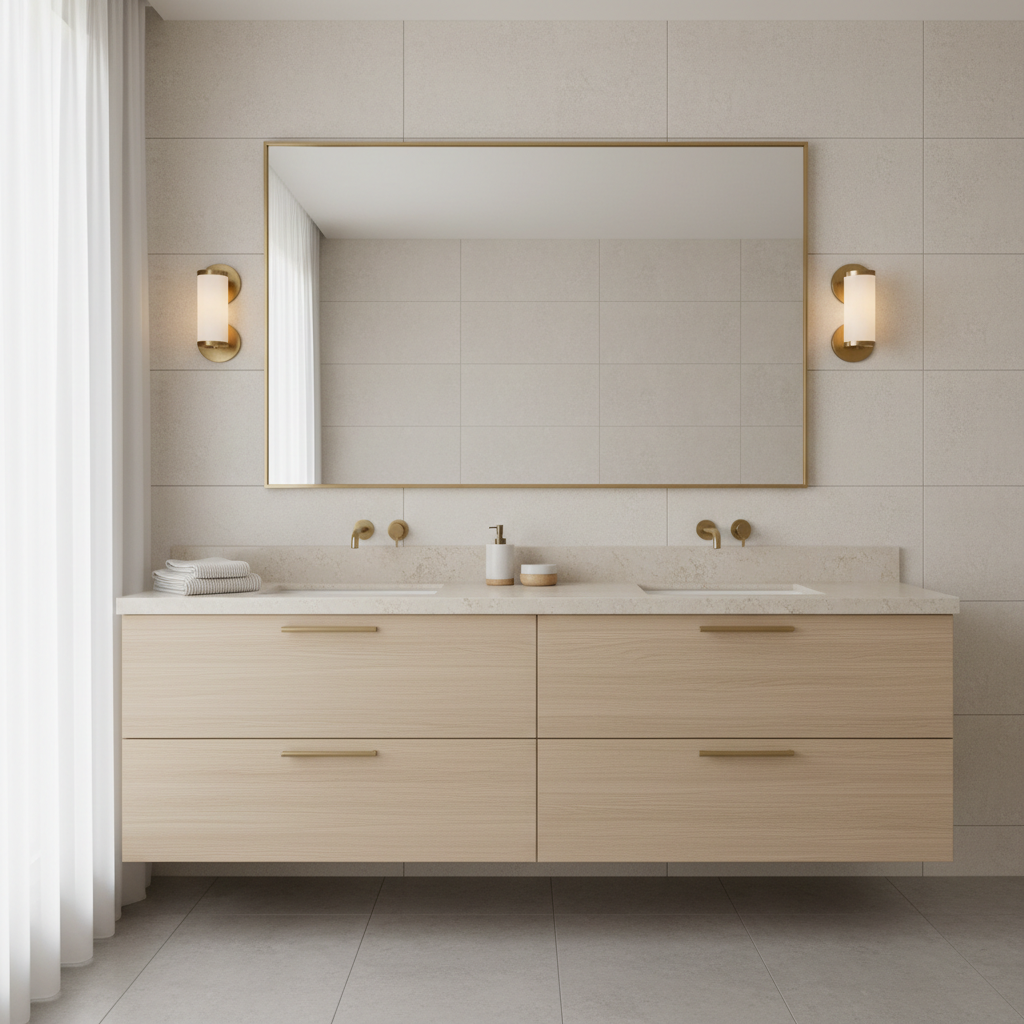
Common rule: choose a mirror that’s slightly narrower than the vanity, often leaving about 1–2 inches of vanity visible on each side. This “breathing room” keeps the setup from looking cramped.
Where people get stuck is edge cases, like tiny powder rooms or wide double vanities. Here are practical guardrails that tend to look right in real houses:
- Single vanity: mirror width typically 70–90% of vanity width.
- Double vanity: decide between one large mirror (cleaner, brighter feel) or two mirrors (more symmetrical, works well with two sconces).
- Small vanity (24–30 in.): a mirror that’s too narrow looks “apartment small,” consider going taller instead of wider.
According to the National Kitchen & Bath Association (NKBA), good bathroom planning emphasizes clearances and functional placement of fixtures; in practice, mirror-to-vanity proportion is one of the easiest ways to make a layout feel planned rather than random.
Height and placement: make faces the priority, not wall decor
After width, height is what makes a mirror feel expensive or cheap. A too-short mirror can look like it was chosen as an accessory instead of a core fixture.
Most people do well with a mirror height in the 28–36 inch range for standard vanities, but your wall height and lighting can push you taller. If your bathroom has higher ceilings or a long vertical sightline, a taller mirror usually looks more intentional.
Mounting basics that avoid the most common “why does this look weird?” moment:
- Center the mirror to the sink (or to each sink on a double vanity), not necessarily to the wall.
- Leave a small gap above the backsplash or countertop so it doesn’t look jammed; many installs land around 4–8 inches, but it depends on faucet height.
- Keep the top edge in harmony with lighting: if you have a light bar above, don’t let the mirror collide with it.
If multiple people share the bathroom and heights vary a lot, it may help to prioritize the mirror’s vertical center around average eye level, or choose a taller mirror so everyone gets a usable reflection without overthinking placement.
Lighting changes your “right size” more than you expect
Lighting is the silent deal-breaker. You can follow every sizing rule and still end up with a frustrating mirror if glare, shadows, or fixture placement fight you.
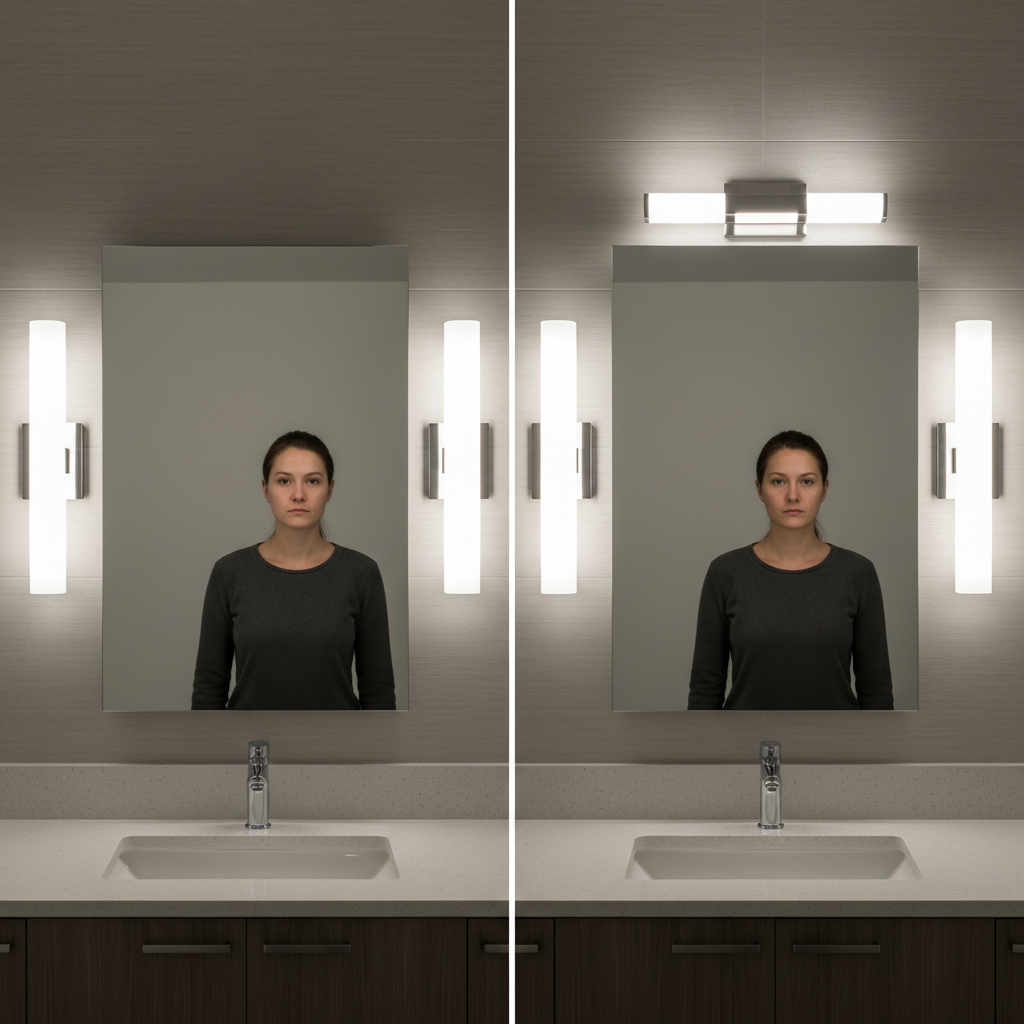
Quick, usable guidance by lighting type:
- Side sconces: you can choose a slightly narrower mirror because the light doesn’t need to sit over the mirror. Sconces also reduce face shadows in many setups.
- Light bar above: make sure there’s enough vertical room so the bar doesn’t crowd the top edge; a taller mirror may need a higher bar.
- Backlit mirror: size is mostly aesthetic, but check that the glow won’t be blocked by a thick frame or deep medicine cabinet.
According to the U.S. Department of Energy, lighting choices affect both visibility and energy use; in bathrooms, that often translates to picking a mirror and light combination that gives clear task lighting without relying on ultra-bright bulbs to compensate for poor placement.
Mirror style choices that look cohesive (without redesigning the whole bathroom)
Style is where people overcomplicate things. A simple way to decide is to match the mirror to one “fixed” element you’re not changing, usually the faucet finish or the vanity hardware.
Frame vs frameless
- Frameless: cleaner, more modern, makes small bathrooms feel bigger; also pairs well with busy tile.
- Framed: adds contrast and warmth, helps a builder-grade vanity look more custom; useful when the wall feels empty.
Shape: rectangular, round, arch
- Rectangular: safest choice, works with most vanities and light bars.
- Round/oval: softens hard lines, great with square sinks or angular tile; avoid going too small, or it can look like a porthole.
- Arched: adds character quickly, but be mindful of clearance with overhead lighting and upper cabinets.
Finish matching tip: matching doesn’t mean identical. Mixed metals can look great, but pick one dominant finish and keep the mirror frame aligned with it, otherwise the wall starts to feel “busy.”
A quick sizing table you can use while shopping
This table won’t replace measuring your specific wall, but it gives a realistic starting point for common vanity sizes in the U.S. market.
| Vanity width | Common mirror width range | Suggested mirror height range | Notes |
|---|---|---|---|
| 24 in | 20–22 in | 28–34 in | Go taller if the wall feels empty |
| 30 in | 24–28 in | 30–36 in | Works well with simple rectangular mirrors |
| 36 in | 30–34 in | 30–40 in | Check sconce spacing if you plan side lights |
| 48 in (single sink) | 40–46 in | 32–40 in | One large mirror often looks cleaner than two small |
| 60 in (double sink) | 54–58 in (one mirror) or two 24–28 in | 32–40 in | Choose one vs two based on lighting and symmetry |
Self-check: which situation are you actually in?
Before you buy anything, answer these fast questions. This is the part that prevents returns.
- Is there a medicine cabinet already? If yes, your “mirror choice” may really be a cabinet size and door swing issue.
- Where is the junction box for the light? If you’re not moving electrical, the fixture location limits mirror height.
- Do you have one sink or two? Two sinks with one mirror can look great, but the faucet centers and lighting should support it.
- Is there a window or tile feature you must align with? Visual alignment often matters more than theoretical rules.
- Who uses this bathroom? Kids, taller adults, or shared spaces usually benefit from a taller mirror.
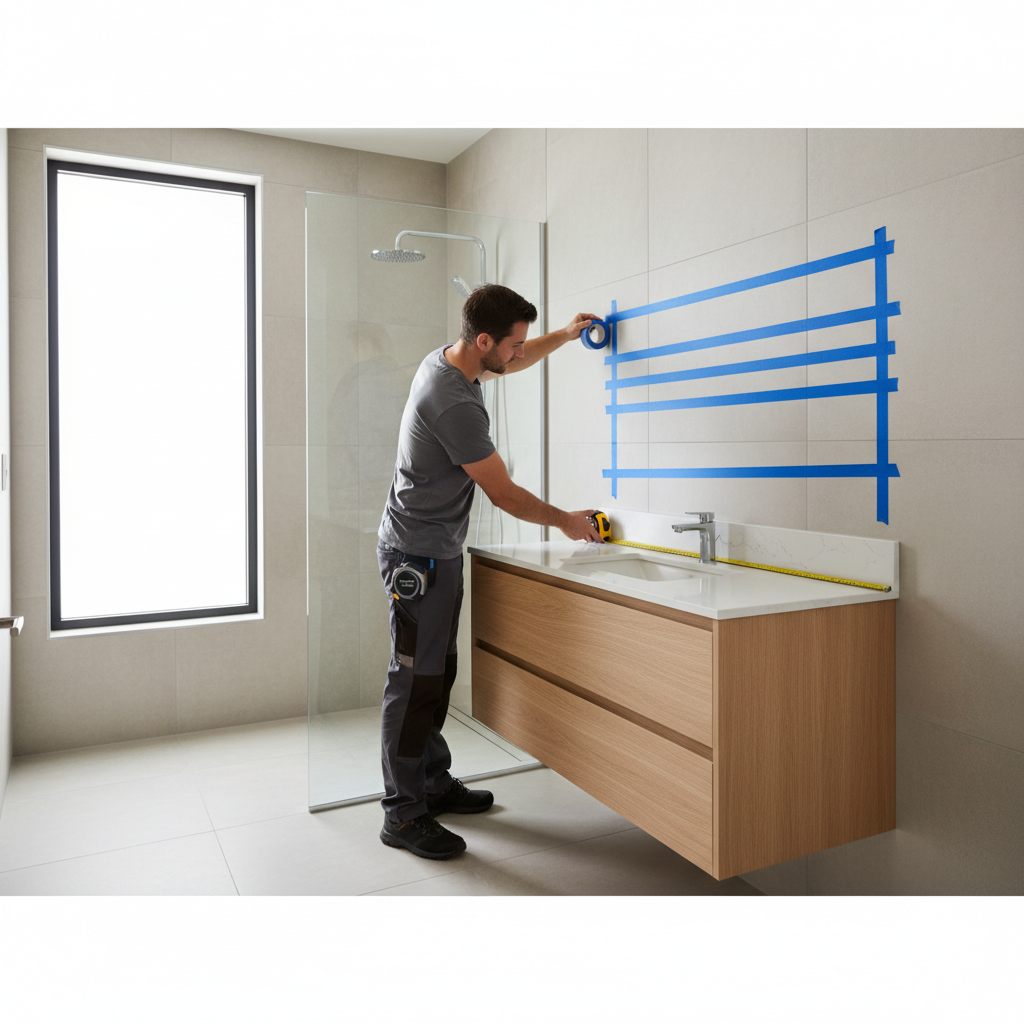
If you’re unsure, a low-effort trick: outline the mirror size on the wall using painter’s tape and stand back from the doorway. It sounds basic, but it catches “too small” and “too high” mistakes immediately.
Practical buying and installation tips (the part people skip)
Once you know the target width and height, you can shop faster and avoid the common “it looked bigger online” disappointment.
- Check exact glass size vs overall size: framed mirrors list the outside dimension, the reflective area may be smaller.
- Confirm mounting method: French cleat, D-rings, wire, or brackets, each affects how level it sits and how hard it is to adjust.
- Pick fog resistance intentionally: coatings and heated pads can help, but performance varies by product and ventilation; if fog is constant, improving the exhaust fan may matter more.
- Mind outlet and switch locations: a wide mirror can accidentally cover access panels or create awkward cuts if you planned a recess.
According to the Consumer Product Safety Commission (CPSC), glass and household fixtures should be handled and installed with care to reduce injury risk. If your mirror is heavy, wall type is uncertain, or you need electrical work for lighting, it’s often safer to consult a qualified installer or electrician.
Key takeaways and a simple next step
If you’re still thinking about how to choose bathroom mirror size, stop hunting for a perfect number and focus on fit: mirror width should visually relate to the vanity, height should suit the wall and the users, and lighting should not fight the mirror’s edges.
Action steps that actually work: measure vanity width, mark two mirror sizes with painter’s tape, then choose the one that looks balanced from the doorway. After that, pick a frame finish that connects to your faucet or hardware so it reads as one set.
FAQ
How wide should a bathroom mirror be compared to the vanity?
A common approach is slightly narrower than the vanity so the edges don’t overhang. In many bathrooms, around 70–90% of vanity width looks balanced, but wall constraints and lighting can shift that.
Is it okay for a mirror to be wider than the vanity?
It can work in some modern designs, especially wall-to-wall looks, but it often feels top-heavy if the vanity is narrow. If you want that effect, make sure the lighting and backsplash lines still look intentional.
Should I choose one mirror or two mirrors for a double vanity?
One large mirror usually feels cleaner and can make the room feel bigger, while two mirrors emphasize symmetry and can pair nicely with two sconces. The deciding factor is often where the lighting and faucet centers land.
What mirror height is “standard” for a bathroom?
There isn’t one true standard, but many homes land in the 28–36 inch height range for a typical vanity setup. Taller mirrors can look better in higher-ceiling spaces or shared bathrooms.
How high should I hang a bathroom mirror?
Most setups work when the mirror is centered around average eye level and aligned to the sink, but faucet height and lighting placement matter. If you’re unsure, tape the outline on the wall and test it from the doorway and at the sink.
Do backlit mirrors need to be a certain size?
Not strictly, but backlighting looks best when the mirror has enough surface area to read as a feature rather than a small accent. Also check that the wall space and wiring allow the mirror to sit flat and centered.
What if my bathroom mirror keeps fogging up?
A defogger can help, but persistent fog often points to ventilation issues or long hot showers in a small room. If it’s a chronic problem, upgrading the exhaust fan or checking airflow may be more effective than changing mirror size.
If you’re trying to pick a mirror quickly and want fewer surprises, bring three numbers to your search: vanity width, maximum available height below the light (or between sconces), and the finish you’re matching. That simple checklist usually narrows choices fast without overdesigning the whole bathroom.