
How to clean air conditioner filter is one of those chores that feels optional, until the airflow drops, the room smells a little off, or your energy bill starts creeping up.
The good news, most filters are designed for quick routine maintenance, and in many homes you can finish the basic clean in under 15 minutes. The trick is knowing what type of filter you have and what “clean” actually means for that model.
This guide walks you through practical steps, a fast self-check, and a simple schedule, plus the common mistakes that waste time or damage the filter.
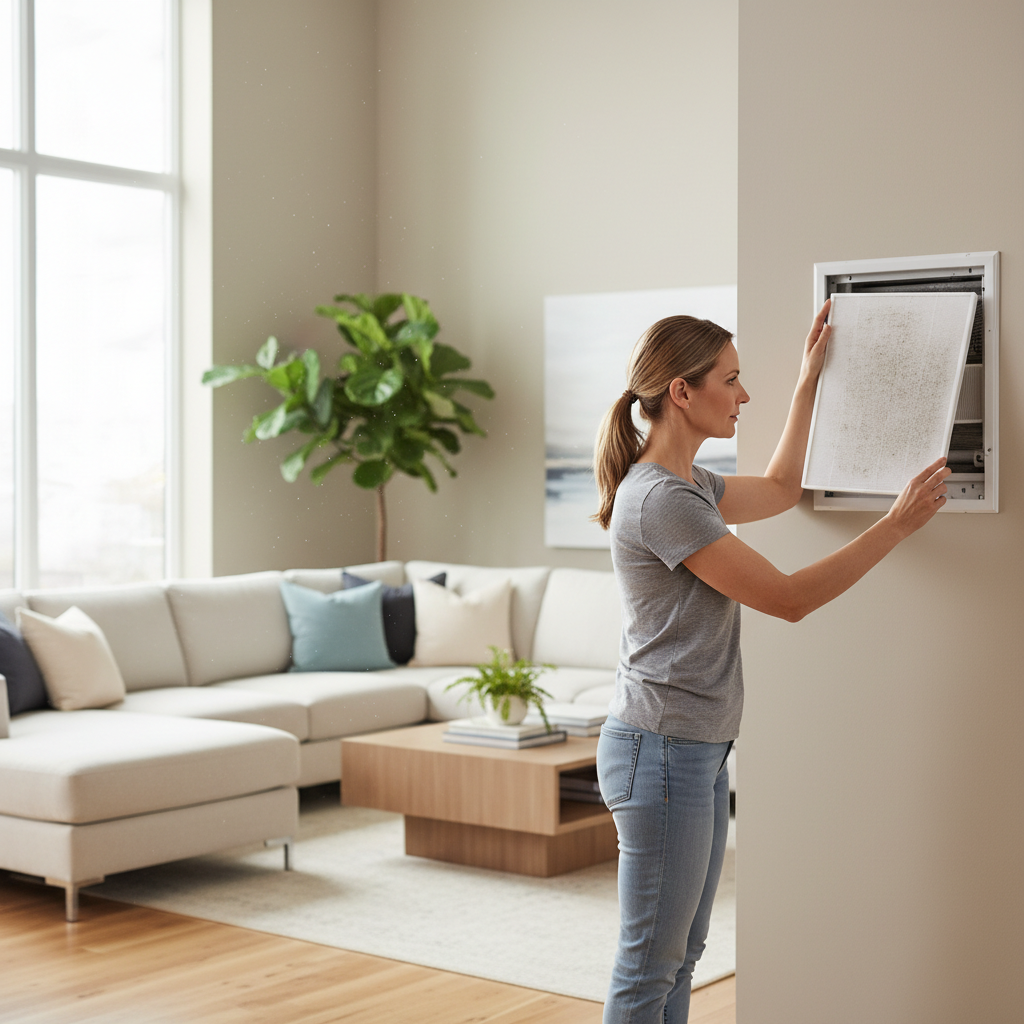
Why a dirty AC filter causes so many problems
A filter’s job is simple: catch dust and debris before it builds up in the system. When it loads up, air struggles to pass through, and everything downstream has to work harder.
- Weaker airflow: vents feel “lazy,” rooms take longer to cool or heat.
- Higher operating cost: restricted airflow can push the system to run longer.
- More dust at home: when the filter is overwhelmed or poorly seated, dust control often gets worse, not better.
- Odors: trapped particles plus moisture around coils can lead to musty smells in some situations.
According to U.S. Department of Energy, replacing or cleaning HVAC filters regularly can improve efficiency and indoor comfort. That’s not magic, it’s just airflow physics.
Quick self-check: what filter do you have and can you wash it?
Before you start, figure out whether you’re dealing with a disposable filter (replace it) or a washable/reusable one (clean it). Many people waste time “washing” a disposable filter and end up with a soggy, warped mess.
Fast identification checklist
- Cardboard frame + pleated paper media: typically disposable, replace only.
- Plastic frame + mesh/screen: often washable, check for “washable” marking.
- Label says “Washable/Reusable”: safe to clean as directed.
- Filter location: return grille, air handler closet, or inside a window AC front panel.
If you can’t find any marking, treat it as disposable until you confirm the model number online or in the unit manual. When in doubt, replacement is usually the safer choice.
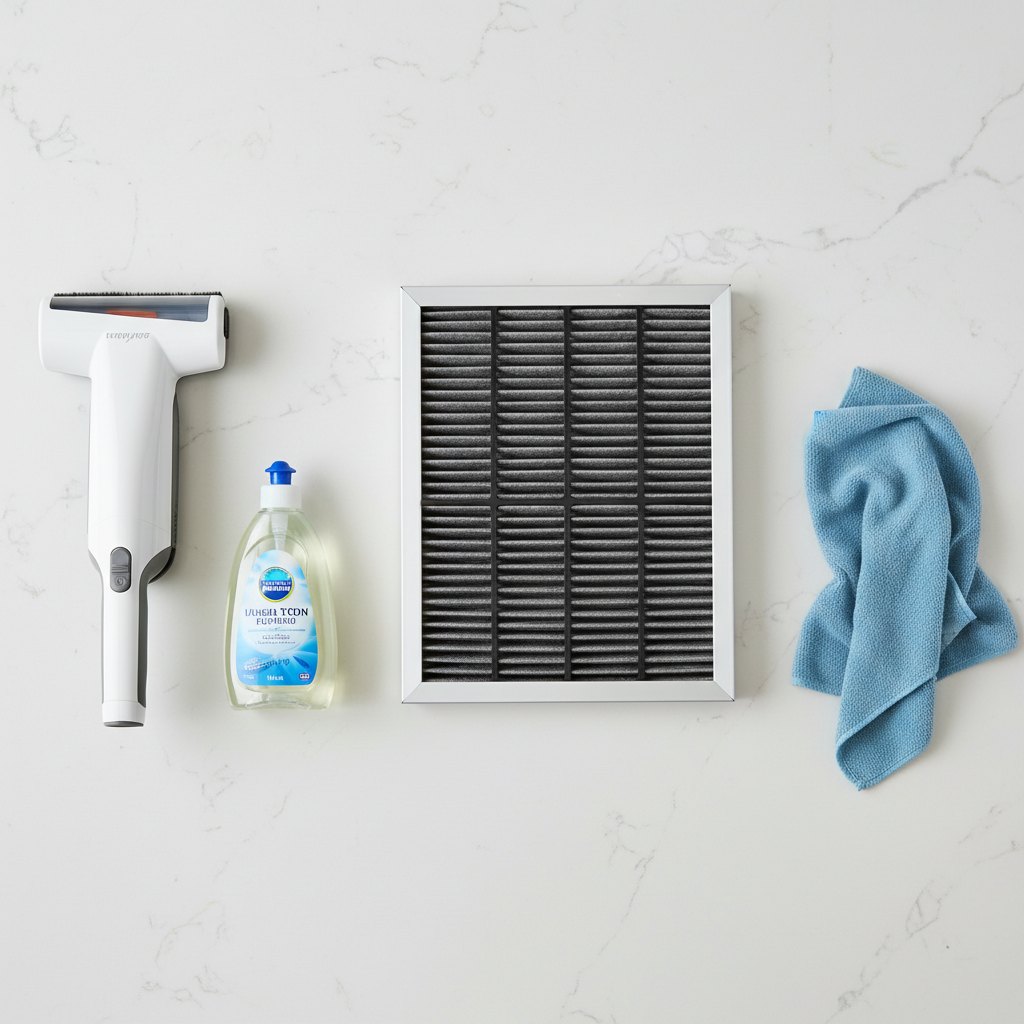
Tools and supplies (keep it simple)
You don’t need specialty gear for routine filter care. What you do need is a clean setup so you don’t dump dust back into the house.
- Vacuum with hose/brush attachment
- Sink, tub, or outdoor hose (for washable filters)
- Mild dish soap (optional, only for washable filters)
- Microfiber cloth or paper towels
- Flashlight (helpful for checking filter orientation and dust load)
Skip harsh cleaners, strong degreasers, or hot water on plastic frames, those can deform materials or leave residue.
Step-by-step: how to clean air conditioner filter (central HVAC)
If your filter is in a return vent grille or near the furnace/air handler, the process is straightforward. The main goal is to remove dust without damaging the media.
1) Power down and remove the filter
Turn the system off at the thermostat first. If the access is near the air handler and you prefer extra caution, you can also switch the unit off at the breaker.
- Open the return grille or filter slot.
- Slide the filter out slowly to avoid shaking dust loose.
- Take a quick photo of the airflow arrow so you reinstall correctly.
2) If disposable: replace, don’t wash
For pleated disposable filters, cleaning typically means a vacuum pass only if you’re in a pinch, then replace soon. Washing can break down the fibers and reduce filtration.
- Put the old filter in a trash bag right away.
- Wipe the filter slot edges with a dry or slightly damp cloth.
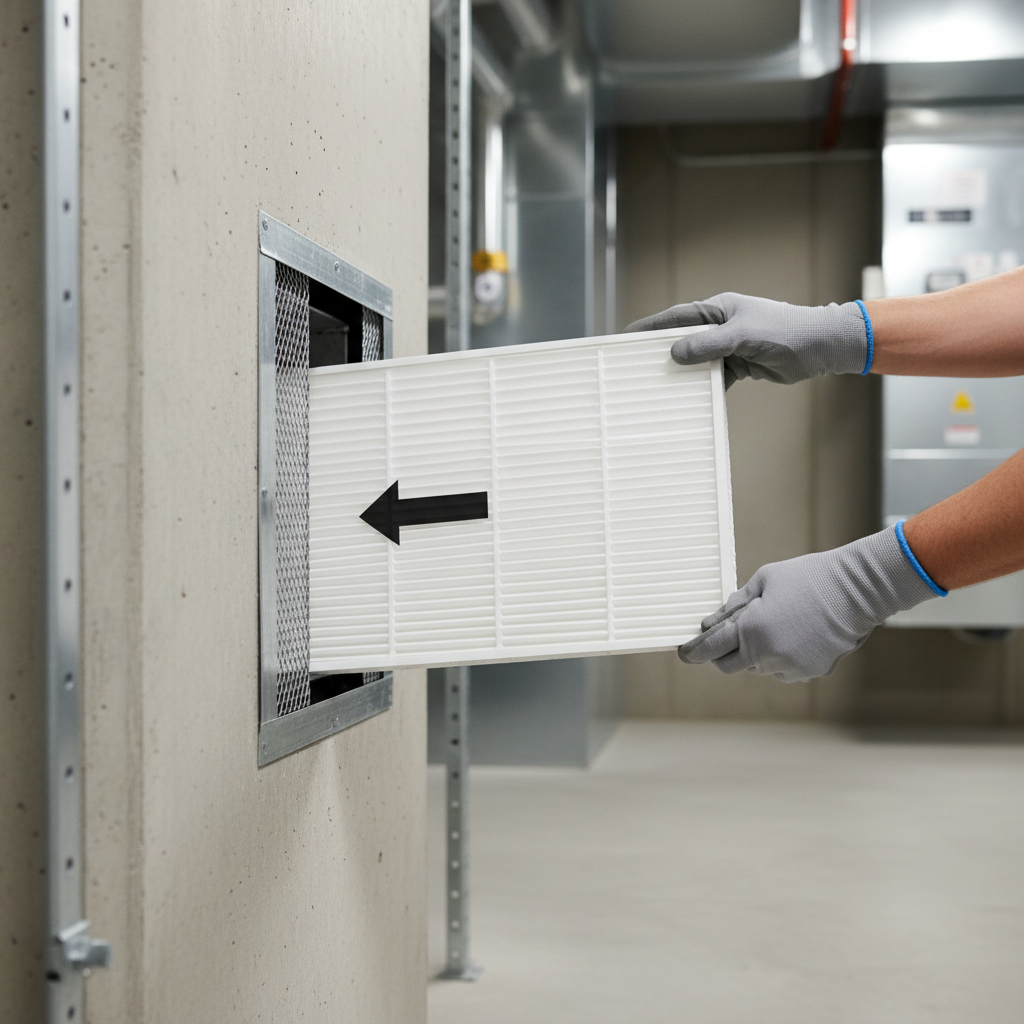
- Install the new filter with the airflow arrow pointing toward the blower.
3) If washable: vacuum, rinse, gentle soap if needed
For reusable filters, start dry to remove loose dust, then rinse.
- Vacuum first: use a brush attachment on low suction.
- Rinse from clean side to dirty side: this pushes debris out instead of deeper in.
- Add a small amount of mild soap only if the filter looks greasy or smells musty.
- Rinse thoroughly until water runs clear.
4) Dry completely before reinstalling
This part matters. A damp filter can encourage odor and, in some situations, moisture issues inside the return path.
- Shake off excess water.
- Air-dry upright in a well-ventilated area.
- Reinstall only when it feels fully dry to the touch.
Window and portable AC filters: quick clean without overthinking it
For window and portable units, filters are usually thin mesh behind the front panel. They load quickly, especially in kitchens or homes with pets.
- Unplug the unit.
- Remove the front cover and slide out the filter screen.
- Vacuum both sides, then rinse with lukewarm water.
- Let it air-dry fully before reinstalling.
If you notice heavy mildew odor, visible mold-like growth, or water pooling inside the unit, routine filter cleaning might not be enough, professional service is often the safer next step.
How often to clean or replace: a realistic schedule (with a simple table)
There isn’t one perfect interval. A small apartment with no pets is different from a busy house with a dog, kids, and construction nearby. Use this as a starting point, then adjust based on what you see.
| Home situation | Check frequency | Typical action |
|---|---|---|
| Light use, no pets, low dust | Every 4–6 weeks | Replace disposable every 2–3 months (or as needed) |
| Pets or allergy-sensitive household | Every 2–4 weeks | Replace more often, consider higher-quality filtration if system allows |
| High dust (construction, wildfires, dirt roads) | Every 2–3 weeks | Replace/clean whenever airflow drops or filter looks loaded |
| Window/portable AC in daily use | Every 2 weeks | Wash the mesh screen and dry completely |
A practical rule: if you hold the filter up to a bright light and can barely see through it, it’s time.
Common mistakes that make filter cleaning less effective
Most “filter cleaning didn’t help” stories come from a few predictable issues. Fix these and you usually feel the difference quickly.
- Installing backward: the airflow arrow matters, especially for pleated filters.
- Washing a disposable filter: it can collapse, shed fibers, and restrict airflow.
- Reinstalling while damp: can contribute to odor and moisture-related problems.
- Using high pressure: a pressure washer or strong spray can tear mesh and deform frames.
- Ignoring the return grille: a dusty grille can re-contaminate the filter area fast.
If you cleaned the filter and airflow still feels weak, the issue may be elsewhere: blocked vents, a dirty evaporator coil, duct leakage, or blower problems. That’s where filter maintenance stops being the whole story.
When to call a pro (or at least pause and reassess)
Filter care is DIY-friendly, but some signals deserve extra caution, especially when health or electrical safety could be involved.
- Ice on the refrigerant line or the indoor coil area: restricted airflow can cause it, but refrigerant or mechanical issues are also possible.
- Burning smell, buzzing, or repeated breaker trips: stop using the unit and contact a licensed HVAC technician.
- Visible mold-like growth inside ducts or on internal components: cleaning might disturb spores; consider professional evaluation.
- Asthma or severe allergies in the household: you may want advice on filtration level and system compatibility.
According to EPA, moisture control is a key factor in preventing mold growth indoors. If you keep seeing dampness around the system, it’s worth getting it checked rather than repeatedly masking symptoms.
Key takeaways and a simple action plan
You don’t need to overcomplicate this. Most of the value comes from doing the basics consistently, and choosing the right “clean vs replace” action for your filter type.
- Confirm filter type before you wash anything.
- Keep airflow direction correct when reinstalling.
- Set a reminder to check the filter, not just replace it on a fixed calendar.
If you want one small next step today, pull the filter, take a photo of the size and airflow arrow, and decide whether it needs replacement now or a washable clean this weekend.
FAQ
- How to clean air conditioner filter without turning off the AC?
It’s usually better to turn the system off at the thermostat so dust doesn’t get pulled in while the filter is out. In some setups the blower can draw debris into the return path quickly. - Can I vacuum my AC filter instead of washing it?
For washable mesh filters, vacuuming removes loose dust and is a great first step, but rinsing often clears finer buildup. For disposable pleated filters, vacuuming may help briefly, but replacement is typically the right fix. - What happens if I run my AC with no filter for a day?
Even short runs can let dust coat the evaporator coil and blower, which is harder to clean than a filter. If you must run it temporarily, keep it minimal and reinstall a filter as soon as possible. - Is it safe to wash an HVAC filter in the dishwasher?
Many manufacturers don’t recommend it because heat and detergents can warp frames or leave residue. If the filter is truly washable, lukewarm water and mild soap is usually the safer route. - Why does my AC still smell after cleaning the filter?
Odor can come from a damp filter reinstalled too soon, a dirty coil, a clogged drain line, or moisture in the unit. If the smell persists, consider having the system inspected. - How do I know what size filter to buy?
Check the size printed on the filter frame, then verify by measuring length, width, and thickness. If the fit is loose, air can bypass the filter and reduce effectiveness. - Should I use a higher MERV filter to catch more dust?
Higher MERV can improve particle capture, but it may restrict airflow on some systems. If you’re unsure what your unit can handle, it’s smart to consult an HVAC professional or follow the equipment documentation.
If you’re trying to keep up with filter maintenance but still dealing with weak airflow, stubborn dust, or recurring odors, you may prefer a more hands-off plan, for example, setting a replacement schedule and confirming the right filter type and rating for your specific HVAC setup.