
how to make a simple centerpiece for dining table is mostly about two things: keeping the table usable, and choosing a “main character” item that looks intentional even when the room is a little messy.
If you’ve ever set something pretty in the middle, then realized you can’t pass the salad, you’re not alone. A centerpiece has to live with plates, hands, and conversation. The good news is you don’t need fancy florals or a shopping spree, you need a plan that respects height, scale, and cleanup.
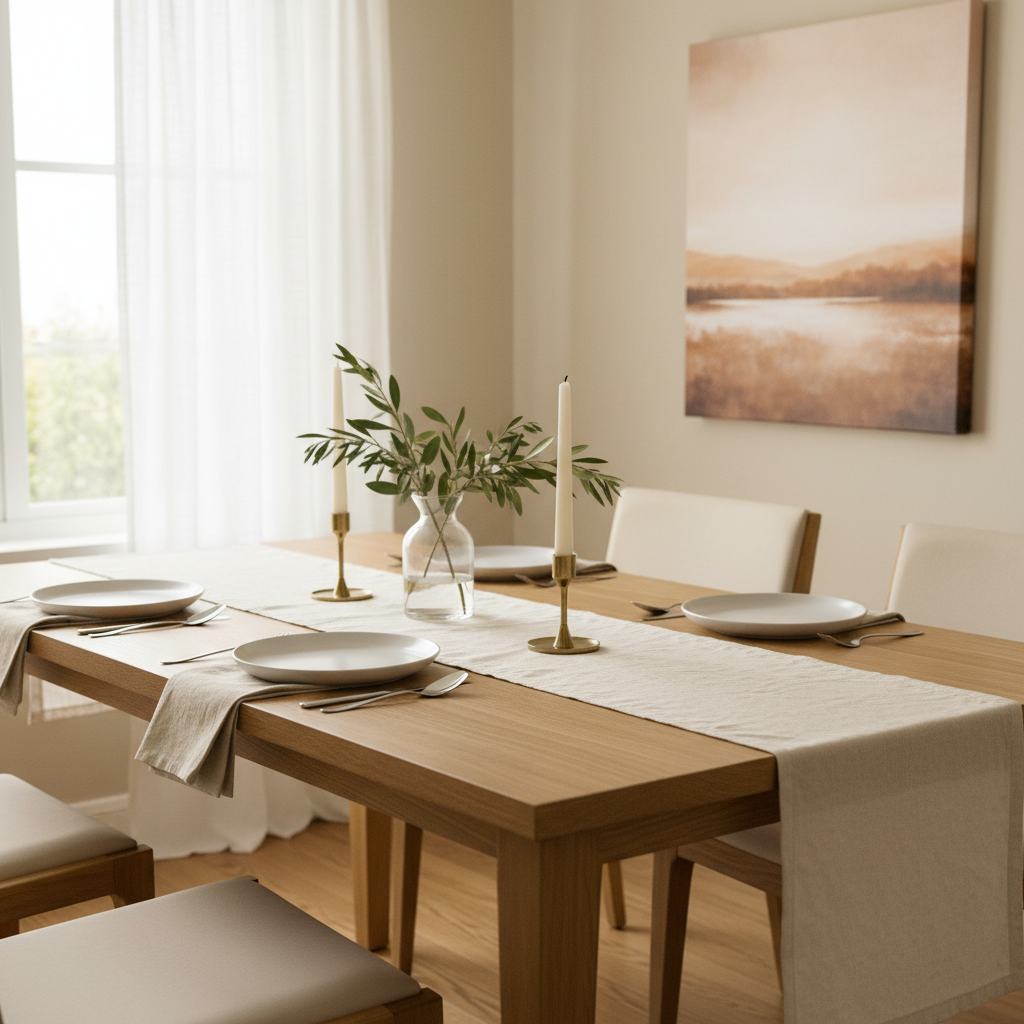
In this guide, you’ll get a few reliable centerpiece “recipes,” a quick sizing checklist, and a simple shopping-and-assembly workflow, so your table looks pulled together on a random Tuesday, not just on holidays.
Start with the three rules: height, footprint, and cleanup
Before picking flowers or candles, decide whether the centerpiece will behave. Most centerpieces fail because they ignore one of these basics.
- Height: Many homes do best with low arrangements (often under 12 inches) so people can see each other. If you want height, keep it airy, like branches in a narrow vase.
- Footprint: The centerpiece should sit in a defined “lane” and leave room for serving dishes. A runner or tray helps visually contain it.
- Cleanup: If it sheds, drips, or requires constant water changes, it becomes clutter fast. Choose materials you can remove in one lift.
According to American Home Furnishings Alliance (AHFA)... good home furnishings should support everyday living, not just look good in photos, which is exactly the mindset you want for a dining table centerpiece.
Quick self-check: what kind of dining table are you styling?
This sounds obvious, but the table shape and how you use it changes everything. Use this as a quick “diagnosis” before you build anything.
- Small round table (2–4 people): One compact cluster, keep it centered and low.
- Rectangle table (4–8 people): A longer base (runner or tray) with 3–5 items in a line reads balanced.
- Expandable/leaf table: Choose pieces that can shift, like two small groupings instead of one long permanent runner.
- Table used for homework/work: Prioritize a tray centerpiece so you can lift and relocate in seconds.
- Households with kids/pets: Skip fragile taper candles and tiny loose filler, go for sturdy vessels and flameless candles if you prefer.
Materials that make a centerpiece look intentional (not random)
When people ask how to make a simple centerpiece for dining table, what they usually mean is “how do I make it look styled without trying too hard.” This is the short list that rarely disappoints.
- Base: tray, shallow bowl, or table runner (creates a boundary)
- Anchor piece: low vase, pitcher, or small bowl (your focal point)
- Secondary items: candles, small bud vases, fruit, or a small stack of coasters
- Texture: linen runner, woven tray, ceramic, or wood
- Greenery: eucalyptus, olive stems, seasonal branches, or a single grocery bouquet split into minis
A practical rule: pick one “statement” material (like brass, black metal, or natural wood), then keep the rest quiet. Mixing too many finishes is how simple becomes busy.
Size guide table (so the centerpiece doesn’t eat your table)
If you’re unsure about proportions, use this table as a starting point. It’s not perfect for every home, but it keeps you out of trouble.
| Table size | Suggested centerpiece length | Safe height range | Best format |
|---|---|---|---|
| Round 36–48 in | 10–16 in across | 6–12 in | One low cluster or bowl |
| Rectangle 60–72 in | 24–36 in long | 6–14 in | Runner + 3–5 items |
| Rectangle 84–96 in | 36–54 in long | 6–14 in | Long tray or two groupings |
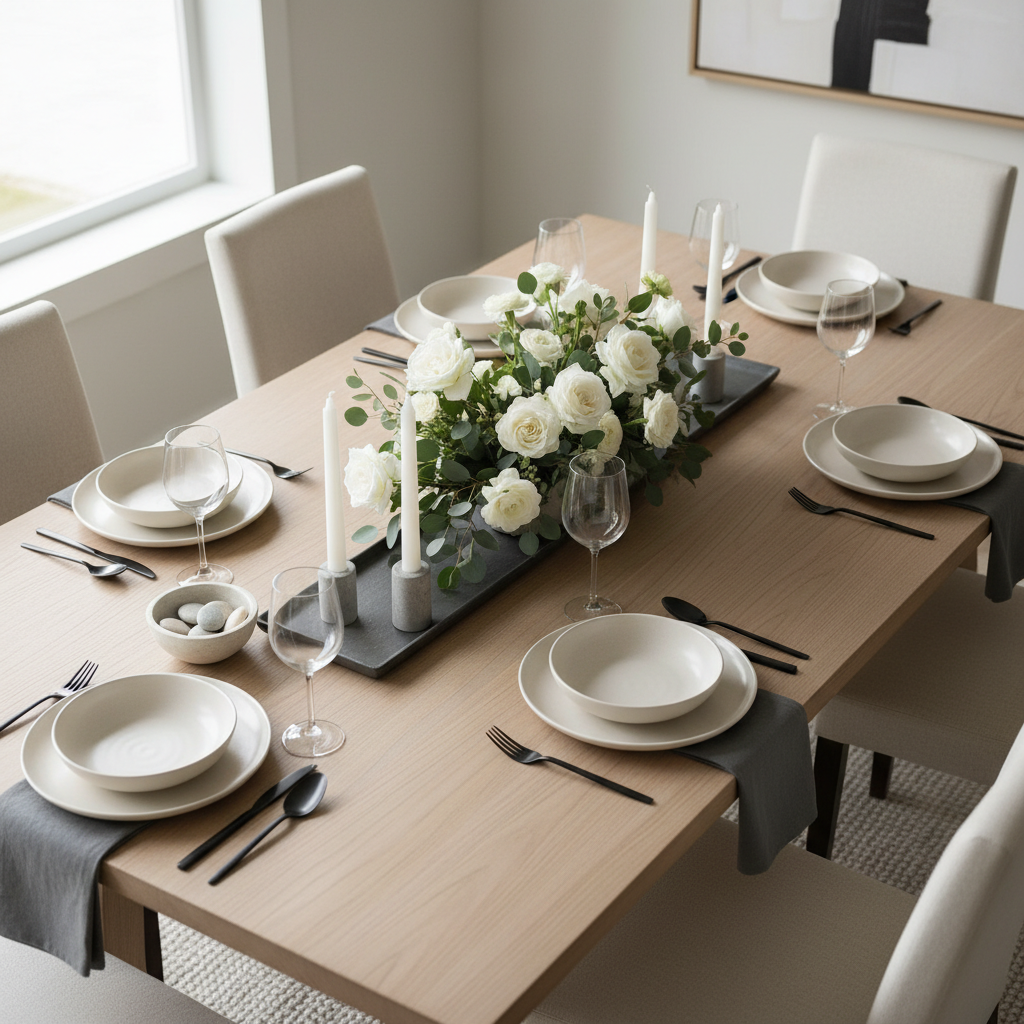
Key point: if you routinely set serving platters on the table, aim smaller than you think. You can always add a second bud vase later, but it’s hard to un-crowd a table mid-meal.
3 simple centerpiece “recipes” (15–30 minutes, no special skills)
These are the setups that work in many American homes because they’re stable, affordable, and easy to reset after a meal.
Recipe A: Tray + greenery + candle trio
- Set a tray in the center (wood, rattan, or matte black).
- Add one low vase with greenery (not a huge bouquet).
- Place 2–3 candles in mismatched heights, but similar color family.
- Leave breathing room, the tray should not be packed edge-to-edge.
Recipe B: Single statement bowl + seasonal filler
- Choose a bowl with some weight (ceramic or wood).
- Fill with lemons, pears, mini pumpkins, pinecones, or ornaments depending on season.
- Add one small bud vase next to it if the table feels too flat.
Recipe C: “Bud vase line” for narrow or busy tables
- Use 3–5 small bud vases spaced evenly.
- Put 1–2 stems per vase, keep it airy.
- This is great when you still want conversation visibility across the table.
In practice, Recipe C is the easiest way to get that “styled” look without a big floral arrangement taking over dinner.
Step-by-step: assemble your centerpiece like a stylist (without overthinking)
Here’s a simple workflow that keeps you from moving objects around for an hour.
- Step 1: Put down the base (runner or tray) and stop there for a second, make sure it sits centered with chairs pushed in.
- Step 2: Add the anchor piece, usually the vase or bowl, slightly off-center looks more natural than perfectly centered.
- Step 3: Add two supporting items, often candles or smaller vessels, keep them within the “base zone.”
- Step 4: Check sightlines from both ends of the table, if it blocks faces, lower it.
- Step 5: Remove one item if it feels cluttered, this is the move most people skip.
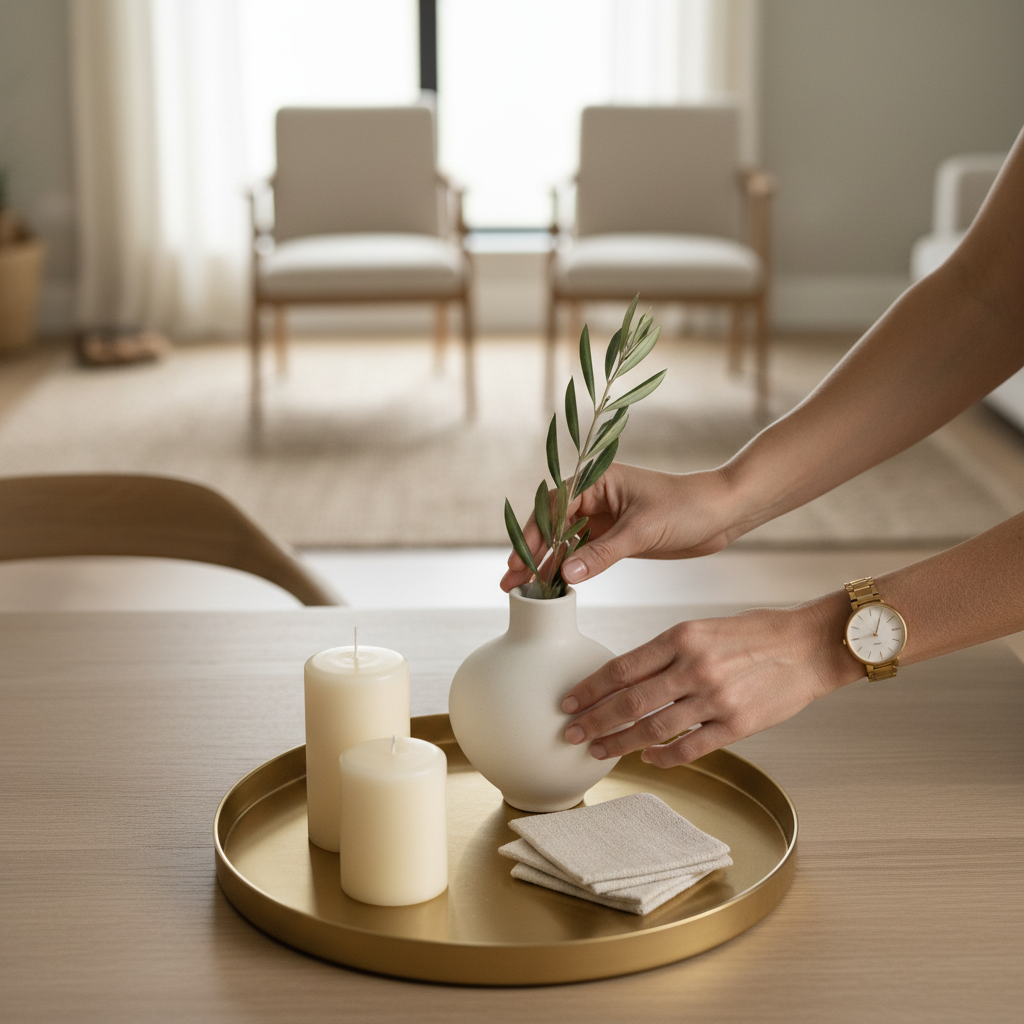
If you’re trying to make it look “done,” add one small contrast element: a dark candle on a light runner, or a natural wood tray on a dark table. Small contrast reads as design.
Common mistakes (and what to do instead)
- Too tall, too dense: If you love tall florals, keep stems sparse or move the height to the sideboard during meals.
- All items the same size: Use at least two heights, like a low vase plus taller candle holders.
- Scatter instead of cluster: Loose objects across the table feel like clutter, contain them on a tray or runner.
- Over-scenting: Strong candles can compete with food smells. Unscented usually plays nicer at dinner.
- Real flame in high-traffic homes: If kids or pets bump the table, flameless candles may be a safer choice, and if you have specific safety concerns, it’s reasonable to ask a professional for guidance.
When people struggle with how to make a simple centerpiece for dining table, it’s rarely about taste, it’s about scale and containment. Fix those two and the rest becomes easy.
Conclusion: keep it low, contained, and easy to reset
A good centerpiece makes the room feel cared for, but it shouldn’t demand constant maintenance or get in the way of dinner. Pick one anchor, give it a boundary, and keep the height friendly for conversation.
Your next move: choose one of the three “recipes,” set a 20-minute timer, and build it using what you already own before buying anything new. You’ll learn your table’s sweet spot faster that way.
Key takeaways
- Contain the arrangement with a tray or runner so it reads intentional.
- Prioritize usability over height, especially for everyday meals.
- Edit ruthlessly, removing one item often improves the whole look.
Practical next steps
- Take a quick photo from the seat positions, camera reveals clutter immediately.
- Create a small “centerpiece bin” in a cabinet: one tray, two candles, one vase, one set of stems.