
How to make a small kitchen functional starts with one honest idea: you don’t need more space, you need fewer friction points, clearer storage, and a layout that matches how you actually cook.
If your counters feel permanently crowded, appliances migrate all over the place, and you’re constantly opening the “wrong” cabinet first, that’s not a you problem, it’s a system problem. Small kitchens punish small inefficiencies.
This guide focuses on practical changes that usually pay off fast, from workflow zones to storage tweaks, plus a few upgrades that can be worth it if you rent or own.
Start with function, not “more storage”
Before buying organizers, decide what “functional” means for you. For some households, it’s weeknight speed. For others, it’s two people cooking without bumping hips, or finally having a place to put groceries.
A small kitchen typically breaks down in three places: work surface (no landing zones), access (you can’t reach what you need), and flow (too many steps for simple tasks). Fix those, and storage often improves naturally.
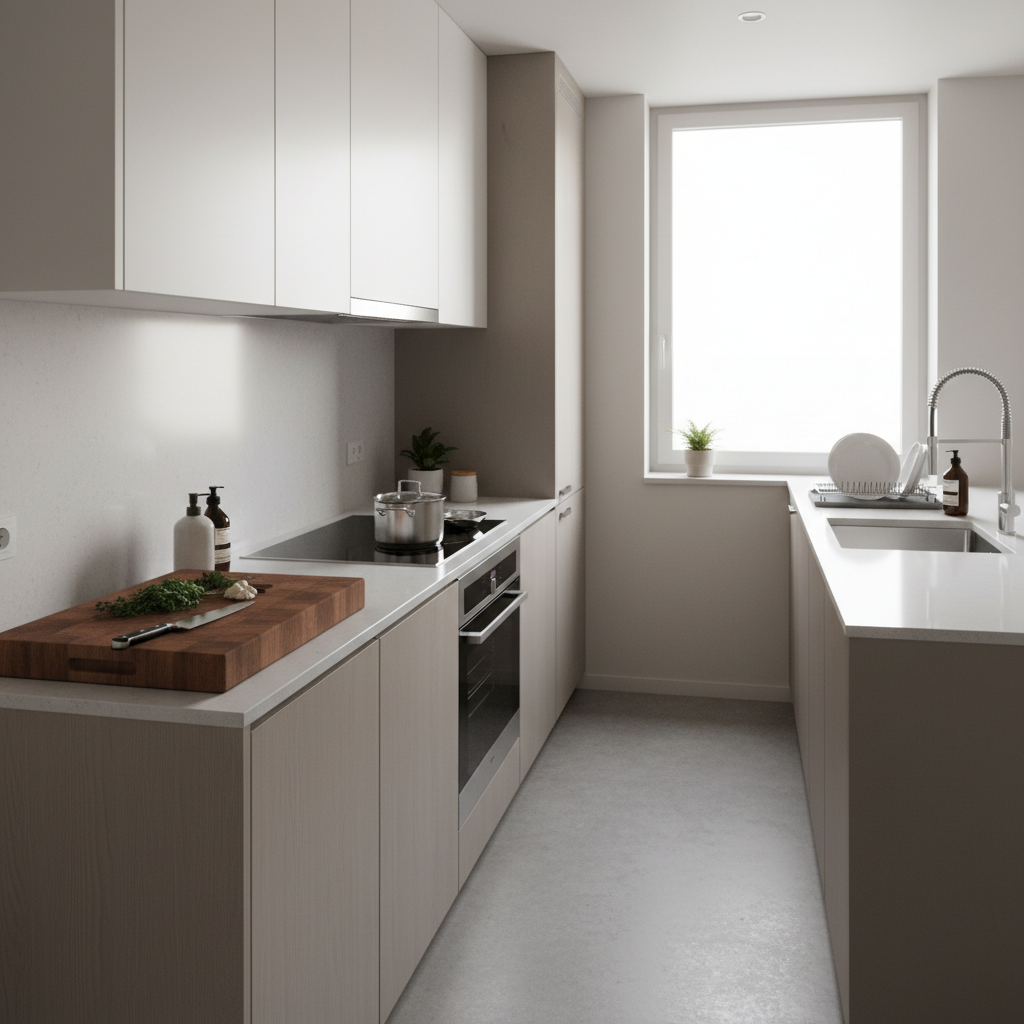
Map your “mini work triangle” and create zones
The classic work triangle (sink, stove, fridge) still matters, but in tight kitchens it’s more helpful to think in zones: prep, cook, clean, coffee/snacks, and pantry. Even if the kitchen is a galley, zones reduce backtracking.
Quick zone setup (30 minutes)
- Prep zone: keep knife, cutting board, mixing bowls, measuring tools within one drawer/cabinet of your main counter.
- Cook zone: store oils, salt, spices you use weekly, and cooking tools next to the range (not across the room).
- Clean zone: place dish soap, sponge, dishwasher pods, towels together near the sink.
- Food zone: group pantry staples by “grab speed” (daily vs weekly vs backup).
According to the National Kitchen and Bath Association (NKBA), good kitchen design supports safe, efficient movement and keeps key tasks close together. In a small kitchen, zones are the easiest way to get that benefit without remodeling.
Clear counters without losing convenience
When counters disappear, everything feels harder: you can’t prep, you can’t unload groceries, and you end up stacking. The goal is not empty counters, it’s usable counters.
What usually deserves counter space
- One daily-use appliance (often a coffee maker) if you truly use it every day
- A utensil crock only if you cook daily and drawer space is tight
- A small tray for “kitchen pocket items” (keys, mail) if that’s your reality
What typically works better off the counter
- Bulky gadgets used less than weekly (air fryer, stand mixer) unless you’re a heavy user
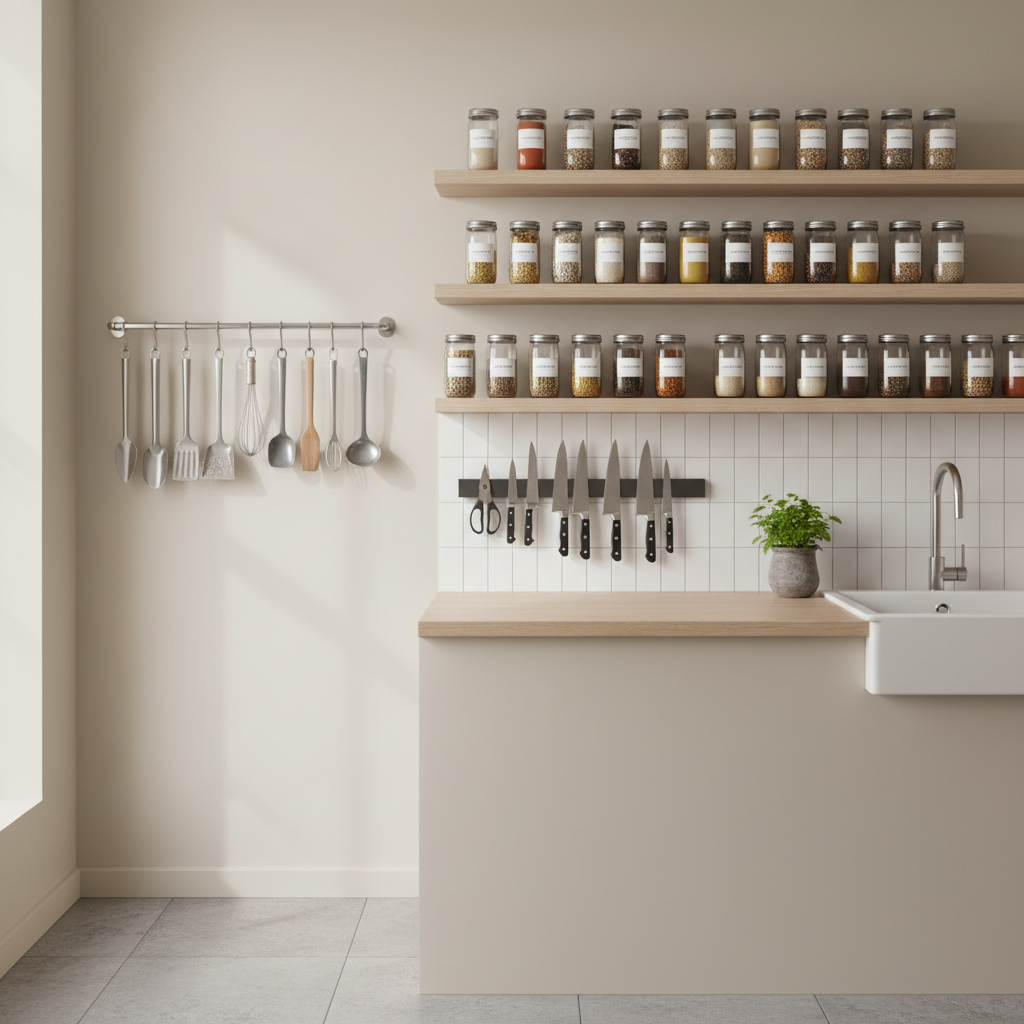
- Knife blocks (a drawer insert or magnetic strip often frees space)
- Spice racks that eat backsplash space if you have limited prep area
If you’re figuring out how to make a small kitchen functional, think “landing zones”: reserve one clear spot near the fridge for groceries, and one clear spot near the stove for plating.
Use vertical space and “hidden” storage (without making it annoying)
Vertical storage can be a lifesaver, but only if it doesn’t create new hassle. If you have to unstack five things to reach one pan, you’ll stop using the system.
High-impact storage moves
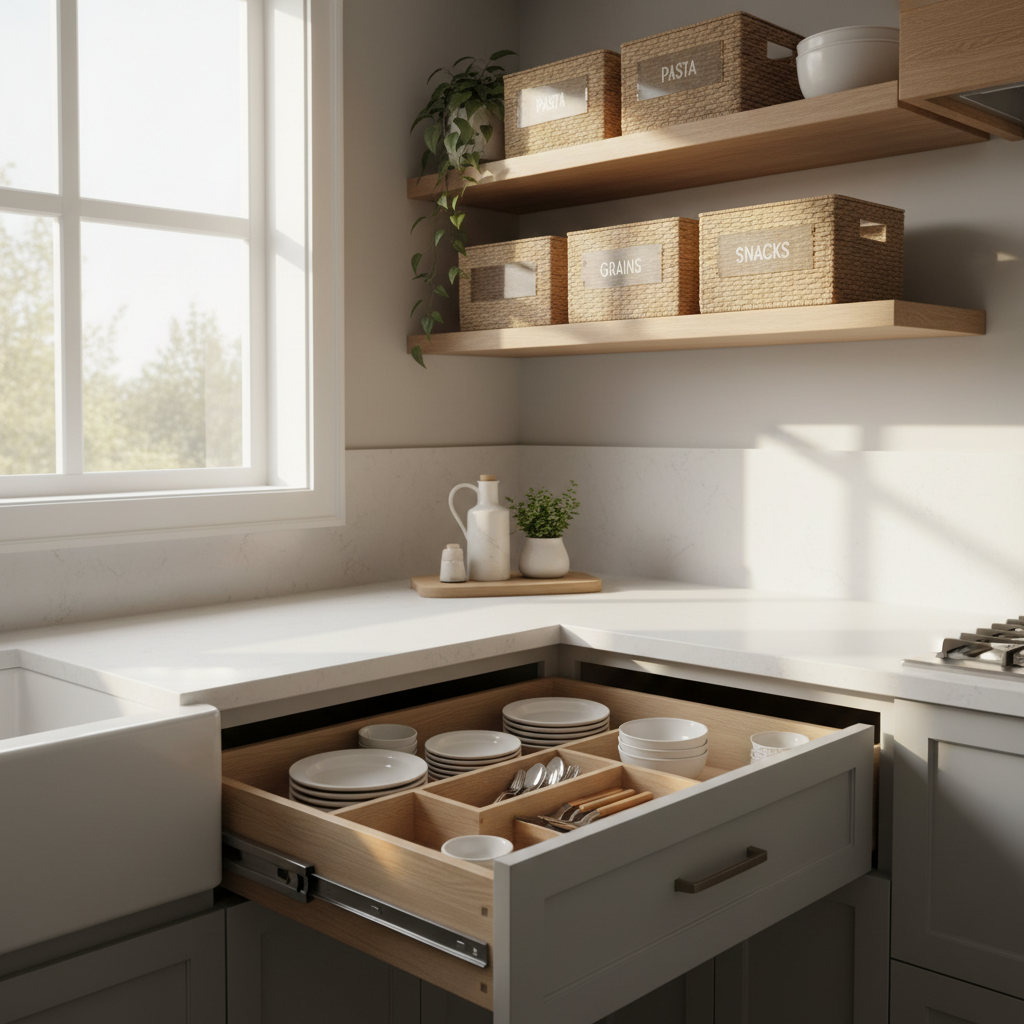
- Under-shelf baskets: add a second layer for wraps, snack bags, or dish towels.
- Door-mounted organizers: cleaning supplies under the sink, lids, spices, foil and parchment.
- Stacking shelves: double cabinet space for plates or mugs.
- Magnetic strip: knives or metal spice tins (check wall type and mounting safety).
- Toe-kick drawer (owners): if you’re renovating, it’s a smart spot for sheet pans.
For renters, focus on removable options (adhesive hooks rated for weight, tension rods, freestanding racks). If you’re unsure about load limits or wall material, it’s safer to ask your landlord or a handyman.
Right-size what you own: the declutter that actually sticks
Most small kitchens aren’t short on cabinets, they’re short on cabinets for the stuff you actually use. Decluttering works when it’s targeted, not emotional.
A realistic keep/toss checklist
- Keep tools you use weekly, or that replace multiple single-use items.
- Keep one “guest set” of dishes if you host sometimes, not three mismatched sets.
- Donate duplicates you only keep “just in case” (extra ladles, three muffin tins).
- Recycle/replace warped plastic containers without lids.
- Store elsewhere true occasional items (holiday platters) if you have a closet.
One trick that feels slightly annoying but works: put rarely used items in a box for 30 days. If you don’t open it, you just proved it doesn’t need prime kitchen real estate.
Choose space-saving gear that earns its spot
Buying your way out of a small kitchen rarely works, but a few well-chosen pieces can reduce clutter and improve flow.
| Problem | What helps | Why it works in small kitchens |
|---|---|---|
| No prep space | Over-the-sink cutting board | Adds a temporary prep surface without permanent footprint |
| Too many pots/pans | One good skillet + one saucepan + one stock pot | Covers most cooking tasks with fewer bulky items |
| Container chaos | Square, stackable containers | Stacks tighter, wastes less cabinet volume |
| Drawer clutter | Adjustable dividers | Stops “junk drawer drift” and keeps tools reachable |
| Appliance pile-up | Appliance garage or rolling cart | Moves bulky items off the counter but keeps them accessible |
When deciding, ask one blunt question: will this replace something, or just join the pile?
A simple reset routine you can actually maintain
Once you’re close to functional, maintenance matters more than perfection. A small kitchen falls apart fast, but it also resets fast.
10-minute daily reset
- Clear and wipe the main prep counter
- Return “category drifters” (spices, scissors, mail) to their zones
- Run the dishwasher or wash the sink load
- Empty a small trash can before it overflows
30-minute weekly reset
- Check the fridge for duplicates and near-expiration items
- Refill a short “working pantry” bin (pasta, rice, canned goods you actually use)
- Do one micro-area: spice drawer, container bin, or under-sink zone
If you’re still asking how to make a small kitchen functional after organizing, it’s often because the system is too fragile. A small weekly reset makes it forgiving.
Common mistakes that make small kitchens feel smaller
- Over-organizing before decluttering: organizers can hide the problem, not solve it.
- Storing by category only: store by use (coffee station, baking zone) when space is tight.
- Ignoring lighting: dim kitchens feel cramped; brighter task lighting can make the room easier to work in.
- Choosing bulky decor: big canisters and oversized cutting boards look nice, but they steal prep space.
- Unsafe overload: heavy items on adhesive hooks or unstable shelving can fall; use proper anchors when needed.
According to the U.S. Consumer Product Safety Commission (CPSC), household falls are a common injury risk. In a tight kitchen, reducing trip hazards and securing storage is a practical safety move, not just “organization.”
Key takeaways (save this)
- Define zones for prep, cook, clean, and food so you stop walking in circles.
- Protect counter space by keeping only true daily-use items out.
- Go vertical with door storage and under-shelf add-ons, but keep access easy.
- Right-size inventory so cabinets hold what you use, not what you might use.
- Maintain with quick resets so the kitchen stays functional on busy weeks.
Conclusion: make the space work like it’s bigger
A functional small kitchen usually comes from a handful of calm decisions, not a dramatic makeover. Pick one zone to fix this week, clear one reliable landing area, and tighten storage around your real routines.
If you want momentum, start tonight with the prep zone. Tomorrow morning, you’ll feel the difference.