
Small space dining ideas for 4 people work best when you stop trying to “fit a dining room” and start building a flexible eating zone that can expand, tuck away, and still feel comfortable for everyday life.
If you’re squeezing four seats into a small apartment, a narrow kitchen, or an open living room, the real frustration usually isn’t the table, it’s the traffic flow, chair clearance, and where all the dining stuff ends up when the meal is over.
This guide focuses on practical choices that hold up in real homes: what table shapes actually seat four, which seating types save inches, and how to place everything so people can sit down without doing the sideways shuffle.
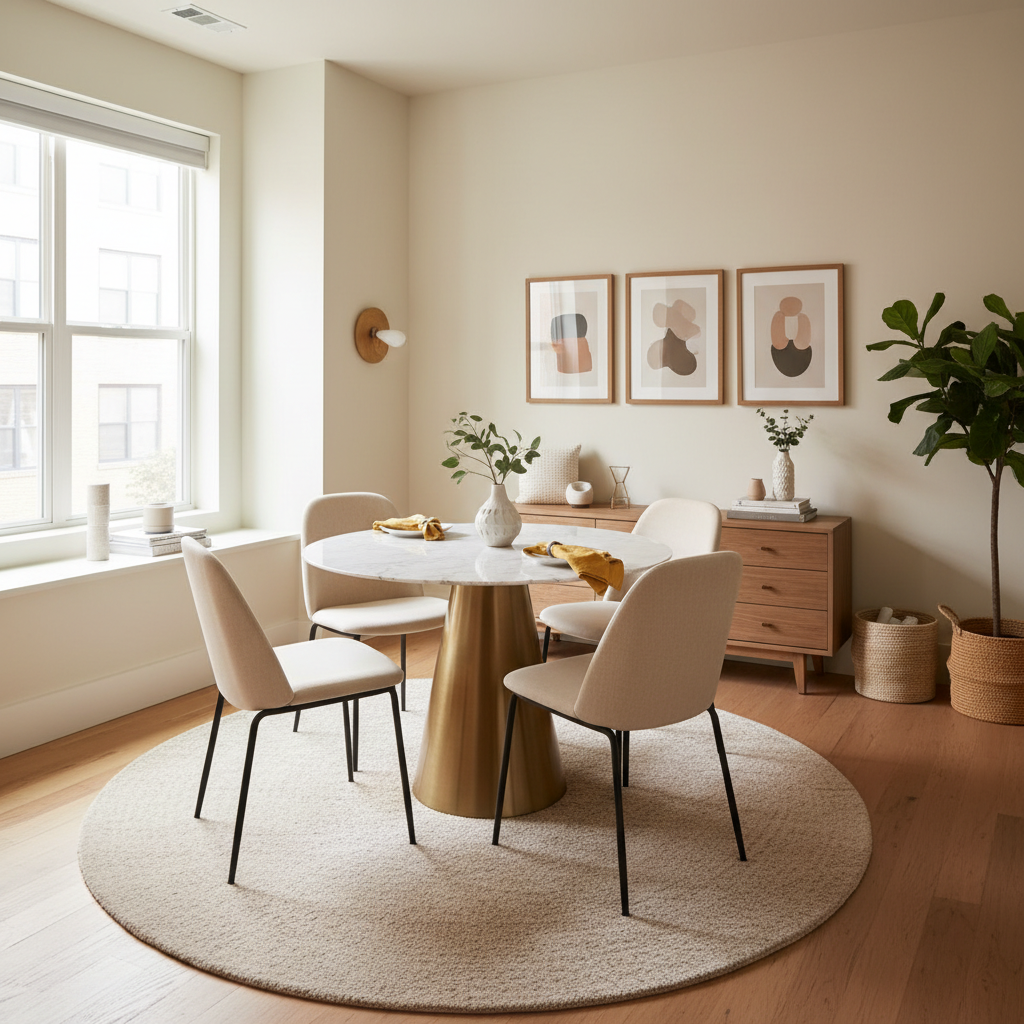
What makes dining for four hard in a small space
Most “it doesn’t fit” problems come from hidden space needs around the furniture, not the tabletop footprint. You can buy a smaller table and still hate it if chairs crash into walls or block the kitchen path.
- Clearance behind chairs: Many homes need roughly 30–36 inches behind a pulled-out chair to sit comfortably, though your layout may force less.
- Walkways: If the dining zone sits on a main route to the bedroom or bathroom, every extra inch matters.
- Storage spillover: Serving pieces, placemats, and extra glasses often end up on the table because there’s nowhere else.
- Visual clutter: Tight spaces feel tighter when furniture looks heavy or mismatched.
According to the National Kitchen and Bath Association (NKBA), thoughtful planning around clearance and pathways is a core part of functional kitchen and dining layouts, even when you’re working with limited square footage.
Quick self-check: which small-space dining situation are you in?
Before shopping, figure out what you’re actually solving. Most people misdiagnose the problem as “I need a smaller table,” when it’s really “I need different seating” or “I need a table that changes shape.”
- Pass-through zone: People constantly walk through where the table would go.
- Wall-hugging zone: One side must sit against a wall or window.
- Open-plan zone: Dining shares space with living room, so it has to look tidy fast.
- Kitchen-only zone: You’re carving out a corner in the kitchen, near cabinets and appliances.
- No storage zone: You’re missing a buffet, pantry, or nearby cabinets for dining items.
Once you know the category, the right small space dining ideas for 4 people become much clearer and less random.
Best table shapes and sizes for four (with a practical sizing table)
For four adults, you’re balancing two things: elbow room and the ability to pull chairs out without hitting something. In many small homes, the “best” table is the one that keeps corners from snagging walkways.
Common table options that fit four
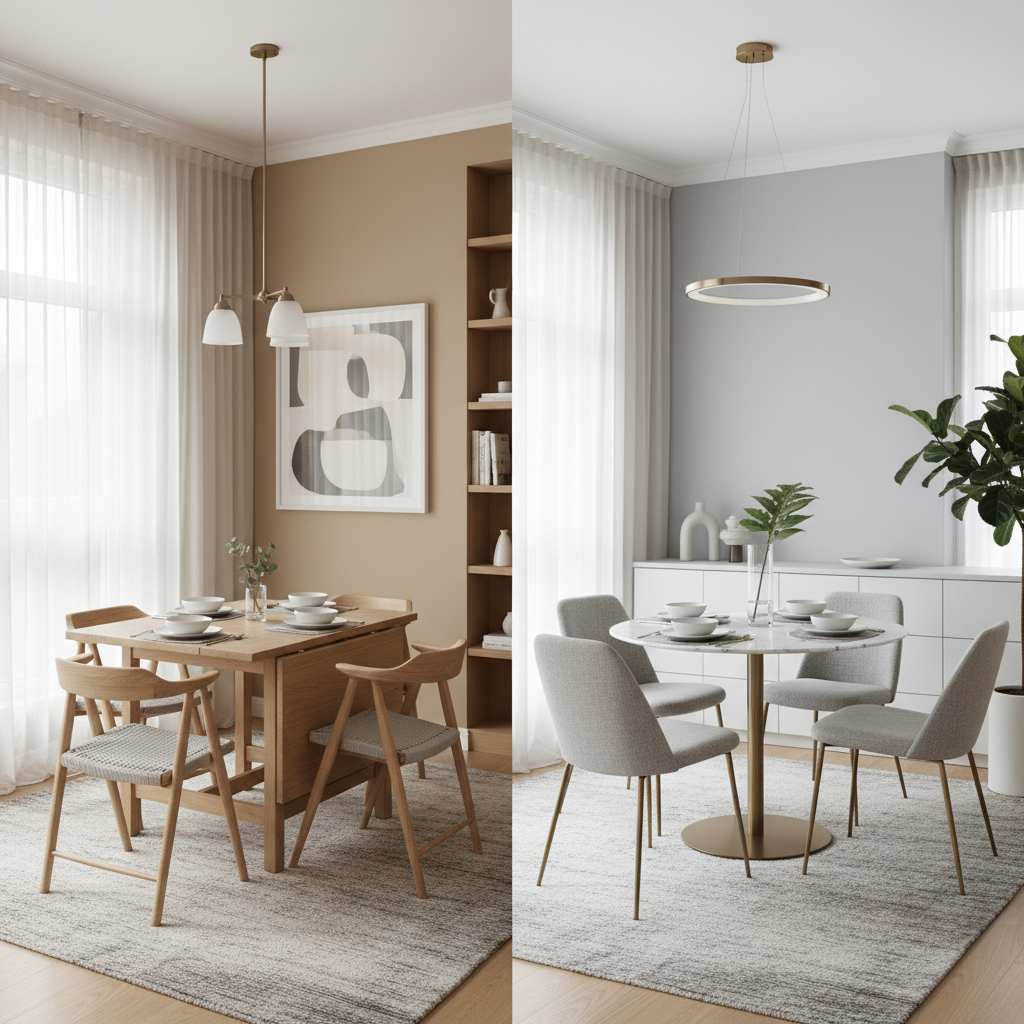
- Round pedestal table: Often the easiest to place because there are no corners and the base frees up leg space.
- Square table: Works when you can center it and keep clearances even on all sides.
- Narrow rectangle: Best along a wall or in a galley-style layout, especially with bench seating.
- Drop-leaf / gateleg: Small day-to-day, expands when four people sit down.
Typical sizing guide (use as a starting point, then measure your room):
| Table type | Comfortable size for 4 | Why it works in small spaces | Watch-outs |
|---|---|---|---|
| Round | 36–44 in diameter | No corners, flexible seating | Too small can feel cramped with plates |
| Square | 34–40 in | Compact footprint, clean look | Corner clearance in tight walkways |
| Rectangle (narrow) | 24–30 in deep, 48 in long | Great against a wall or banquette | End seats feel tight if table is too short |
| Drop-leaf | ~24 in closed, 48+ in open | Scales up only when needed | Leaf hardware stability varies by model |
Seating strategies that save inches (without feeling cheap)
In tight layouts, chairs are usually the bigger issue than the table. The wrong chairs add bulk, block drawers, and make the whole area feel crowded even when the tabletop size is “correct.”
What tends to work well
- Armless chairs: Easier to slide in, visually lighter, often a better fit for four.
- Benches: Tuck fully under a rectangular table, and can seat two on one side when space is tight.
- Two chairs + two stools: Stools can live under a console or counter when not used.
- Folding chairs you actually like: Not the metal kind from the garage, think slim wood or upholstered foldables.
A simple rule that avoids regret
If the chair back is tall and the legs splay outward, it usually “reads” bigger than it measures. In small space dining ideas for 4 people, visual bulk matters almost as much as inches.
Layouts that seat four in real homes (apartment-friendly)
You don’t need a perfect square room to make dining for four work, but you do need a plan for circulation. A workable layout lets one person get up without everyone else moving.
Layout A: Against-the-wall rectangle (best for pass-through rooms)
- Use a narrow rectangular table or a drop-leaf.
- Put a bench on the wall side, two chairs on the open side, one chair at the end if space allows.
- Keep the open side facing the main walkway, so chairs pull out where there’s room.
Layout B: Small round table in a corner (best for open-plan)
- Choose a pedestal base so knees don’t battle table legs.
- Angle the table slightly if the corner is tight, it often improves chair pull-out space.
- Use two full chairs and two slimmer seats (stools or petite chairs) if needed.
Layout C: Banquette or built-in feel (best if you own, or can hack it)
A true built-in banquette is a project, but a “banquette look” can be as simple as a storage bench plus cushions. You gain storage, and the seating line stays put, which helps in narrow rooms.
Practical setup steps: measure once, buy with confidence
Here’s the process that prevents the most returns and “why does this feel awkward” moments. It’s not glamorous, but it works.
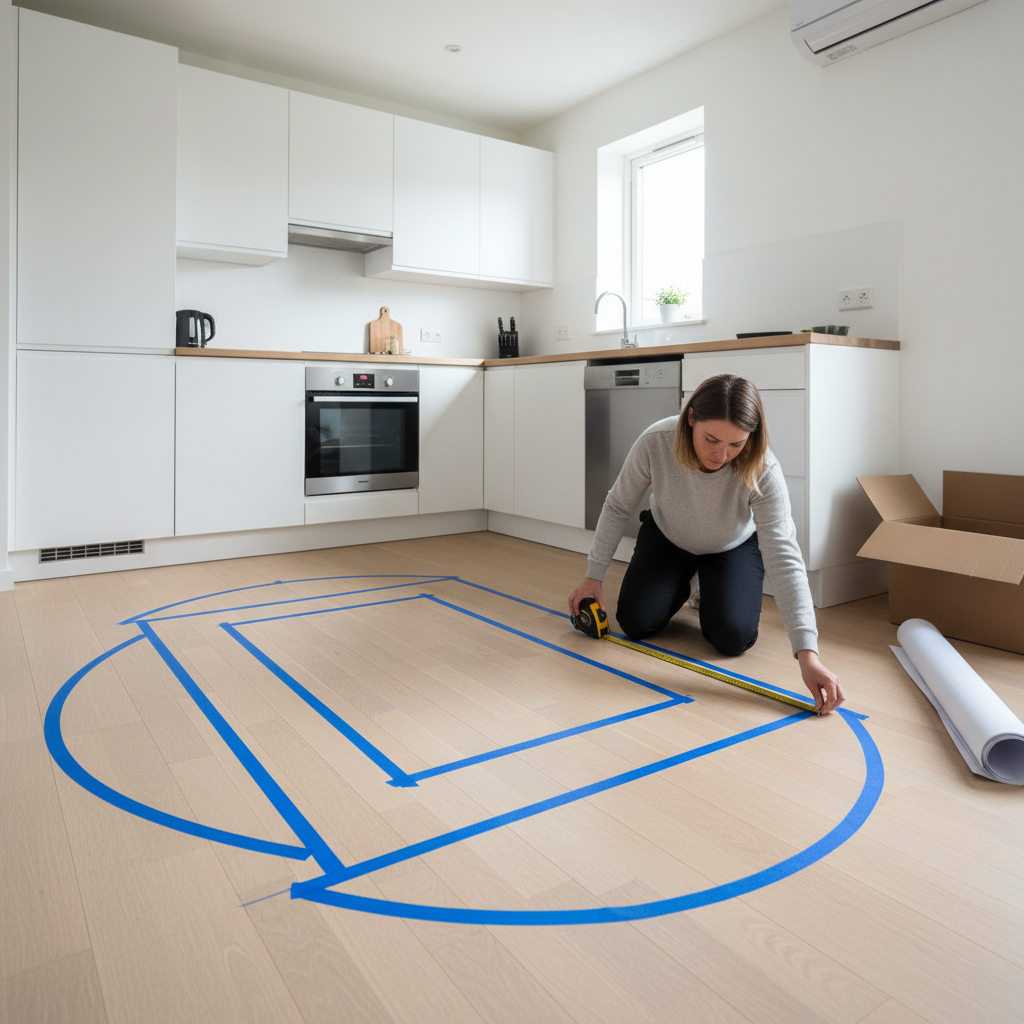
- Tape it out: Mark the table footprint on the floor, then add a second outline for chair pull-out space.
- Test the path: Walk your main routes with the tape down, especially to the fridge, bathroom, and sofa.
- Mock a meal: Put four place settings (plates + glasses) on a temporary surface to see if 36 inches round feels tight or fine.
- Plan “parking”: Decide where two extra seats go on non-dinner days, because that’s the part people forget.
If you rent, favor options that adapt: drop-leaf tables, movable benches, and seating that can live elsewhere when the room needs to flex.
Mistakes to avoid (the ones that make small dining feel cramped)
Some choices look great online and fail fast in a small room. If you’re building small space dining ideas for 4 people, these are the common traps.
- Oversized chair count: Four big chairs can overwhelm a table that’s technically the right size.
- Thick table aprons: They steal knee room, especially at smaller diameters.
- Skipping lighting: A cramped zone feels worse under harsh overhead light. A softer pendant or plug-in sconce often helps.
- No storage plan: If placemats live on the table 24/7, the area never resets visually.
- Rug that’s too small: In many cases, a rug that traps chair legs becomes an everyday annoyance, even if it looks cute.
Key takeaway: the goal isn’t to “fit four chairs,” it’s to make sitting down and getting up feel normal.
Conclusion: a small dining zone can still feel like a real one
Small space dining ideas for 4 people usually come down to three decisions: a table shape that matches your traffic flow, seating that tucks in cleanly, and a layout that gives you at least one “easy out” seat.
If you do one thing today, tape out your best spot and measure the clearances, then pick a table type that supports how you actually live. If you do a second thing, swap bulky chairs for slimmer seating, that change alone often makes the space feel twice as calm.
If you’re ready, start with your layout category from the self-check, then shop with those constraints in mind, it saves money and a lot of frustration.