
small space nursery with convertible crib setups work well in 2026, but only if you plan around real constraints: door swing, crib conversion space, and what you actually use at 2 a.m. The goal is not to “fit everything”, it’s to make the room calm, safe, and fast to navigate when you’re tired.
A convertible crib can carry you from newborn to toddler and sometimes beyond, which sounds perfect for small rooms, but there’s a catch: many nurseries feel great on day one and fall apart when you add a glider, hamper, stroller parking, and piles of laundry. A few layout decisions up front usually prevent that spiral.
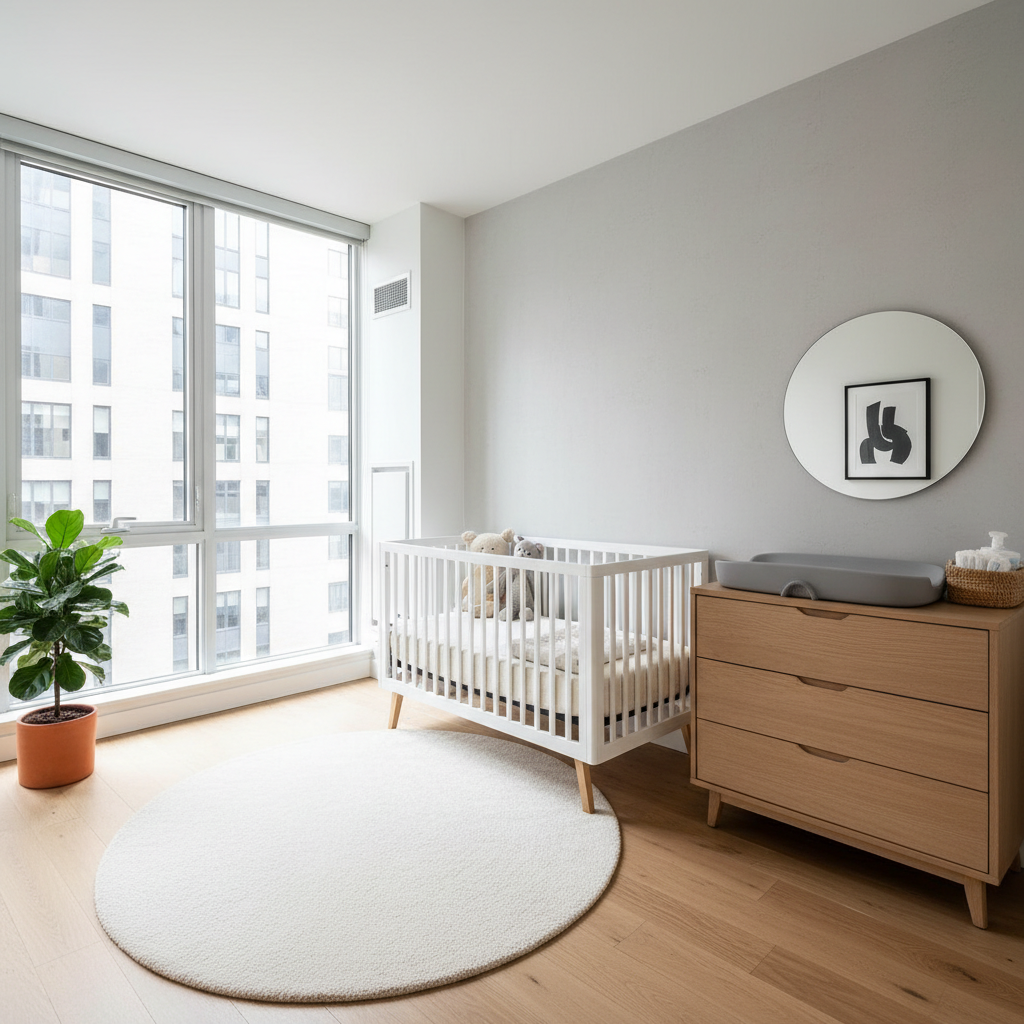
Below is a practical way to choose a crib, map clearances, and avoid the common “we bought the right items but the room still feels tight” problem. I’ll also point out when safety guidance matters more than aesthetic trends.
What makes a small nursery feel tight (even with the “right” furniture)
Most small nurseries don’t fail because the room is tiny, they fail because the workflow is messy. You end up walking around furniture, opening drawers into each other, or storing the stuff you need most in the hardest spot.
- Hidden conversion footprint: some convertible cribs need extra space for toddler rails or full-size bed rails later, and the room layout that works now may block the future setup.
- Bad “night path”: if the light switch, feeding seat, and diapering station are scattered, you create extra steps, noise, and bumps in the dark.
- Storage in the wrong form: deep bins look tidy but turn into black holes; shallow, labeled storage usually wins in small rooms.
- One oversized piece: a plush glider or wide dresser can eat the turning radius and make the whole room feel stressful.
According to the American Academy of Pediatrics (AAP), safe sleep guidance includes keeping soft bedding and loose items out of the sleep area; in small rooms, clutter creeps closer to the crib, so you’ll want a layout that makes “clear crib zone” easy to maintain.
Quick self-check: is your space better for a mini crib, standard convertible, or another approach?
Before shopping, measure the room and do a blunt reality check. If you’re aiming for a small space nursery with convertible crib, you want enough clearance to move safely, open storage, and later convert without re-buying everything.
Measure these three things
- Wall length where the crib will sit (include baseboards).
- Clear walking lane from door to crib to changing spot (you’ll use it half-asleep).
- Drawer/door swing for dresser and closet, so nothing collides.
Rule-of-thumb decision cues (not hard rules)
- If you’re in a studio/very tight room and need flexibility, a mini crib may fit the early months better, then you can reassess later.
- If you can place the crib on a solid wall and still keep a clean lane, a standard convertible crib often pays off long-term.
- If the room can’t handle conversion rails later, consider a crib that converts only to toddler daybed, or plan to move the bed conversion to another room when the time comes.
Best layout patterns for a small nursery with a convertible crib
Layout is the make-or-break piece. Don’t start with decor, start with flow: crib placement, diapering, then seating. Everything else can be scaled down.
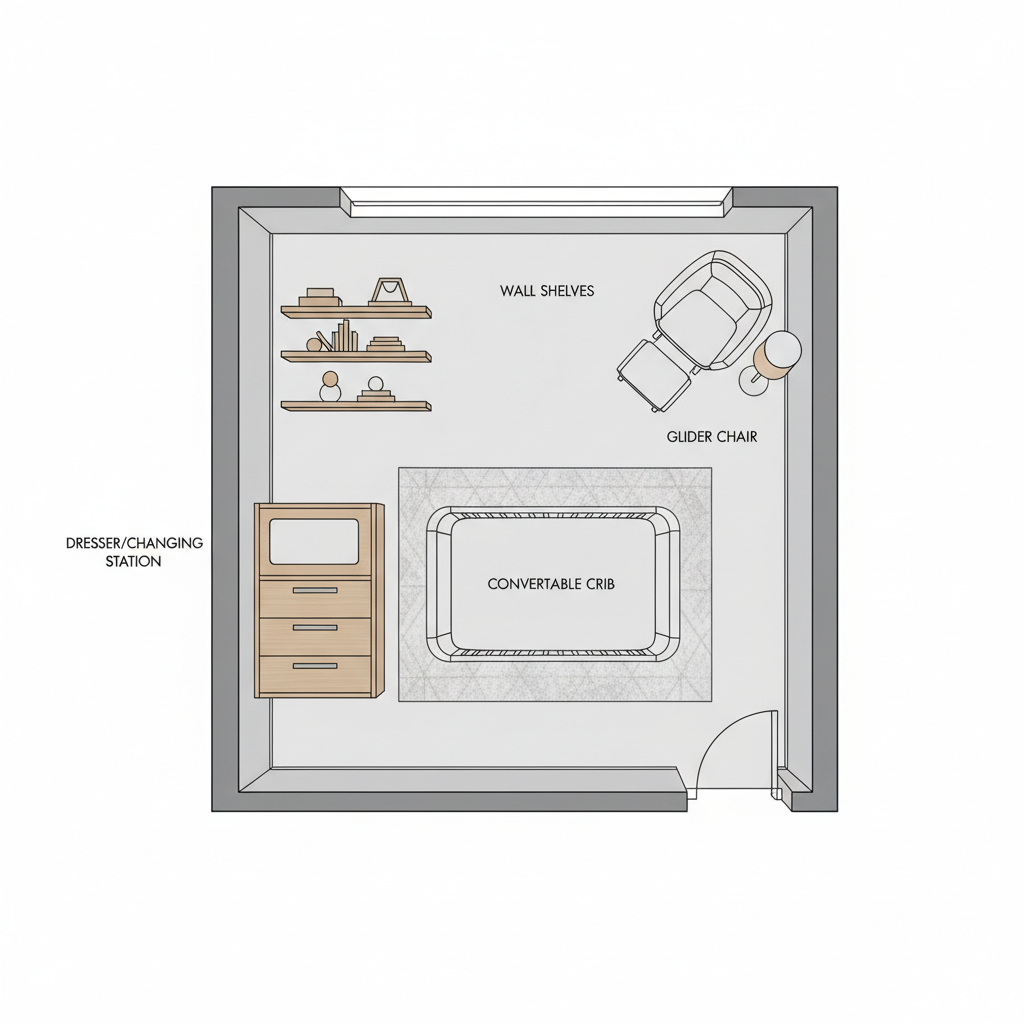
Pattern A: “Crib + dresser wall” (most common, usually easiest)
Put the convertible crib on the longest uninterrupted wall, and place a compact dresser with changing top on the adjacent wall. This creates a simple L-shaped workflow and keeps the center open.
- Keep daily items in the top two drawers, not the bottom.
- Use vertical wall storage above the dresser, not above the crib.
Pattern B: “Crib by the window” (works, with guardrails)
This can look great and free up wall space, but you need to be extra careful with cords and drafts. According to the U.S. Consumer Product Safety Commission (CPSC), window covering cords can pose a strangulation hazard; in practice, that means keep cords well out of reach and consider cordless options.
- Avoid placing the crib where curtains or blind cords can fall into the sleep area.
- Watch heater/vent placement so airflow isn’t blasting directly at the crib.
Pattern C: “Closet-first” layout (when storage is your biggest constraint)
If your closet is tiny or awkward, prioritize access to it. Place the crib to leave the closet doors fully usable, then use over-door organizers and slim rolling carts for supplies.
What to buy (and what to skip) for 2026 small nurseries
Trends come and go, but the same categories keep saving space. The real win is choosing items that do two jobs without adding bulk.
| Category | Space-smart choice | Why it helps | Watch-outs |
|---|---|---|---|
| Convertible crib | Crib with storage-free base | Cleaner footprint, easier cleaning | Confirm conversion kit availability and cost |
| Changing station | Changing pad on a dresser | One piece instead of two | Secure pad, keep supplies within reach |
| Seating | Compact glider or armless chair | Less visual and physical bulk | Don’t sacrifice back support too much |
| Storage | Shallow bins + labels | Find items fast, less overflow | Open bins collect dust, rotate/clean |
| Lighting | Plug-in wall sconce + dim bulb | Frees nightstand space | Manage cords safely, avoid reach zones |
- Skip the standalone changing table in most tight rooms unless you truly lack dresser space.
- Be picky about “cute storage”; if it’s hard to open one-handed, you will stop using it.
- Choose a hamper you can live with; laundry is the fastest way small rooms look chaotic.
Step-by-step setup: from empty room to functional nursery
This is the order that tends to prevent rework. It’s not glamorous, but it keeps you from buying around a mistake.
- Mark the crib footprint with painter’s tape, including space to stand and bend comfortably.
- Place the dresser/changing surface where drawers open fully without blocking your path.
- Choose the “night path”: door → light → feeding seat → changing → crib, and clear that lane.
- Set up vertical storage near the changing area for diapers, wipes, burp cloths, extra sheets.
- Only then add decor: rug, art, mobile, blackout solution, in that order.
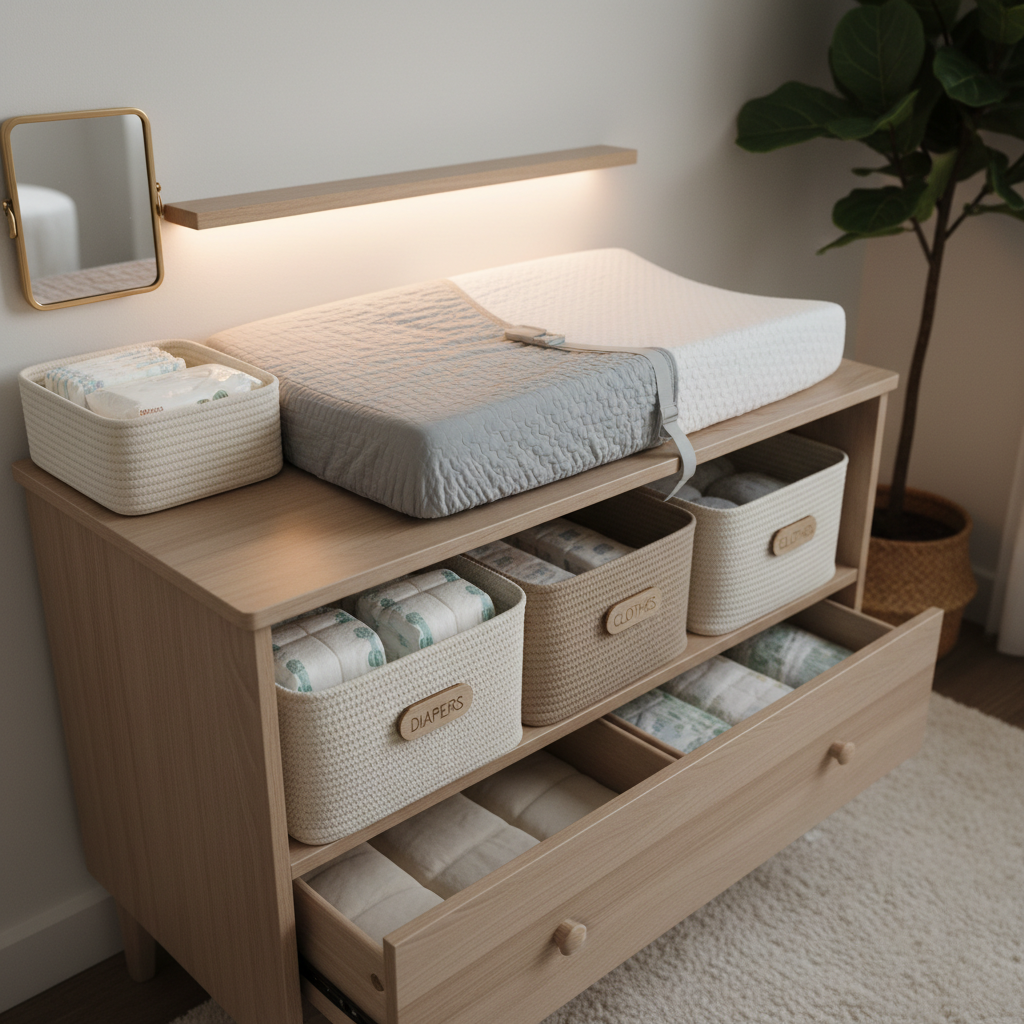
Key point: if you’re building a small space nursery with convertible crib and you can’t keep the center of the room mostly open, you’ll feel cramped every single day. It’s worth giving up a “nice-to-have” piece to protect that open zone.
Safety and comfort details that matter more in small rooms
Small spaces amplify small mistakes. A tiny trip hazard becomes a real problem when you’re carrying a baby at night.
- Keep the sleep area clear: avoid shelves, heavy frames, or dangling decor above the crib. If you’re unsure, err on the empty-wall side.
- Manage cords and chargers: mount power strips, reduce reachable cords, and keep monitors positioned so cords don’t drape near the crib.
- Temperature and airflow: tight rooms can warm up quickly; if you’re concerned about overheating or drafts, it may help to ask your pediatrician what to watch for in your home’s setup.
According to the National Fire Protection Association (NFPA), safe use of electrical cords and avoiding overloaded outlets can reduce fire risk; in nurseries with lots of devices (white noise, monitor, lamp), planning outlets and cord routes is part of “babyproofing,” not an afterthought.
Common mistakes (and quick fixes) I see all the time
- Mistake: buying the crib first, then discovering the dresser doesn’t fit. Fix: tape the footprint of both pieces before purchasing.
- Mistake: using under-crib storage that turns into clutter. Fix: limit under-crib to one category only, like spare sheets, in a zip bag.
- Mistake: “decor shelves” become a dumping zone. Fix: switch to labeled bins or a closed cabinet surface.
- Mistake: oversized recliner in a micro room. Fix: try a compact chair plus a small ottoman that tucks under the dresser overhang.
When it’s worth getting professional help
If you’re unsure about crib placement near windows, heaters, or tight electrical layouts, a quick consult can save stress. That might be a pediatrician for sleep environment questions, a certified child passenger safety technician for gear storage questions related to car seats, or a local electrician if outlets and cords feel sketchy.
And if your nursery doubles as your bedroom, it can be helpful to talk through room-sharing logistics with your pediatrician, since family routines and sleep setups vary a lot.
Conclusion: make it small, not cramped
A small space nursery with convertible crib can feel surprisingly roomy when the essentials sit close, storage stays shallow, and the open lane stays protected. Pick a layout you can maintain on low sleep, choose fewer but better pieces, and treat safety clearances as non-negotiable.
If you do one thing this week, tape the crib and dresser footprints on the floor, then walk the “night path” a few times. It’s a simple test, and it reveals problems before you spend money.
FAQ
- What size rug works in a small nursery with a convertible crib?
In many small rooms, a medium rug that anchors the crib area without running wall-to-wall feels better than a tiny accent rug. The practical test is whether you can open drawers and the door without catching edges. - Is a convertible crib worth it in a small apartment nursery?
Often yes, if you expect to stay in the same home and can plan for future conversion space. If you may move soon, a simpler crib can be easier to resell and easier to fit in a new layout. - Where should I put the dresser if the closet doors are tight?
Usually on the wall that keeps closet access clean, even if it’s not the prettiest spot. Daily usability beats symmetry, especially once you’re changing diapers multiple times a day. - Can I place the crib next to a window?
Sometimes, but be careful with cords, curtains, and temperature swings. If you can’t fully control cords and hanging fabric, it’s safer to choose a different wall. - What’s the best storage for diapers and wipes in a tiny nursery?
A small caddy on the dresser plus a shallow drawer bin system tends to work better than big baskets. You want one-hand access without digging. - How do I keep the nursery from looking cluttered?
Limit surfaces: one tray on the dresser, one hook rail by the door, and everything else behind drawers or inside labeled bins. Open shelves look nice, but in real life they collect random items fast. - Do I need a glider in a small nursery?
Not always. If space is tight, a supportive armless chair can be enough, and you can add comfort with a compact ottoman or lumbar pillow rather than a bulky recliner.
If you’re trying to set up a nursery fast and you’d rather not guess, start by listing the three daily “must-do” moments (feeding, changing, sleep) and build the room around those, then add the nice touches once the flow feels effortless.