
how to organize outdoor cushions in storage box comes down to three things: keep them dry, keep them sorted by “use,” and stack them in a way you can actually reach without pulling everything out.
If your patio cushions end up smelling musty, losing their shape, or turning into a messy pile by mid-season, it’s usually not because you “need a bigger box,” it’s because the storage setup doesn’t match how cushions behave: they trap moisture, they compress unevenly, and they’re awkward sizes.

This guide walks you through a practical, real-world method: a quick cushion audit, a layout that prevents “bottom-crush,” moisture control that works in most climates, and a simple system so you don’t dread opening the box.
Start with a quick “cushion audit” (it saves space later)
Before you fold anything, figure out what you’re storing and what condition it’s in. This is the part most people skip, then wonder why the box turns into chaos.
- Separate by type: seat pads, back cushions, chaise cushions, throw pillows.
- Check covers and seams: small tears or open zippers let water in fast once items sit compressed.
- Confirm they’re fully dry: even “slightly damp” foam can sour in storage.
According to the U.S. Environmental Protection Agency (EPA), controlling moisture is key to limiting mold growth indoors and in enclosed spaces, and outdoor storage boxes behave like mini enclosed spaces when humidity rises.
Pick the right storage box setup (size, venting, and placement)
A storage box can be “big enough” and still be a poor fit. Look at three factors that affect cushion longevity more than people expect.
1) Interior volume and opening style
- Top-opening boxes are common, but deep boxes make you unstack everything to reach one cushion.
- Front-access or lift-and-slide designs can be easier if you grab cushions daily.
- Measure the largest cushion (often chaise) and plan around that, not the smallest pillow.
2) Venting and water management
- Some boxes are “weather resistant,” not waterproof, so assume humidity and small leaks can happen.
- If your box sits in full sun, interior heat can spike, which may stress fabrics and coatings over time.
3) Location matters more than the label
- Keep the box off low spots where water pools after rain.
- Leave a little space behind the box so air can move around it.
How to organize outdoor cushions in storage box: a layout that actually works
Here’s the approach that tends to work in real patios: store by “grab order,” protect shape, and avoid burying the things you use most.
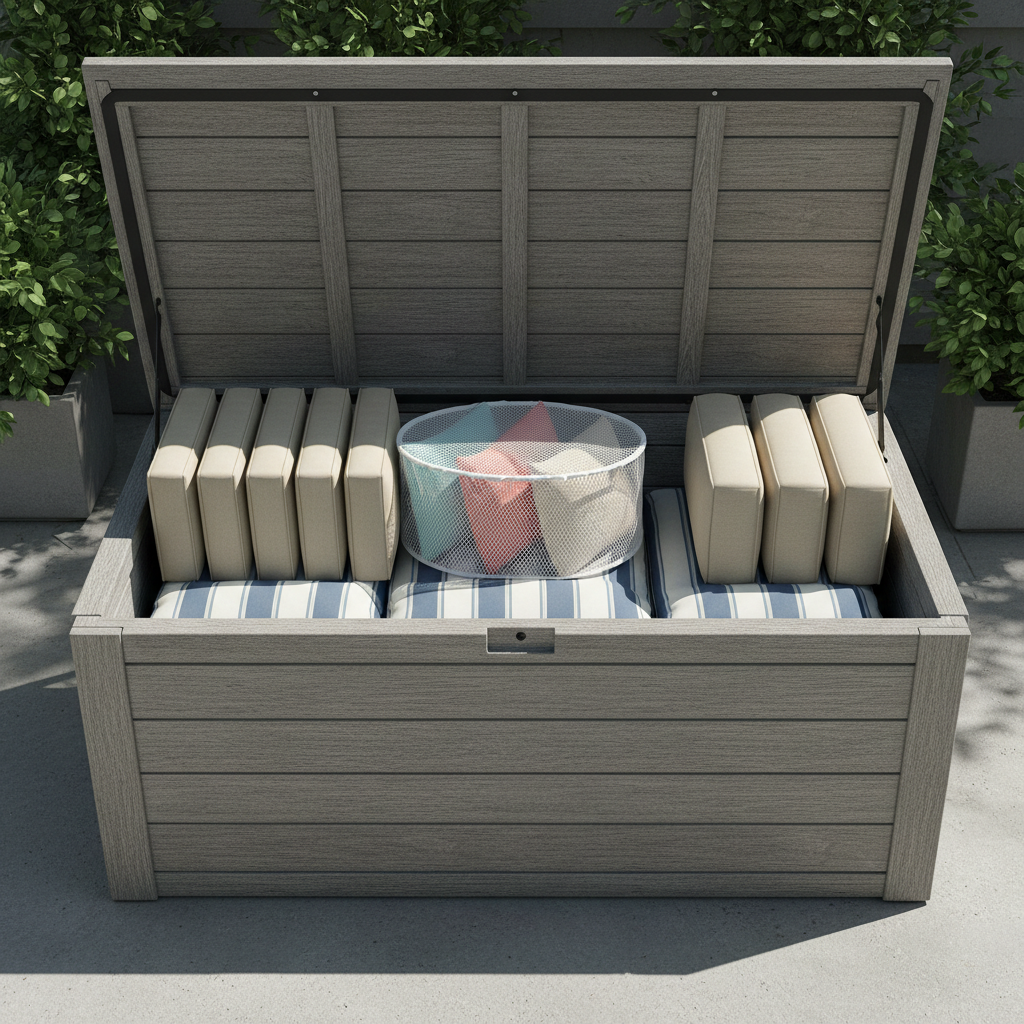
The “bottom-flat, sides-vertical” method
- Bottom layer: place the flattest, largest pieces first (often chaise or bench pads). Keep them flat to prevent permanent creases.
- Side stacks: stand seat cushions on edge along one side, and back cushions along the other side. This reduces pressure points and makes grab-and-go easier.
- Top zone: throw pillows and smaller items go on top, ideally inside a breathable laundry bag or fabric tote so they don’t snag.
When you should not vacuum-bag cushions
Vacuum bags can save space, but they can also create issues if the cushion isn’t bone-dry or if the foam doesn’t rebound well. Many outdoor cushions handle light compression, but some foams and fills can take a set. If you try vacuum storage, test one cushion first and check rebound after 24 hours.
Moisture control and odor prevention (without overcomplicating it)
If you only change one thing, make it moisture control. That’s usually the difference between “fresh next weekend” and “why does this smell like a basement.”
- Dry time: after rain or cleaning, give cushions extra time. Sun helps, but shade with airflow can be safer for color longevity.
- Air gap: don’t pack so tight that nothing breathes. A little space reduces trapped humidity.
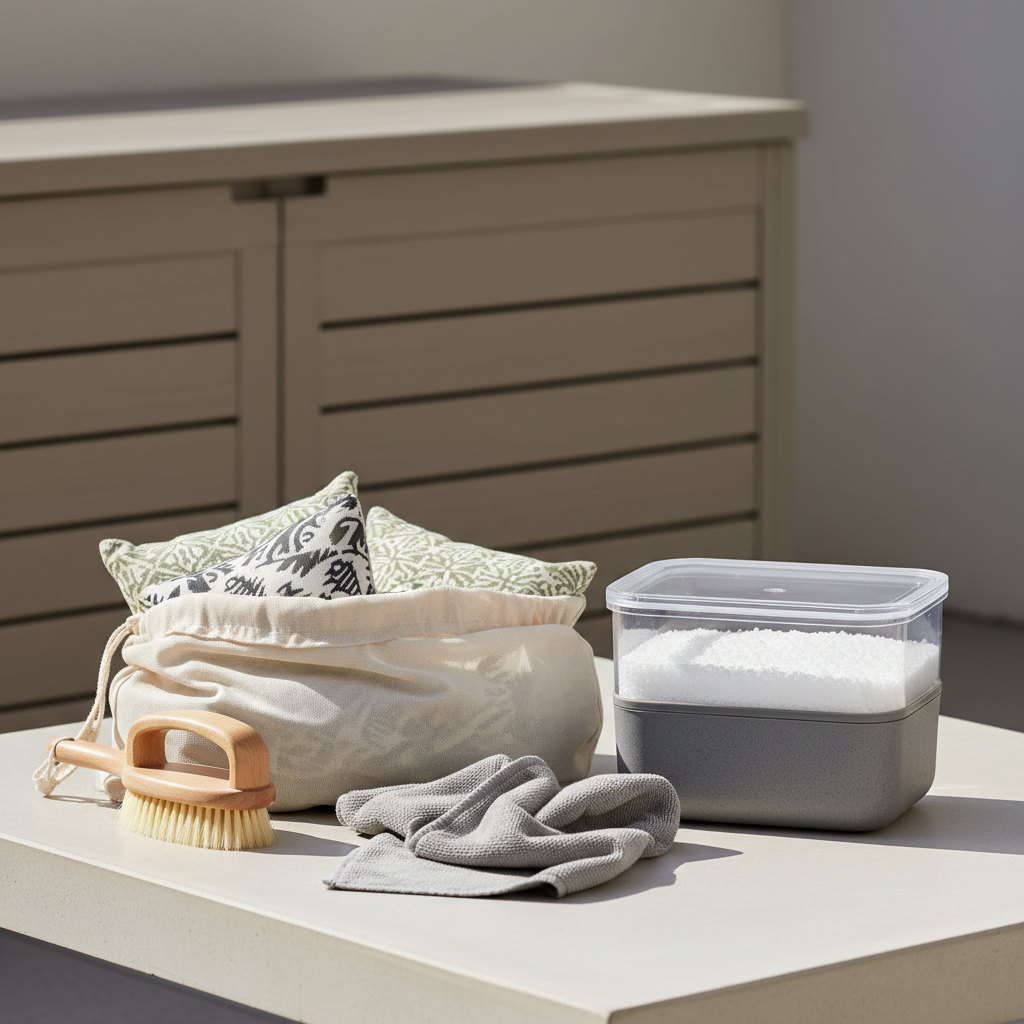
- Absorbers: in humid regions, a moisture absorber can help, but replace it on schedule so it doesn’t become decorative and useless.
- Avoid harsh fragrances: strong scent packets can transfer odor to fabric and irritate sensitive noses.
If you see visible mold or persistent odor that doesn’t improve after cleaning, consider replacing the cushion insert. In some cases, mold can be difficult to remove from porous foam, and you may want to consult a cleaning professional for safer handling.
A simple sorting system so you don’t “re-organize” every week
The best organization system is the one you’ll keep doing when you’re tired after dinner.
Use a 3-part grouping
- Daily-use set: the cushions that live on the seating most days.
- Guest/extra set: spares, seasonal color swaps, oversized lounge pieces.
- Repair/replace: anything with broken zippers, torn ties, or foam that stays flat.
Label lightly, not obsessively
- One tag for “CHAIR SEATS,” one for “BACKS,” one for “PILLOWS” is usually enough.
- If you own multiple furniture sets, add a small color dot system to avoid playing cushion Tetris later.
Quick decision table: what to do based on your situation
If you’re unsure what’s “good enough,” use this table to pick a path and move on.
| Situation | Likely problem | What to do |
|---|---|---|
| Box smells musty after rain | Trapped humidity, cushions stored damp | Dry cushions fully, add airflow gap, use a moisture absorber |
| Cushions look creased or misshapen | Too much weight on soft fills | Store large cushions flat, stand medium cushions on edge, reduce stacking height |
| You hate grabbing the “bottom” cushion | Access friction, deep stacking | Put daily-use items on top/near opening, keep like items grouped |
| Fabric feels dusty or gritty | Outdoor debris, no pre-clean | Brush off, quick wipe, let dry before storage |
Common mistakes that waste space (and how to avoid them)
- Storing damp cushions “just overnight”: that’s often when odor starts. If it feels cool and clammy, wait.
- Overstuffing the box: you gain capacity today, then lose usability all season.
- Mixing sharp items with fabric: grill tools, garden trowels, pool gear can snag covers fast.
- Ignoring pests: in some areas, critters may nest in warm, quiet boxes. Check periodically, especially in shoulder seasons.
Key takeaways (save this)
- Dry beats “weatherproof.” Your best defense is storing cushions truly dry with a bit of airflow.
- Organize by grab order. Daily-use cushions should be easiest to reach.
- Protect shape. Large flat pieces stay flat, medium cushions stand on edge, small pillows go on top.
- Keep it simple. Light labels and clear groups prevent weekly re-stacking.
Conclusion: a storage box can be tidy without being fussy
If you’ve been treating your storage box like a laundry hamper, you’re not alone, but it’s also why cushions start feeling like a problem. Set up one clean layout, control moisture, and make the “next grab” easy, that’s the whole game.
Tonight’s easy win: pull everything out once, wipe the box, sort cushions into three groups, then rebuild the stack using the bottom-flat, sides-vertical method. You’ll notice the difference the next time you open the lid.
FAQ
How do I organize outdoor cushions in a storage box if they’re different sizes?
Use size as your stacking logic: large and flat on the bottom, medium on edge along the sides, small pillows on top in a breathable bag. This keeps the box usable and reduces crushed corners.
Should I store outdoor cushions in plastic bags inside the box?
Usually only if you can guarantee they’re fully dry. Sealed plastic can trap humidity and create odor. Breathable fabric bags tend to be safer for throw pillows and covers.
How can I keep outdoor cushions from getting moldy in storage?
Dry them completely, leave a small air gap, and consider a moisture absorber in humid climates. If mold keeps returning, the box placement or venting may be the real issue.
Is it okay to store cushions standing up?
For many seat and back cushions, standing them on edge works well because it reduces pressure points and improves access. Very thick or easily creased cushions may do better stored flat.
What’s the best way to store wet cushions when rain is coming?
If you have to move fast, bring them under cover with airflow and dry them as soon as you can. Storing wet cushions in an enclosed box often leads to musty smells within a day or two.
How often should I air out the storage box?
In dry regions, occasional airing may be enough. In humid or rainy areas, opening the box on a dry day every week or two can help, especially if the box stays in shade.
Do I need to wash cushions before storing them for the season?
It depends on how dirty they are, but brushing off debris and letting everything dry is a good baseline. If you wash, follow the care label and allow extra drying time so you don’t lock moisture into the foam.
If you’re trying to keep a patio looking pulled together without turning cushion storage into a weekly project, a weather-resistant box with decent venting plus a simple layout can be the “set it and forget it” level most households actually want.