
best air purifiers for bedroom allergy searches usually come from one of two nights: you either woke up congested again, or you are tired of guessing whether dust, pollen, or pet dander is running your sleep.
The tricky part is that “good for allergies” and “good for a bedroom” are not the same thing, bedrooms demand low noise, steady performance at night, and filters you will actually replace, not just big CADR numbers on a box.
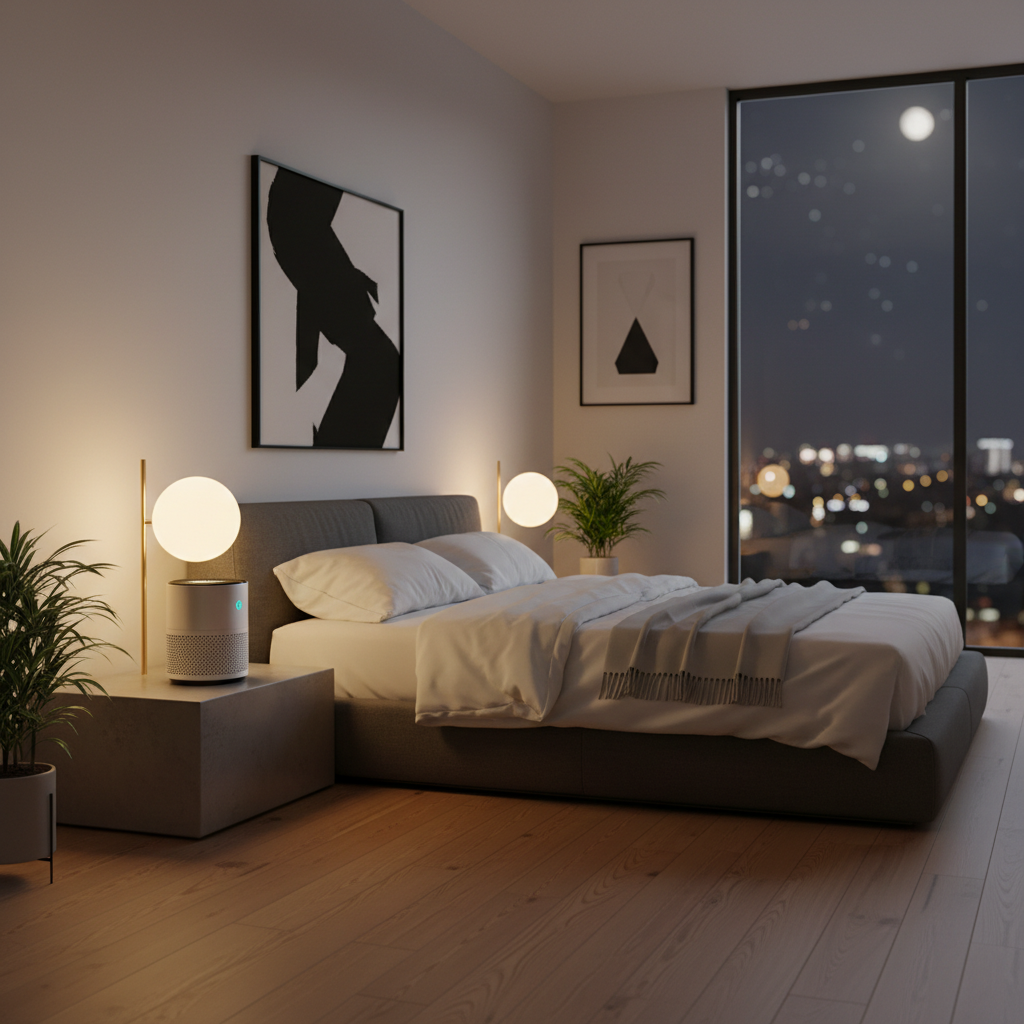
This guide focuses on real bedroom constraints: how to match the purifier to your room size, what filter type matters for allergies, how to keep noise low, and when an upgrade will not fix the problem because the trigger sits somewhere else.
Quick picks: what to buy (by bedroom situation)
If you want a short list before the deep dive, here is a practical way to shop: pick a “type” that fits your room and habits, then compare models within that lane.
- Light sleeper, easily annoyed by sound: choose a quiet HEPA unit with a true low fan setting you can leave on all night, plus an auto-dim or lights-off mode.
- Pet dander in the bedroom: HEPA matters, but you also want a decent pre-filter for hair so the main filter does not clog fast.
- Seasonal pollen, windows occasionally open: prioritize enough airflow for your room size so it can “recover” air quality quickly after you close windows.
- Small room, tight budget: do not overbuy, a right-sized HEPA purifier with affordable replacement filters beats an oversized unit you run on low forever.
- Odors or smoke also a concern: consider a model with meaningful activated carbon, but do not expect carbon to replace ventilation in heavy odor situations.
What “allergy-friendly” actually means in an air purifier
For bedroom allergies, the goal is straightforward: reduce airborne particles that irritate your nose, eyes, or lungs, and keep that reduction steady over hours of sleep.
HEPA filtration is the baseline for particles. According to EPA, HEPA filters can capture a very high percentage of airborne particles of certain sizes, which is why they are widely recommended for particle control in homes.
Filters and features that usually matter
- True HEPA (or HEPA-grade) main filter: helps with pollen, dust, pet dander, and many fine particles.
- Pre-filter: catches lint and hair, extending the life of the main filter, this is a quiet money-saver in pet homes.
- Activated carbon (optional but useful): can help with light odors and some VOCs, but capacity varies a lot by model.
- AHAM Verifide / CADR listing: a helpful signal that performance testing follows a recognized protocol. According to AHAM, CADR provides a standardized way to compare particle cleaning rates for smoke, dust, and pollen.
Features that sound helpful but often disappoint
- Ionizers and “plasma” add-ons: these can introduce tradeoffs, including potential ozone concerns depending on design. According to EPA, ozone can be harmful even at low levels, so if you do not need the feature, many people simply avoid it.
- “HEPA-like” wording: not automatically bad, but it is vague. Look for clear filter specifications and reputable testing.
How to size a purifier for your bedroom (without overpaying)
Most regret comes from buying the wrong size: too small and you crank it loud, too big and you pay extra for airflow you never use.
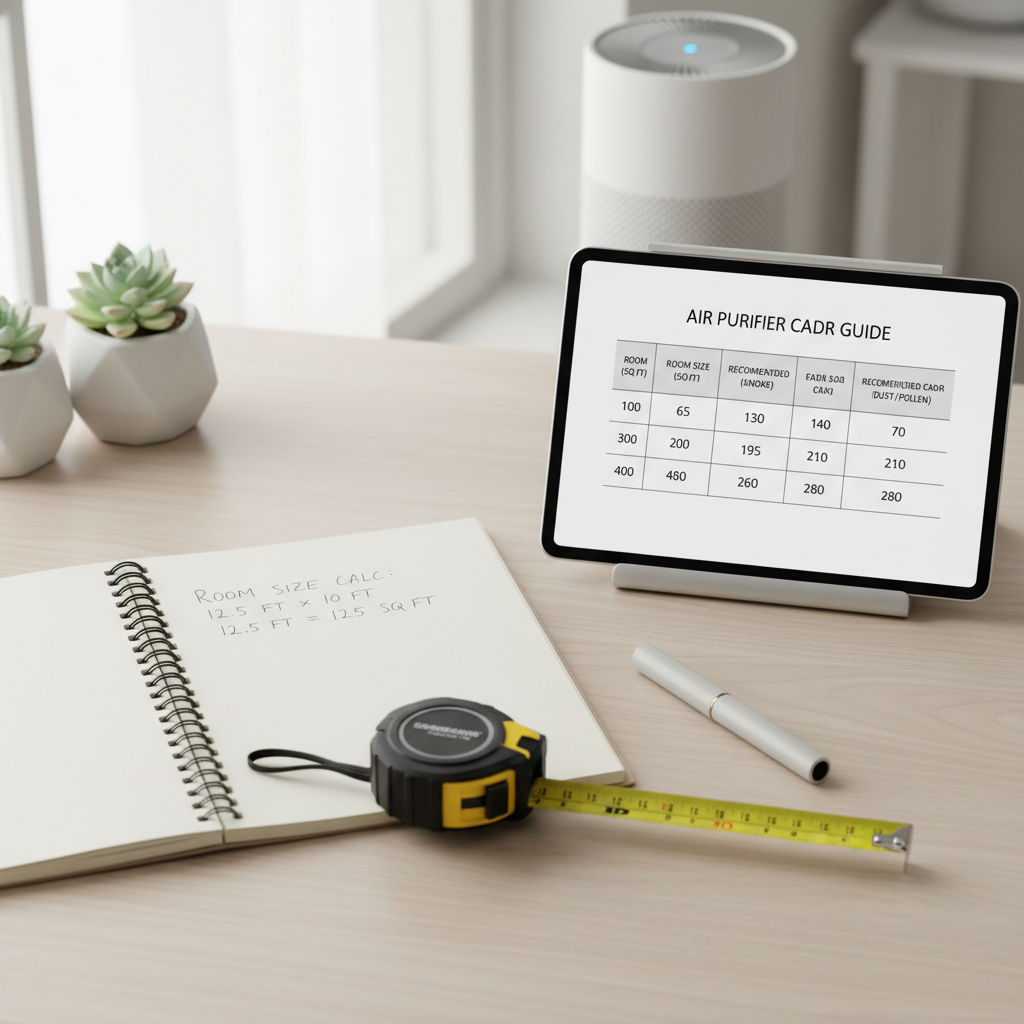
A bedroom-friendly target many shoppers use is to get enough airflow that the unit can clean the room several times per hour, while still running on a lower, quieter setting at night. Brands may describe this as recommended room size, CADR, or air changes per hour, the exact wording varies.
- Measure your room: length × width = square feet. If ceilings are unusually high, performance can feel weaker, because the purifier still moves a fixed amount of air.
- Use “night mode reality”: assume you will not run max fan while sleeping. A model that only meets your room size on turbo may be effectively undersized for you.
- If you sleep with the door closed, you have a smaller air volume to manage, so right-sizing becomes easier.
- If you keep doors open, your bedroom purifier partly cleans the hallway air too, you may need a stronger unit or a second purifier elsewhere.
Noise, lights, and sleep: what to look for (and what to ignore)
For most people, the “best air purifiers for bedroom allergy” category is really a sleep-product category, if it annoys you, you will turn it off, and zero airflow does nothing.
- Low setting that still moves air: some purifiers have a “silent” mode that is basically a whisper but barely cleans, read reviews and look for published specs if available.
- Auto-dimming or lights-off: small LEDs can feel surprisingly bright at 2 a.m., especially on the floor near the bed.
- Sound character: decibels matter, but tone matters too, a smooth “fan” sound is often easier to sleep with than a pulsing or rattly unit.
- Placement room: if it must sit inches from your nightstand, choose a model designed for close-range use without blowing directly at your face.
One simple test: run it for 20 minutes while you read in bed, if you catch yourself thinking about the noise or light, that feeling usually gets worse when you are trying to fall asleep.
Comparison table: bedroom allergy shopping checklist
This table is not brand-specific on purpose, it is a quick way to compare models fairly when marketing copy gets loud.
| What to compare | What “good” looks like | Why it matters for allergies |
|---|---|---|
| Filtration type | True HEPA + pre-filter | Captures common triggers like pollen and dander, pre-filter slows clogging |
| Room size / CADR | Meets your room on a quiet setting | Better overnight particle reduction without running turbo |
| Noise & lights | Night mode, dimmable LEDs, stable fan sound | Higher chance you keep it on consistently |
| Filter replacement cost | Filters easy to find, reasonable schedule | Old filters reduce airflow and performance, and people delay replacements |
| Extra tech | Optional, clearly explained, can be disabled | Avoid features you do not need, especially if they introduce sensitivity issues |
Set it up for results: a bedroom routine that works
Even a great purifier underperforms if it is placed poorly or run inconsistently. The goal is boring consistency, not occasional “blast it on high.”
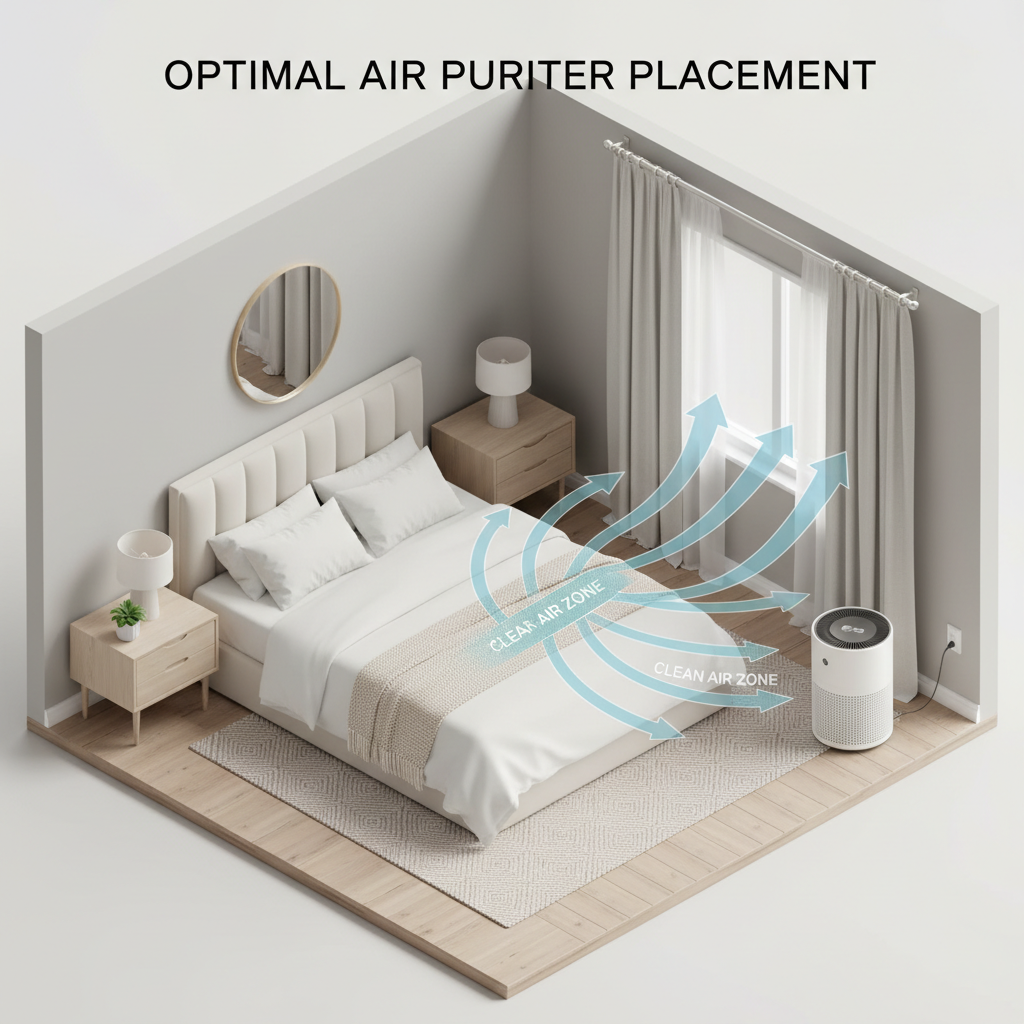
Placement and run time
- Give it breathing room: keep it a bit away from walls, bedding, and curtains so intake and exhaust are not blocked.
- Run it before sleep: start 30–60 minutes ahead, especially on high-pollen days, then drop to a quiet setting for overnight.
- Close the loop: if pollen is your issue, keeping windows closed at night often helps the purifier keep up.
Filter maintenance without overthinking
- Check the pre-filter often, pet hair buildup can be fast, a quick vacuum or rinse if the model allows can restore airflow.
- Replace on schedule, or sooner if airflow drops and the unit smells dusty. Many “allergy failures” are really clogged filters.
- Buy filters where you will not forget: a subscription or calendar reminder beats guessing.
Common mistakes that keep allergies bad (even with a purifier)
This is the part many people do not want to hear: a purifier helps, but it cannot undo everything in a bedroom environment.
- Expecting it to fix dust in fabrics: if bedding, pillows, or carpet hold allergens, you may still react when you move around. Washing bedding hot when appropriate and using allergen covers can matter.
- Running only on “auto”: sensors often react to big spikes, not steady low-level pollen. In many bedrooms, a steady low fan overnight works better.
- Placing it behind furniture: if air cannot circulate, performance drops quietly, and you blame the model.
- Ignoring humidity or mold signals: musty smells, bathroom moisture, or visible spots suggest issues a purifier will not solve alone.
- Using ozone-generating devices: some “air cleaners” are not HEPA purifiers at all. According to EPA, ozone can irritate the respiratory system, so it is worth being cautious and reading labels.
When you should talk to a professional
If symptoms feel severe, persistent, or include wheezing, it is smart to consult a clinician or allergy specialist, especially before you assume it is “just the room.” Air cleaning is a support tool, not a diagnosis.
- Allergy symptoms persist despite consistent purifier use for a few weeks, especially with bedding and cleaning steps in place.
- Asthma, chest tightness, frequent night coughing, these deserve medical guidance.
- Suspected mold or water damage, consider an indoor air quality professional or a qualified contractor, because remediation needs a plan.
Conclusion: picking the right bedroom purifier without guesswork
If you want a clean, realistic takeaway, choose a quiet true-HEPA purifier sized for your bedroom on a low setting, then run it consistently and stay on top of filters, that combo is what usually turns “I hope this helps” into noticeable nights.
Two easy next steps: measure your bedroom tonight and decide where the unit can sit with clear airflow, then compare a few models by HEPA type, CADR or room rating, and annual filter cost, you will narrow the field fast.
FAQ
- What is the best air purifier for bedroom allergy symptoms if I am a light sleeper?
Look for a model known for low noise on its medium-low settings, not just a “sleep mode” label. Dimmable lights and a steady fan sound often matter as much as the decibel number. - Do I need a true HEPA filter, or is “HEPA-like” fine?
True HEPA is clearer and easier to compare across brands. “HEPA-like” can still help, but the wording is vague, so you rely more on CADR, reputable testing, and real-world airflow performance. - Where should I place an air purifier in a bedroom for allergies?
Keep it where airflow is not blocked, a little away from walls and fabric, and not shoved under a desk. If you can, place it so the clean-air stream does not blow straight at your face all night. - How long should I run my purifier at night?
Many people run it continuously, with a higher setting before bed and a quieter setting overnight. Consistency usually beats short bursts, especially during pollen season. - Will an air purifier help with dust mites?
It may reduce airborne dust that includes mite debris, but mites live in bedding and soft materials. Allergen covers, frequent washing when appropriate, and humidity control often make a bigger difference. - Is activated carbon necessary for bedroom allergies?
Not always. Carbon targets odors and some gases, while allergies are often particle-driven. If odors or wildfire smoke are part of your problem, carbon becomes more relevant. - How often do I really need to replace filters?
It depends on pets, smoke, and dust levels. Follow the manufacturer schedule as a baseline, then adjust if you notice reduced airflow, more noise, or a dusty smell, those are common “replace soon” signals.
If you are trying to narrow down the best air purifiers for bedroom allergy relief based on your room size, noise tolerance, and ongoing filter cost, it may help to shortlist 2–3 models and compare them side by side before you buy, it is usually quicker than chasing one “top pick” that might not fit your bedroom.