
Cozy reading nook ideas home usually fail for one simple reason, people copy a beautiful photo, then realize their room has different light, traffic flow, and storage needs. The fix is not buying more decor, it is picking a nook “type” that matches how you really read, quick chapters on weekdays, long weekend sessions, audiobooks with a throw, or kids climbing in and out.
This matters because a good reading nook is less about a chair and more about friction, can you sit down in 10 seconds, find your book, get decent light, and stay comfortable for 20 to 40 minutes. When any one of those breaks, the nook becomes a clothes chair.
Below you will find room-by-room ideas, a fast self-check, and a few design rules that hold up in most homes. I will also flag safety and renter-friendly considerations, because drilling into studs or overloading outlets is where “cozy” stops being fun.
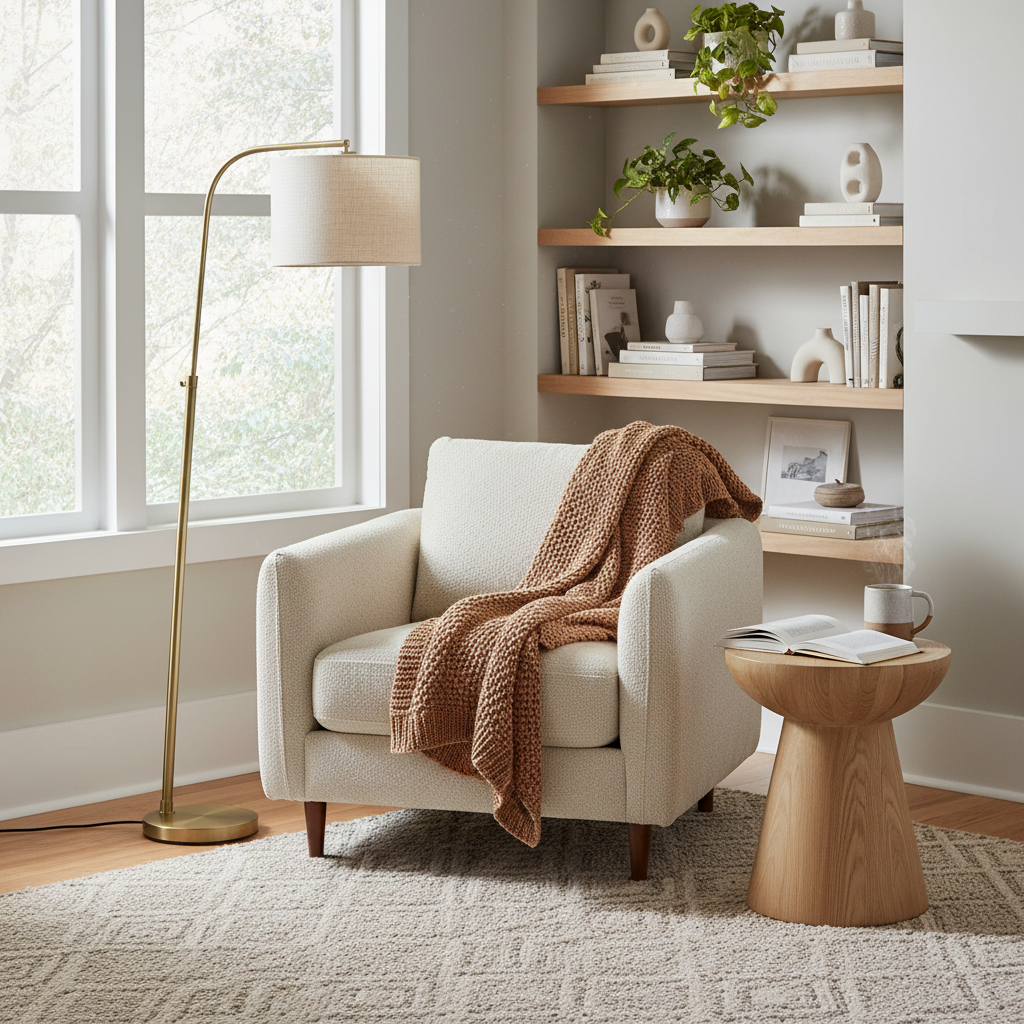
What makes a reading nook feel cozy (the 5 non-negotiables)
Before you choose furniture, lock in the essentials. When people say “cozy,” they usually mean a mix of comfort, control, and warmth.
- Comfort you can sustain: seat depth, back support, and a foot position that does not strain your hips.
- Light where the page is: ambient light looks nice, but task light prevents eye fatigue for print reading.
- A place for the “stuff”: current book, next book, glasses, water, charger, bookmark.
- Some boundary: a corner, curtain, screen, or shelf edge that visually says “this is my spot.”
- Temperature and texture: a throw, rug, or pillow that makes the space feel soft, not sterile.
According to the American Lighting Association, layered lighting combines ambient and task lighting for both comfort and function. In a reading nook, that usually means a room light plus a lamp aimed at the reading surface, not at your eyes.
Quick self-check: which nook type fits your home?
Pick the description that sounds like your real life. Your answer will tell you what to prioritize, and which “cozy reading nook ideas home” are likely to work without constant tweaking.
- The Micro-Nook: you have under 25 square feet, need compact seating and vertical storage.
- The Window Nook: you have decent daylight, but need glare control and nighttime lighting.
- The Shared-Family Nook: you need durable fabrics, easy cleanup, and storage that closes.
- The Quiet Retreat: you need sound dampening, visual calm, and minimal clutter.
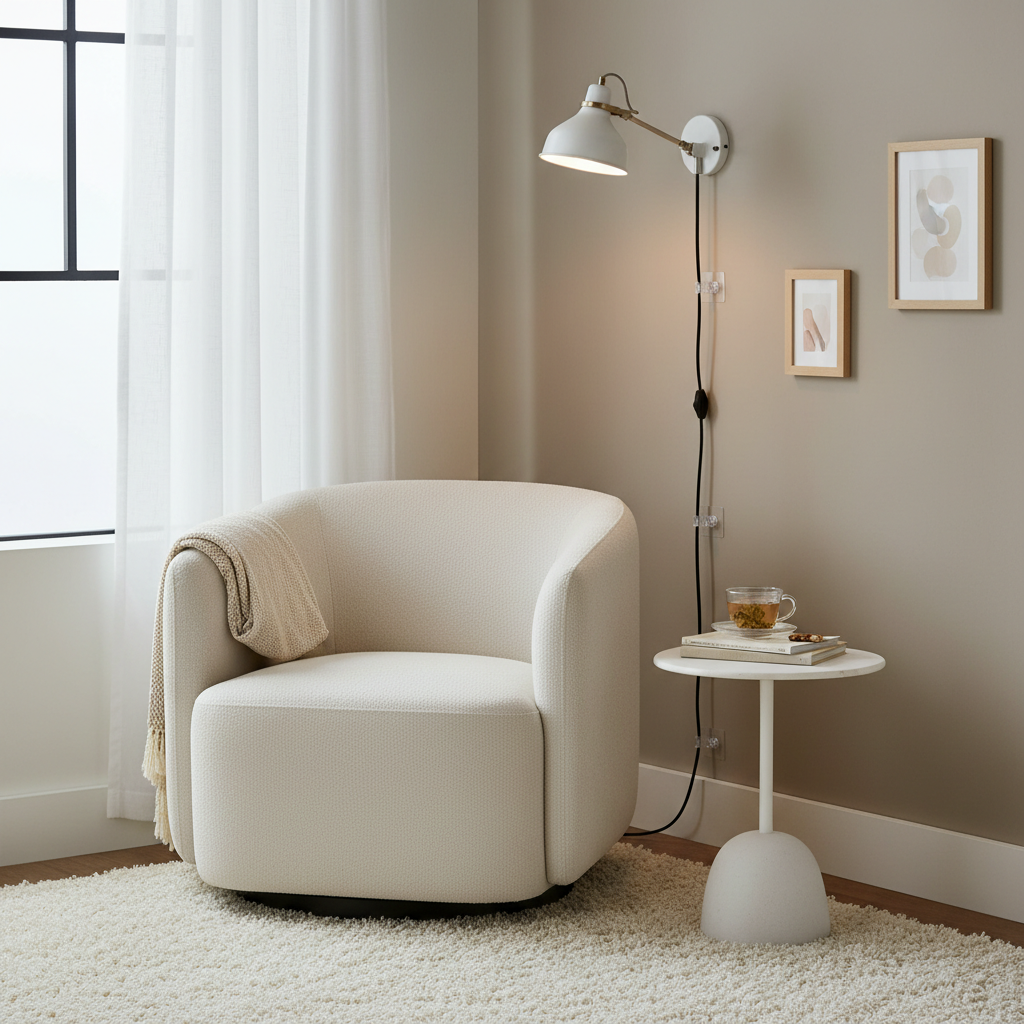
- The Rental-Friendly Nook: you want no-drill solutions, lightweight pieces, and removable lighting.
If you are torn between two, choose the one that matches your most common reading time. Night readers should prioritize lighting and comfort; weekend readers can lean more into style and staging.
Room-by-room cozy reading nook ideas (that actually fit)
Living room
The living room nook works when it does not fight the main seating area. Look for a “dead” corner near an outlet, then add a chair angled slightly away from the TV so your brain stops expecting background noise.
- Use a small side table (10–14 inches wide) so it fits without blocking traffic.
- Add a floor lamp with an adjustable head so the light lands on the book, not the ceiling.
- Define the nook with a 5x7 rug or even a 3x5 if space tight.
Bedroom
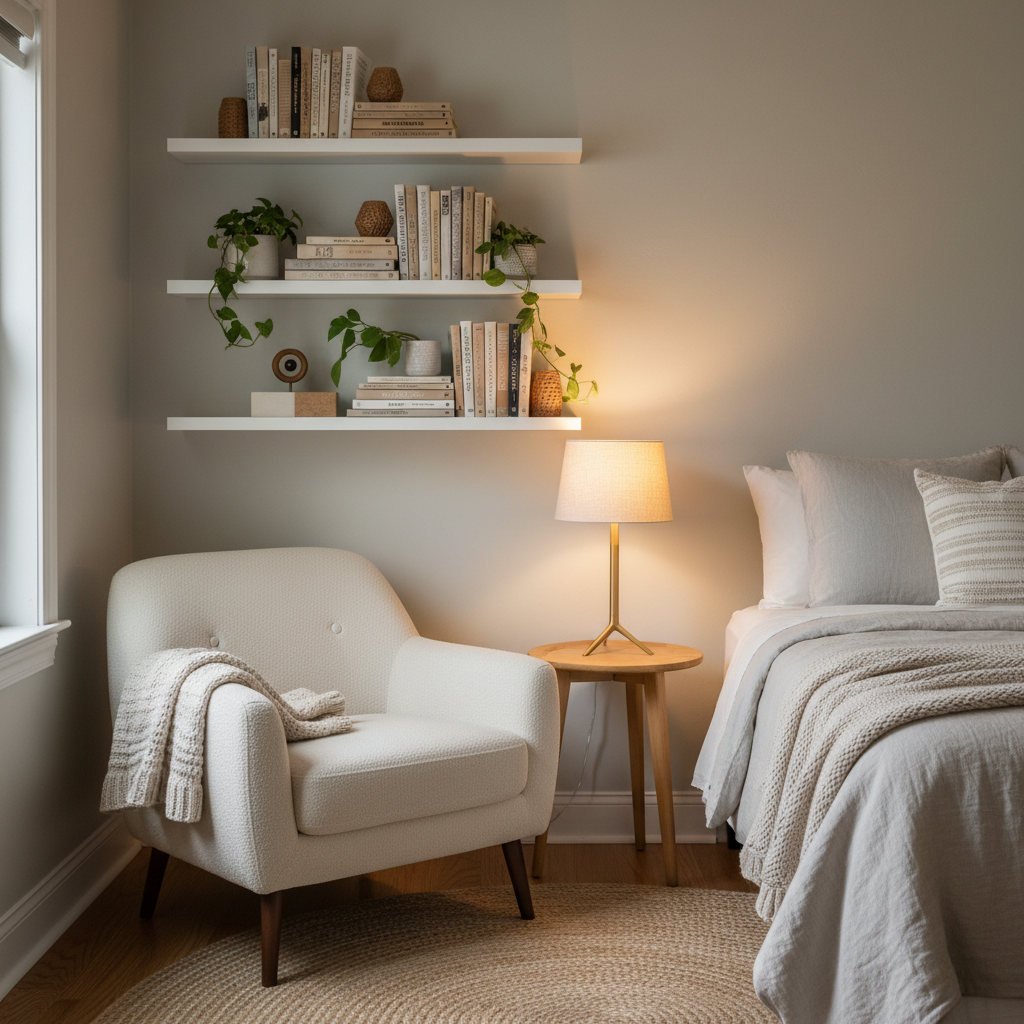
A bedroom reading nook should help you wind down, not keep you scrolling. A simple rule, keep the nook “analog-forward,” books, journal, lamp, maybe a sleep mask, and avoid making it your second desk.
- Choose warm bulbs (often 2700K) for a calmer feel.
- If you read in bed-adjacent seating, add a footstool so posture stays relaxed.
- Use a basket for throws so the space stays tidy without effort.
Home office
This one is underrated. If you work from home, a separate reading chair can reduce the “I’m still working” feeling. Place it away from your monitor line-of-sight, even a few feet helps.
- Pick a chair that feels different from your task chair, softer, wider, less upright.
- Use a plug-in wall sconce (common renter option) to save floor space.
- Keep a narrow bookshelf or magazine rack so paper does not migrate onto your desk.
Kids’ room or family corner
For kids, cozy equals accessible. Low shelves, washable textiles, and “one reach” storage work better than delicate styling.
- Use a washable rug and slipcover where possible.
- Consider a bean bag or floor cushions, but add a wall pillow or backrest for longer reading.
- Keep a small bin for library books so they do not vanish.
Hallway landing or under-stair space
If your home feels packed, these overlooked spots can become a true Micro-Nook. The trick is choosing pieces with shallow depth, and keeping it visually light.
- Try a slim lounge chair or a built-in style bench with cushions.
- Add a picture light or sconce if a floor lamp blocks the path.
- Use closed storage to prevent the area from turning into a drop zone.
The “comfort formula”: seating + lighting + surfaces (a practical table)
If you want a simple way to choose pieces, use this table as your shopping filter. You do not need all the upgrades, but you do need a clean baseline in each column.
| Element | Baseline (works in most homes) | Upgrade (if budget/space allows) |
|---|---|---|
| Seating | Accent chair with supportive back | Swivel chair or chaise for long sessions |
| Lighting | Adjustable floor or table lamp | Plug-in sconce + dimmer + warm bulb |
| Surface | Small side table for book and drink | C-table + hidden storage shelf |
| Soft layers | Throw blanket or small rug | Rug + lumbar pillow + textured curtain |
| Storage | Basket or short shelf | Closed cabinet or wall shelves |
Step-by-step: set up your nook in one afternoon
This is the part most people skip, they buy items first, then try to “make it work.” Flip it, place first, buy second.
- Pick the spot: choose a corner with the least foot traffic and access to an outlet.
- Mark the footprint: use painter’s tape to outline chair, table, lamp, this prevents oversized choices.
- Place the chair: angle it 15–30 degrees away from the room center for a more tucked-in feel.
- Add task lighting: aim the lamp toward your shoulder, not straight above your head.
- Add a surface: if you can’t set down a drink safely, the nook will never feel finished.
- Layer one soft item: rug or throw, not both at first, then adjust.
- Finish with one “anchor”: a plant, art, or shelf that visually frames the nook.
For many cozy reading nook ideas home, the “anchor” is what keeps the setup from looking like random furniture. Even a single framed print can do the job.
Common mistakes (and what to do instead)
- Buying a chair that photographs well but sits poorly: prioritize seat comfort and back support, then add style with textiles.
- Relying on overhead lighting: add a dedicated lamp, eye strain is a common “silent dealbreaker.”
- No landing zone for clutter: add one basket or closed box, visual calm matters more than people expect.
- Placing the nook in a busy pass-through: if you get bumped or distracted, move it two feet, that can be enough.
- Overloading one outlet: if you stack lamps, chargers, and heaters, use a surge protector and consider an electrician if anything feels warm or loose.
If you use candles for vibe, keep them away from throws and curtains, and follow manufacturer guidance. If you have kids or pets, flameless options tend to be safer in many situations.
When it’s worth getting professional help
Most nooks are DIY, but a few scenarios benefit from extra guidance.
- Electrical work: adding a new outlet, hardwiring sconces, or fixing flickering lights, talk to a licensed electrician.
- Built-ins: window benches, shelves, or under-stair carpentry, a carpenter can prevent wobbly installs and wasted materials.
- Pain or posture issues: if reading triggers neck or back pain, a physical therapist or ergonomics specialist can offer safer seating guidance.
According to the U.S. Consumer Product Safety Commission, following product instructions and using furniture anchors where recommended can reduce tip-over risks, especially with tall shelves in homes with children.
Key takeaways to keep your nook cozy all year
- Choose a nook type that matches how you read, not how you wish you read.
- Layer lighting so print reading stays comfortable at night.
- Give every item a home, one basket can save the whole setup.
- Start small, then add one upgrade after a week of real use.
If you want momentum, do two things today, pick the corner, then add a lamp you actually like turning on. The rest becomes much easier once those decisions stop floating around in your head.
FAQ
What are the best cozy reading nook ideas home for small apartments?
Look for a Micro-Nook, a compact chair, a C-table, and vertical storage like floating shelves. In small spaces, the “win” is keeping the footprint narrow while still having real task lighting.
How do I make a reading nook cozy without buying new furniture?
Work with what you have, move a lamp closer, add a throw, and create a boundary with a rug or a plant. Often the missing piece is a surface for your drink and book, even a sturdy stool helps.
Where should a reading nook go if my living room is busy?
Try the quieter side of the sofa, a bedroom corner, or a hallway landing if it is wide enough. The goal is fewer interruptions, not the “perfect” Instagram spot.
What lighting is best for reading at night?
An adjustable lamp aimed at the page is usually more comfortable than overhead light alone. Warm color temperature feels cozy, but brightness matters too, if you squint, increase light output or change the lamp position.
How can renters create a reading nook without drilling holes?
Use plug-in sconces, floor lamps, tension rods for curtains, and removable hooks for cord control. Choose lightweight shelves or leaning bookcases, and follow the product weight limits.
How do I keep a reading nook tidy in a family home?
Closed storage works better than open stacks in many households. A lidded basket for throws and a bin for current reads keeps the nook usable without daily re-styling.
Is a window reading nook always a good idea?
It can be, but glare and temperature swings are real. Add a shade for midday sun, and plan for a lamp at night, otherwise the nook feels great for photos but frustrating for actual reading.
If you are building a nook and want a more “done” look without guessing, start by choosing your nook type, then shop only for the missing piece that blocks comfort most, usually lighting or a side table, and you will end up with cozy reading nook ideas home that fit your room instead of fighting it.